Macros vs Micros: What's the Difference and Why Both Matter
How macronutrients differ from micronutrients, why calories tell only half the story, and how to keep vitamins, minerals, and trace elements on the radar.
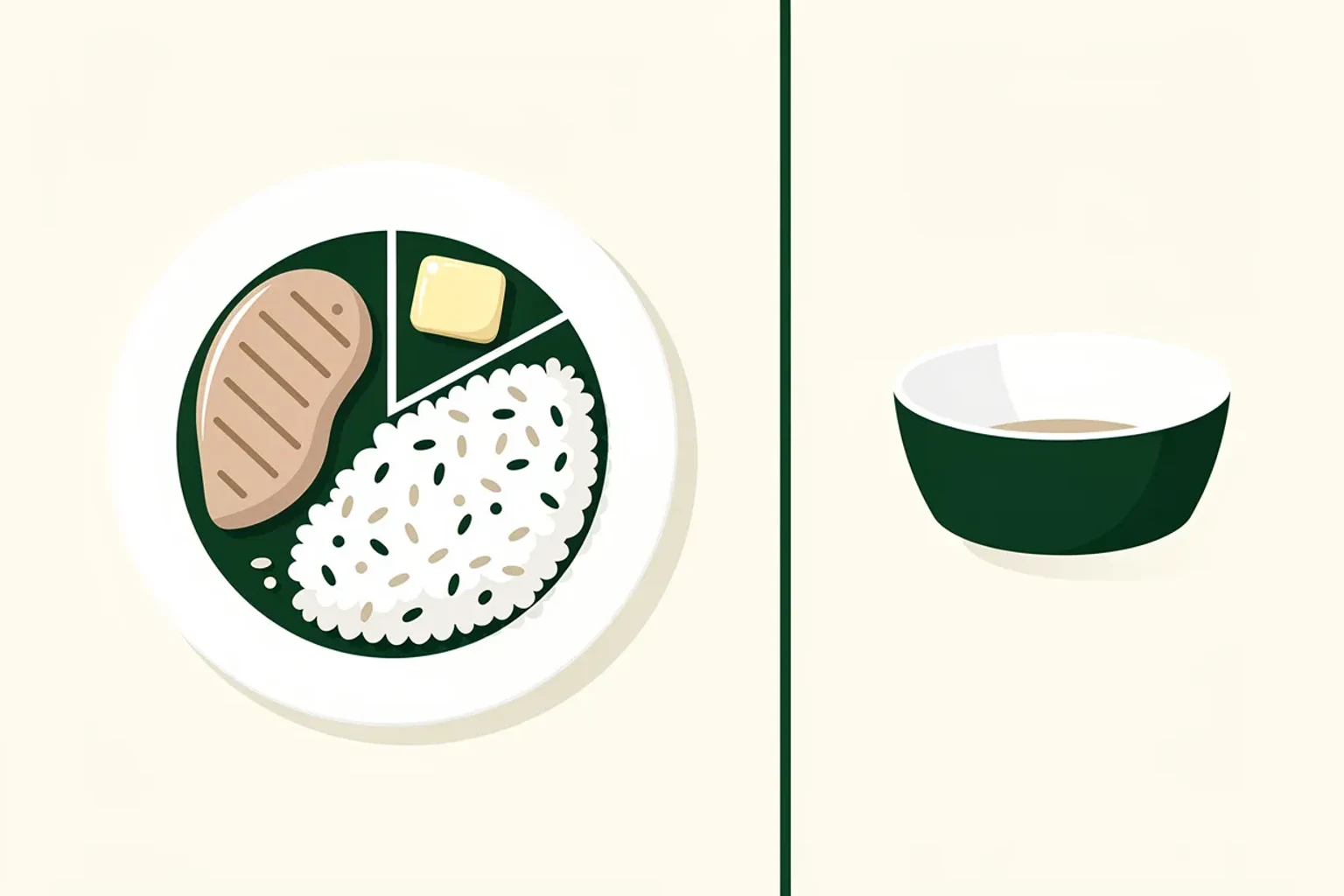
"Counting calories" or "tracking macros" usually means watching three numbers: protein, fat, and carbs. But every food also carries 30+ micronutrients — vitamins, minerals, and trace elements. Macros run the energy ledger; micros run the biochemistry. Most apps and food labels surface the first and quietly drop the second.
This guide covers both groups: what's in each, the units they use, how they interact, and why a diet with perfect macros can still leave you short on iron, B12, or magnesium.
What are macronutrients?
Macronutrients are three classes of compounds the body needs in large amounts (grams and tens of grams per day) — they supply energy.
- Protein — 4 kcal/g. Building material for muscle, enzymes, hormones, and immune cells. Adult requirement: 0.8–1.6 g/kg of body weight; more during strength training or a calorie deficit.
- Fat — 9 kcal/g. Energy, cell membranes, fat-soluble vitamins. WHO recommends 20–35 % of calories from fat, saturated under 10 %.
- Carbohydrate — 4 kcal/g. Main fuel for brain and muscle. Range is wide: from ~25 g on keto to 300+ g for endurance athletes.
Alcohol delivers 7 kcal/g but isn't a nutrient — it has no physiological role.
Then there's fibre: technically a carbohydrate, but partially or not absorbed. It contributes about 2 kcal/g under EU rules and 0–4 kcal/g under US rules. See the fibre guide.
What are micronutrients?
Micronutrients are substances the body needs in small amounts (milligrams and micrograms per day). They don't provide energy — they run enzymes, hormones, blood formation, and immune defence.
13 vitamins:
- Fat-soluble: A, D, E, K
- Water-soluble: C and eight B-vitamins (B1 thiamine, B2 riboflavin, B3 niacin, B5 pantothenate, B6 pyridoxine, B7 biotin, B9 folate, B12 cobalamin)
~15 minerals and trace elements:
- Macrominerals (grams to hundreds of mg/day): calcium, phosphorus, magnesium, potassium, sodium, chloride
- Trace minerals (mg to mcg/day): iron, zinc, copper, selenium, iodine, manganese, molybdenum, chromium, fluoride
Also in this bracket: choline (technically not a vitamin, but a deficit causes fatty liver) and conditionally essential compounds — omega-3 EPA/DHA, taurine, creatine — required by some groups but not all.
How macros and micros differ
| Dimension | Macronutrients | Micronutrients |
|---|---|---|
| Daily intake | 50–500 g | 1 mcg – 1000 mg |
| Source of energy? | Yes | No |
| Units | g | mg, mcg |
| Shown on food labels | Always | Usually only four |
| Deficiency signs | Weakness, muscle loss | Fatigue to anaemia |
| Excess risk | Weight gain | Toxicity (A, D, iron) |
| Visible in trackers | Everywhere | Rarely |
The core difference: macros control the energy balance, micros control biochemistry. You can lose weight on perfect macros and still get zero of a critical micronutrient — and vice versa.
Why macros matter
Macros determine three things.
- Calorie intake. Protein + fat + carbs adds up to total energy. A deficit drives weight loss, a surplus drives weight gain. Plain arithmetic.
- Body composition. Enough protein (≥1.2 g/kg in a deficit) preserves muscle while losing fat. Without it, you lose both.
- Satiety and blood-sugar stability. How calories split between macros affects hunger, insulin, and the glycemic response. Fat and protein fill you up more than the same calories from refined carbs.
Labels and trackers usually show four numbers: calories, protein, fat, carbs. Enough for weight management, not enough for health.
Why micros matter
Micronutrient deficiencies in wealthy countries are more common than people assume.
- Iron. Up to 30 % of menstruating women in Europe are iron-deficient (Hercberg 2024). Higher among vegans. See iron sources.
- Vitamin B12. Vegans without supplements will become deficient — B12 comes from bacteria, not plants. See B12 for vegans.
- Vitamin D. Above 40° latitude in winter, most people fall below 30 ng/mL. Food alone usually can't cover it. See vitamin D from food.
- Iodine. Many people skip iodised salt and don't eat saltwater fish often. Iodine deficiency returned to Europe in the 2010s. See iodine.
- Magnesium and potassium. Up to half of adults get less than the recommended amount. Linked to blood pressure and muscle function.
- Choline. Around 90 % of people fall short. Linked to memory and liver health. See choline.
Micronutrient deficits rarely shout. The signs — fatigue, poor sleep, mood swings, brittle nails, hair loss — usually get blamed on stress or age.
How macros and micros interact
They don't work in isolation.
- Vitamin C triples non-heme iron absorption. Lentils with lemon juice give about 3× the iron of plain lentils.
- Vitamin D enables calcium uptake. Without D, calcium isn't absorbed — no matter how much milk you drink.
- B12 and folate work as a pair. High folate can mask a B12 deficiency — a classic vegan trap.
- Fat is needed for fat-soluble vitamins. Carrot juice without fat is nearly useless for beta-carotene. Carrots with olive oil work.
- Magnesium is needed to activate vitamin D. One quiet reason D supplements don't always work.
That's why pure calorie- or macro-counting misses half the picture. You can eat "healthy" by macros and still run deficits on 3–5 micronutrients.
How to track both
Most apps show calories and the three macros only. That's the baseline.
A step up — also track fibre, saturated fat, sugars, and sodium (the standard label fields). See how to read a nutrition label.
A step further — track specific micronutrients tied to your context:
- Menstruating: iron, folate, B12.
- Vegan: B12, iron, zinc, calcium, omega-3, iodine, vitamin D.
- Above 40° latitude: vitamin D, iodine.
- Athletes: magnesium, sodium, potassium.
- Pregnancy: folate, iron, choline, iodine.
The Vnutri catalog shows 38 nutrients per food, including vitamins, minerals, and fatty acids. Filters — high iron, high calcium, high potassium, high vitamin C, high vitamin D — help find concentrated sources fast.
Common mistakes
- Counting calories only. A 500-kcal deficit drives weight loss, but says nothing about whether those calories carried iron.
- Counting macros only. "Keto + 150 g protein" doesn't guarantee folate, potassium, or magnesium are in range.
- Default to multivitamins. Doses target average deficits. If you don't have a deficit, surplus A, D, iron, or zinc is harmful.
- Ignoring nutrient form. Heme iron from meat absorbs 2–3× better than non-heme from plants. Dairy calcium beats calcium carbonate tablets. Vitamin K1 in spinach ≠ K2 in fermented food.
- Averaging across a week. Vitamin C is needed daily (not stored). Vitamin D can build up over summer for winter. The averaging principle doesn't apply uniformly.
How Vnutri shows macros and micros
The Vnutri catalog stores 38 nutrients per food: 4 core macros (calories, protein, fat, carbs), 6 extended macros (fibre, sugars, starch, saturated/mono/poly fats, trans fat, cholesterol), 13 vitamins, 13 minerals and trace elements, omega-3, omega-6, choline. Data is merged from 8 curated databases — USDA, Ciqual, CoFID, AFCD, Matvaretabellen, Frida, CNF, USDA Choline DB.
The detail page shows micros next to macros — not hidden in a separate tab. Filters combine across nutrient, diet, and category: e.g., "high-iron vegetarian dishes" or "low-carb with high potassium".
Frequently asked questions
Which matters more — macros or micros?
Both. Macros set weight and energy; micros run enzymes, hormones, and immunity. Ignoring either side carries risk. If your macros are dialed in but B12 or iron is low, you'll still feel tired regardless of calorie intake.
Can I get all micronutrients from food alone?
Almost all — yes. Exceptions: B12 for vegans (supplement or fortified foods needed) and vitamin D in winter above 40° latitude. Everything else comes from a varied diet.
How many vitamins and minerals are essential?
13 vitamins and 16 minerals, plus a few conditionally essential compounds (omega-3 EPA/DHA, choline, taurine for some groups). About 30 nutrients total that the body can't function without.
Do multivitamins replace a varied diet?
No. Multivitamins are a safety net against gross deficiencies, not a primary source. In real food, nutrients come bundled with fibre, antioxidants, and phytochemicals that pills don't carry. Large meta-analyses (Cochrane 2022) found no health benefit for healthy adults.
How do vitamins differ from minerals?
Vitamins are organic compounds (carbon-based), synthesised by plants or microbes. Minerals are inorganic elements (iron, calcium, zinc), drawn from soil and water. Vitamins degrade under heat and storage; minerals don't.
What is "hidden hunger"?
A WHO term: enough calories alongside a deficit of key micronutrients. Typical case — diet built on ultra-processed foods: calories fine, but iron, zinc, folate, and vitamins A and B are short. Affects roughly 2 billion people worldwide.
References
- World Health Organization. Healthy diet fact sheet N°394. 2020.
- US National Academies of Sciences. Dietary Reference Intakes (DRI) Tables and Application. National Academies Press. 2024.
- Hercberg S, et al. Iron deficiency in Europe — current state and consequences. Eur J Clin Nutr. 2024.
- Cochrane Library. Vitamin and mineral supplements for the prevention of cardiovascular disease and cancer. 2022.
- European Food Safety Authority. Dietary Reference Values for the EU. 2023.