Sodium, Potassium, Magnesium: The Electrolyte Triangle
How three minerals — sodium, potassium, magnesium — run fluid balance, muscle and nerve function. Top food sources, daily targets, and the Na:K ratio.
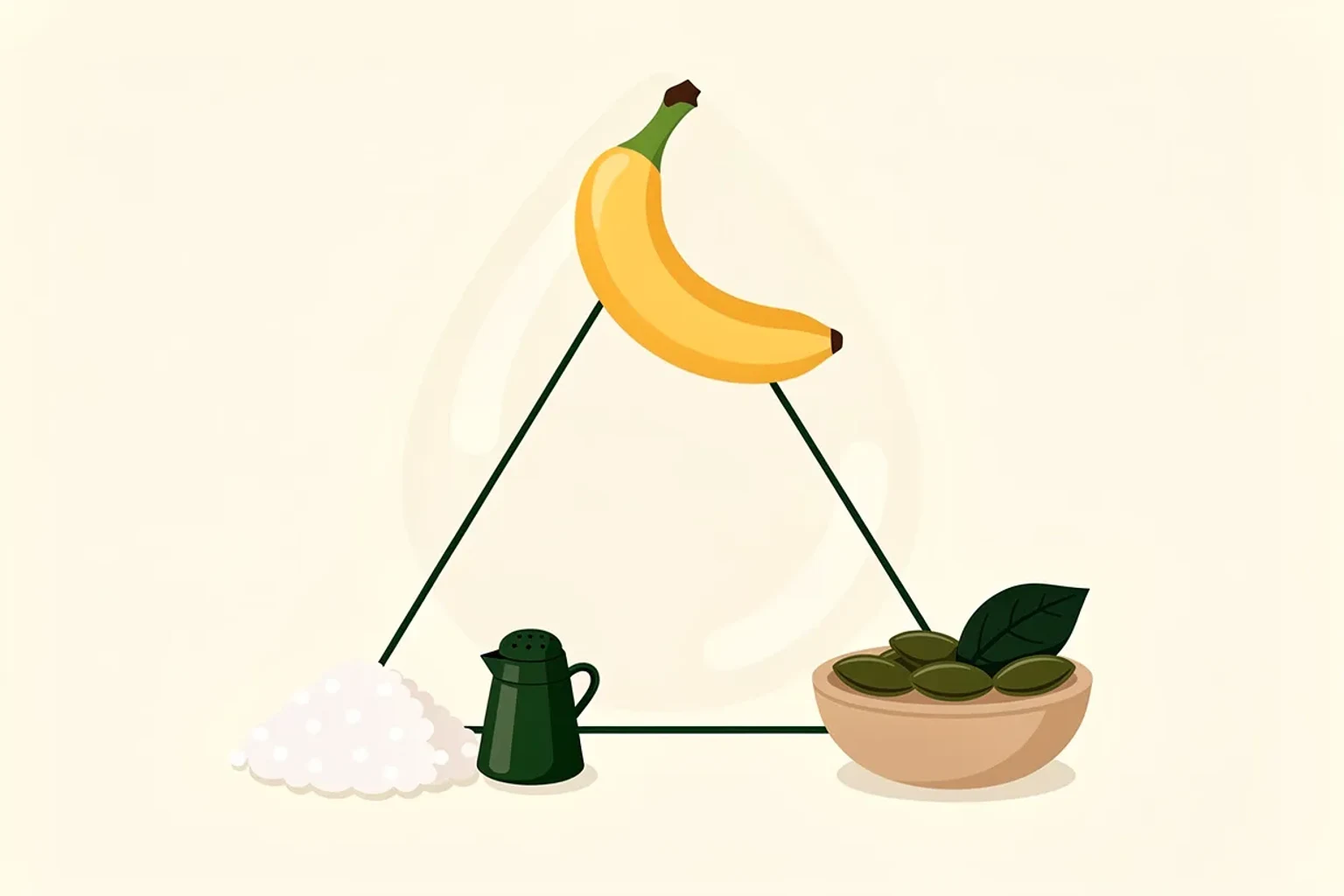
Three minerals do most of the work in fluid balance, muscle contraction, and nerve signalling: sodium, potassium, magnesium. Modern diets are typically high in sodium, low in potassium, and borderline in magnesium. Cleaning up that triangle is one of the biggest practical wins in everyday nutrition — bigger than most supplement protocols.
This guide covers daily targets, top food sources per 100 g, the sodium-to-potassium ratio that matters more than absolute sodium, magnesium forms in supplements, and a short FAQ.
The triangle
The three electrolytes work as a system. Sodium and potassium are paired — sodium keeps fluid outside cells, potassium keeps fluid inside cells. Magnesium runs the enzymes that move them.
- Sodium. Keeps fluid in the extracellular space; partners with chloride to regulate blood volume and pressure. Target: 1,500–2,300 mg/day. Most people consume 3,500–5,000 mg.
- Potassium. Keeps fluid inside cells; counterbalances sodium and supports normal heart rhythm. Target: 3,500–4,700 mg/day. Most people consume around 2,500 mg.
- Magnesium. Cofactor in 300+ enzyme reactions, muscle relaxation, blood-pressure regulation, ATP production. Target: 320 mg/day (women), 420 mg/day (men). Most people consume around 300 mg.
Two of the three targets are routinely missed in the wrong direction. The fix is mostly about food choice, not pills.
Sodium: what's wrong
Sodium itself isn't the villain — sodium chloride is essential. The problem is the source.
About 70 % of the sodium in a typical Western diet comes from processed foods, not the salt shaker. The usual suspects:
- Bread and bakery
- Cured and processed meats
- Canned soups and stocks
- Fast food and most restaurant meals
- Cheese, especially aged and processed
- Sauces, dressings, soy sauce
One frozen pizza often delivers 1,500–2,000 mg sodium — close to a full day's WHO target in a single meal. A single restaurant pasta dish can hit 2,500 mg.
WHO recommends under 2,000 mg/day for adults, lower for people with hypertension. The simplest sodium win isn't avoiding salt at home — it's eating less ultra-processed food.
Sodium: when you need more
Low-sodium advice doesn't apply to everyone. Several situations call for higher intake:
- First week of keto. Lower insulin tells the kidneys to dump sodium. Headache, fatigue, and brain fog ("keto flu") are usually sodium deficiency, not lack of carbs.
- Intense exercise with heavy sweating. Athletes lose 500–2,000 mg sodium per hour, sometimes more in heat.
- Low-carb diets generally. Same insulin mechanism as keto, milder version.
- Hot climates and physical labour. Loss through sweat scales with heat and effort.
For sedentary people on a mixed diet, sodium is rarely the issue. For athletes, low-carb dieters, and people in hot climates, deliberately under-salting food can backfire.
Potassium: the under-consumed mineral
Potassium is the mirror image: almost everyone gets too little. The target is 3,500–4,700 mg/day; average intake is closer to 2,500.
Top food sources per 100 g (raw or as noted):
| Food | Potassium (mg) |
|---|---|
| Dried apricots | 1,162 |
| Pistachios | 1,025 |
| White beans (cooked) | 561 |
| Avocado | 485 |
| Sweet potato (baked) | 475 |
| Spinach (cooked) | 466 |
| Lentils (cooked) | 369 |
| Salmon | 363 |
| Banana | 358 |
| Black beans (cooked) | 355 |
| Tomatoes | 237 |
| Yogurt | 234 |
Reaching 4,700 mg means roughly 4–5 servings of these foods daily. Bananas alone won't get you there — they're useful, but per gram, beans, dried fruit, leafy greens, avocado, and seafood deliver more. Browse high-potassium foods in the catalog for the full list sorted by content.
Magnesium: the silent gap
Magnesium intake is borderline for most adults — usually close to but below the RDA. It's not dramatic deficiency, but it's enough to surface as muscle cramps, restless legs, and poor sleep over time.
Top food sources per 100 g:
| Food | Magnesium (mg) |
|---|---|
| Pumpkin seeds | 535 |
| Cashews | 292 |
| Almonds | 270 |
| Dark chocolate (70 % +) | 228 |
| Spinach (cooked) | 87 |
| Black beans (cooked) | 70 |
| Brown rice (cooked) | 44 |
| Avocado | 29 |
| Banana | 27 |
A single ounce (28 g) of pumpkin seeds delivers around 150 mg — about a third of the daily target. Seeds and nuts are the most efficient single source.
The sodium-to-potassium ratio
Absolute sodium gets the headlines, but the sodium-to-potassium ratio tracks heart disease risk and blood pressure more cleanly.
- Modern Western diet: Na:K ≈ 2:1 (twice as much sodium as potassium)
- Ancestral diets: Na:K ≈ 1:4 (four times as much potassium as sodium — flipped)
Aim for 1:1 minimum — ideally less sodium than potassium across the day. The easiest way isn't watching salt; it's adding potassium-rich foods to displace sodium-heavy processed ones.
Magnesium forms in supplements
If diet falls short, magnesium is one of the few supplements with real-world value. Form matters:
- Magnesium glycinate. Gentle on the gut, good absorption, mild calming effect. Best for sleep and general supplementation.
- Magnesium citrate. Good absorption, but laxative at higher doses. Useful for constipation.
- Magnesium L-threonate. Crosses the blood-brain barrier; preliminary evidence for cognition and memory. More expensive.
- Magnesium oxide. Cheap and common, poor absorption. Mostly acts as a laxative.
Typical supplemental dose: 200–400 mg/day, ideally with food. Doses above 350 mg from supplements can cause loose stools regardless of form.
Symptoms of imbalance
Each electrolyte shows up differently when off:
- Low sodium (hyponatremia). Confusion, headache, nausea, seizures in severe cases. Most often seen in endurance athletes who over-hydrate with plain water, in older adults on diuretics, and in people on extreme low-sodium diets. Acutely dangerous below 130 mmol/L blood sodium.
- Low potassium. Muscle weakness, cramps, arrhythmia, constipation, fatigue. Usually from diuretics, vomiting, or chronic low intake.
- Low magnesium. Night-time muscle cramps, restless legs, anxiety, poor sleep, eye twitches, palpitations. The most common subclinical deficiency in adults.
If symptoms persist after dietary fixes, a doctor visit beats self-supplementation — blood electrolytes are simple to test.
Practical fix
Most people don't need supplements; they need a small set of food habits:
- 3–4 servings of high-potassium foods daily. Rotate: avocado, beans, leafy greens, banana, sweet potato, salmon.
- One ounce of seeds or nuts daily. Pumpkin seeds, almonds, or cashews cover most of the magnesium gap.
- Less ultra-processed food. Cuts sodium without thinking about salt.
- Salt food to taste at home. Not unsalted — that backfires with low-carb diets and active people. Just don't pile it on.
These four habits together usually move the Na:K ratio toward 1:1 and bring magnesium into range. No tracking required.
Athletes
Endurance and high-sweat training change the calculus:
- Pre-workout. 500 ml fluid + 500 mg sodium 30–60 minutes before. Light meal or carb drink alongside.
- During (90+ minutes). 500–1,000 mg sodium per hour plus 30–60 g carbs. Sports drinks, electrolyte tabs, or a pinch of salt in water with fruit.
- Post-workout. Rehydrate at 1.5 × estimated fluid loss with sodium-containing fluid. Plain water alone after a heavy sweat session dilutes blood sodium.
Magnesium loss in sweat is small. Potassium losses are real but easily covered by post-workout food (banana, yogurt, avocado toast).
Vnutri filters
Two filters in the Vnutri catalog map directly to this guide:
- /nutrient/high-potassium — foods with 400 mg or more potassium per 100 g, sorted by content.
- /nutrient/low-sodium — foods with under 140 mg sodium per 100 g.
Combine with the broader food catalog to find replacements: a low-sodium snack with high potassium beats a chip-and-pickle combo.
Related reading
- Macros vs micros: what counts and why — where electrolytes sit in the bigger picture.
- Keto diet basics — why the first week needs more sodium, not less.
- How to read a nutrition label — finding sodium on packaged food.
Frequently asked questions
Are sports drinks needed daily?
For most people, no. A typical sports drink has 200–500 mg sodium per bottle and 30 g sugar. Useful during 90+ minutes of intense exercise; unnecessary for office work or short workouts. Water plus a balanced meal covers normal electrolyte needs.
Is coconut water a good potassium source?
Decent, not exceptional. Coconut water has about 250 mg potassium per 100 ml — useful, but plain water plus a banana delivers more for less sugar. As a post-workout drink it's fine; as a daily potassium strategy it's expensive.
Are salt cravings a sign of deficiency?
Sometimes, but not reliably. Strong cravings after heavy sweating, a low-carb week, or fasting often do reflect sodium loss. Persistent cravings on a normal diet are more often about habit, dehydration, or stress eating. The salt-craving signal works during real loss, less so otherwise.
Which magnesium supplement form is best?
Glycinate for sleep and general use. Citrate if constipation is also a concern. Threonate for cognition (more expensive, less evidence). Avoid oxide unless you specifically want the laxative effect. Doses above 350 mg from supplements can cause loose stools.
Can you overdose on potassium from food?
Practically no for healthy adults. The kidneys excrete excess potassium efficiently — even 6,000–8,000 mg/day from food is well tolerated. The exception is kidney disease, where potassium can build up to dangerous levels. Supplement potassium is regulated to small doses (99 mg per pill in the US) precisely because pill-form potassium bypasses some of the body's safeguards.
References
- Aaron K, Sanders P. Role of dietary salt and potassium intake in cardiovascular health and disease: a review of the evidence. Mayo Clinic Proceedings 2013.
- Cogswell ME et al. Estimated 24-Hour Urinary Sodium and Potassium Excretion in US Adults. JAMA 2018.
- World Health Organization. Guideline: Sodium intake for adults and children. 2012.
- EFSA Panel on Dietetic Products, Nutrition and Allergies. Scientific Opinion on Dietary Reference Values for magnesium. EFSA Journal 2015.
- Stone MS, Martyn L, Weaver CM. Potassium Intake, Bioavailability, Hypertension, and Glucose Control. Nutrients 2016.