Taro
Taro, cooked
Categories
Cooking method
| Macros | per 100 g |
|---|---|
| Calories | 142 kcal |
| Protein | 0.5 g |
| Fat | 0.1 g |
| Carbs | 34.6 g |
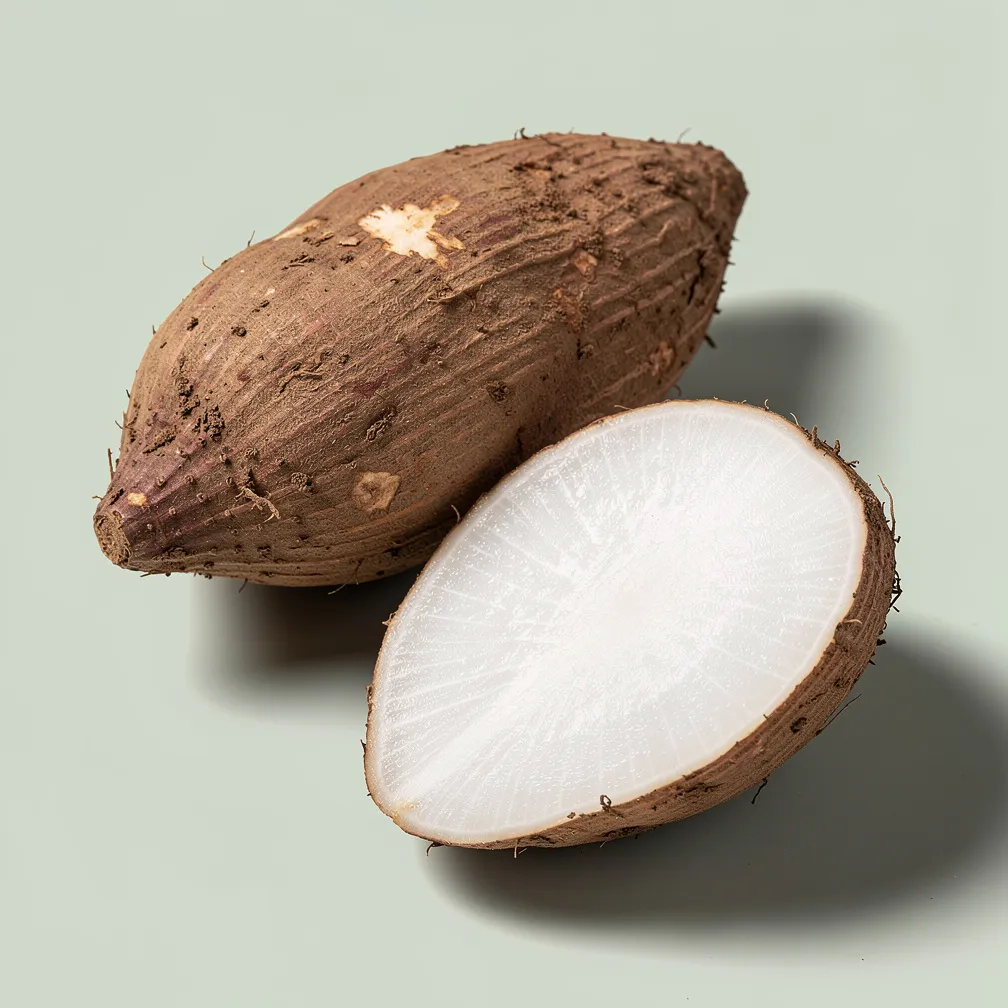
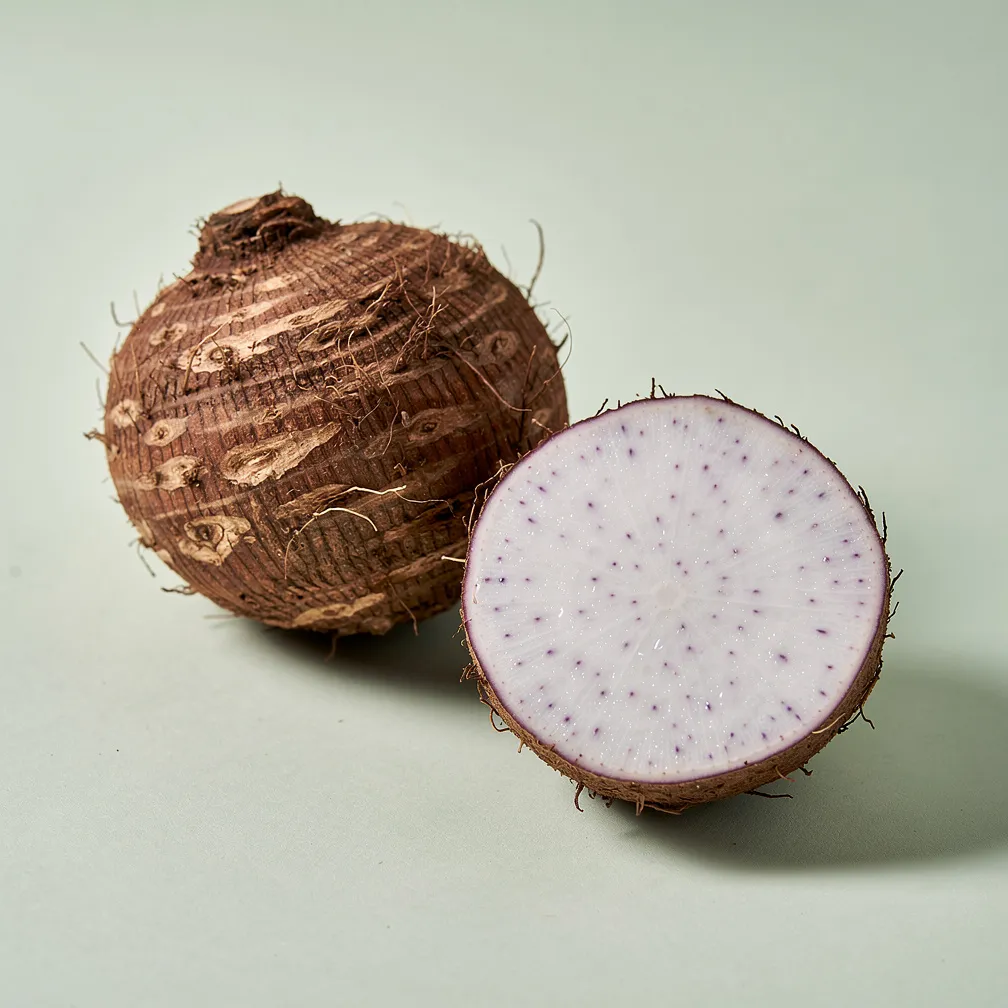
Taro is a starchy root vegetable, consumed raw before preparation but almost always cooked — boiled, steamed, fried or mashed — and used as a staple carbohydrate across South and Southeast Asia, the Pacific Islands, West Africa and the Caribbean. Per 100 g, raw taro provides 107 kcal, 1.5 g of protein, 0.2 g of fat, 26.2 g of carbohydrates and 4.1 g of dietary fibre, with very little sugar (0.4 g). It is a notable source of potassium at 591 mg per 100 g, alongside 84 mg of phosphorus and 43 mg of calcium. Taro also contributes 22 mcg of folate per 100 g. It fits vegan, vegetarian, gluten-free, dairy-free, paleo and low-FODMAP dietary patterns.
How many calories in taro?
Raw taro contains 107 kcal per 100 g, making it moderately energy-dense for a root vegetable — comparable to sweet potato. A typical cooked serving of around 150 g would provide roughly 160 kcal.
How much potassium is in taro?
Taro contains 591 mg of potassium per 100 g, which is notably high — more than a banana, which averages around 360 mg per 100 g. This makes taro one of the more potassium-rich starchy vegetables available.
Is taro gluten-free?
Yes, taro is naturally gluten-free and appears on the gluten-free compatible diet list. It is also suitable for vegan, dairy-free, paleo and low-FODMAP eating patterns, making it a versatile option for people managing multiple dietary restrictions.
Diets
Get Vnutri
Log meals, track daily totals, save favorites. Free on iOS and Android.
Glycemic Index
approximateMacros · per 100 g
| Macros | Amount |
|---|---|
| Calories | 142 kcal |
| Protein | 0.52 g |
| Fat | 0.11 g |
| Carbs | 34.6 g |
| Sugars | 0.49 g |
| Fiber | 5.1 g |
| Fats breakdown | Amount |
|---|---|
| Saturated | 0.023 g |
| Monounsaturated | 0.009 g |
| Polyunsaturated | 0.046 g |
| Trans | 0 g |
| Omega-3 | 0 g |
| Cholesterol | 0 mg |
| Minerals | Amount |
|---|---|
| Calcium | 18.0 mg |
| Iron | 0.72 mg |
| Magnesium | 30.0 mg |
| Phosphorus | 76.0 mg |
| Potassium | 484 mg |
| Sodium | 237 mg |
| Zinc | 0.27 mg |
| Copper | 0.20 mg |
| Manganese | 0.45 mg |
| Selenium | 0.90 mcg |
| Vitamins | Amount |
|---|---|
| Vitamin A | 4.0 mcg |
| Retinol | 0 mcg |
| Vitamin C | 5.0 mg |
| Vitamin D | 0 mcg |
| Vitamin E | 2.9 mg |
| Vitamin K | 1.2 mcg |
| Thiamin (B1) | 0.11 mg |
| Riboflavin (B2) | 0.028 mg |
| Niacin (B3) | 0.51 mg |
| Pantothenic acid (B5) | 0.33 mg |
| Vitamin B6 | 0.33 mg |
| Folate (B9) | 19.0 mcg |
| Vitamin B12 | 0 mcg |
| Choline | 21.3 mg |
Other cooking states of Taro
Raw taro (107 kcal).