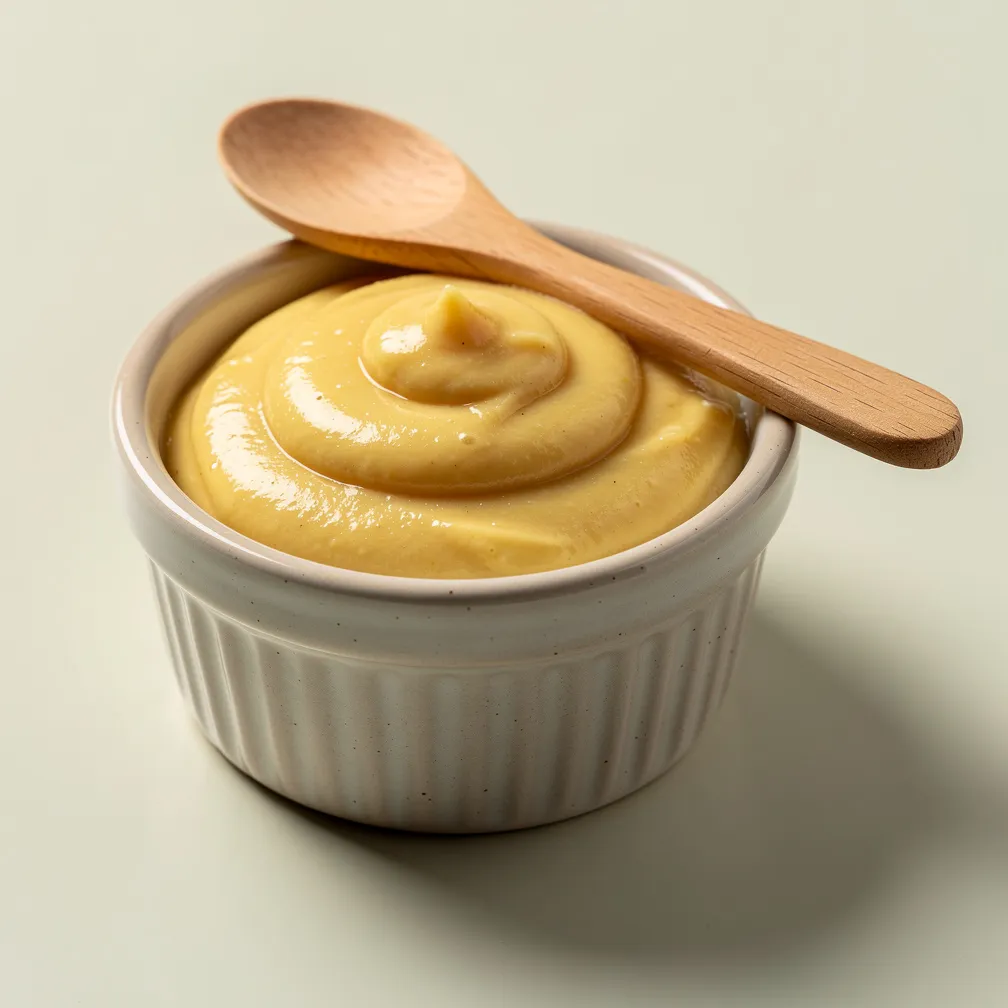
Dijon mustard
Categories
| Macros | per 100 g |
|---|---|
| Calories | 60 kcal |
| Protein | 4.0 g |
| Fat | 3.0 g |
| Carbs | 6.0 g |
Dijon mustard is a smooth, sharp-tasting condiment originating from Dijon, France, made from brown or black mustard seeds, white wine or verjuice, and salt. It is used in small amounts as a spread, salad dressing base, marinade ingredient, or emulsifier in vinaigrettes, and a typical serving is around 5–10 g. Per 100 g, it provides 60 kcal, 4 g of protein, 3 g of fat, 6 g of carbohydrates and 3 g of dietary fibre, with only 1 g of sugars — a notably low-sugar profile for a condiment. It contains 1135 mg of sodium per 100 g, which is worth keeping in mind given typical serving sizes, along with 58 mg of calcium and 49 mg of magnesium. No glycemic index value is available. Dijon mustard is compatible with vegan, vegetarian, gluten-free, dairy-free, keto, paleo, Mediterranean and low-FODMAP dietary patterns.
How many calories in Dijon mustard?
Dijon mustard contains 60 kcal per 100 g. A typical serving of around 5 g (one teaspoon) contributes only about 3 kcal, making it a very low-calorie condiment by volume.
How much sodium is in Dijon mustard?
Dijon mustard contains 1135 mg of sodium per 100 g. Because it is used in small amounts — usually 5–10 g per serving — a single teaspoon delivers roughly 55–115 mg of sodium.
Is Dijon mustard keto-friendly?
Yes, Dijon mustard is considered keto-friendly. It contains only 6 g of carbohydrates and 1 g of sugars per 100 g, and at typical serving sizes of 5–10 g the carbohydrate contribution is negligible.
Diets
Get Vnutri
Log meals, track daily totals, save favorites. Free on iOS and Android.
Macros · per 100 g
| Macros | Amount |
|---|---|
| Calories | 60.0 kcal |
| Protein | 4.0 g |
| Fat | 3.0 g |
| Carbs | 6.0 g |
| Sugars | 1.0 g |
| Fiber | 3.0 g |
| Fats breakdown | Amount |
|---|---|
| Saturated | 0.20 g |
| Minerals | Amount |
|---|---|
| Calcium | 58.0 mg |
| Iron | 1.5 mg |
| Magnesium | 49.0 mg |
| Sodium | 1135 mg |