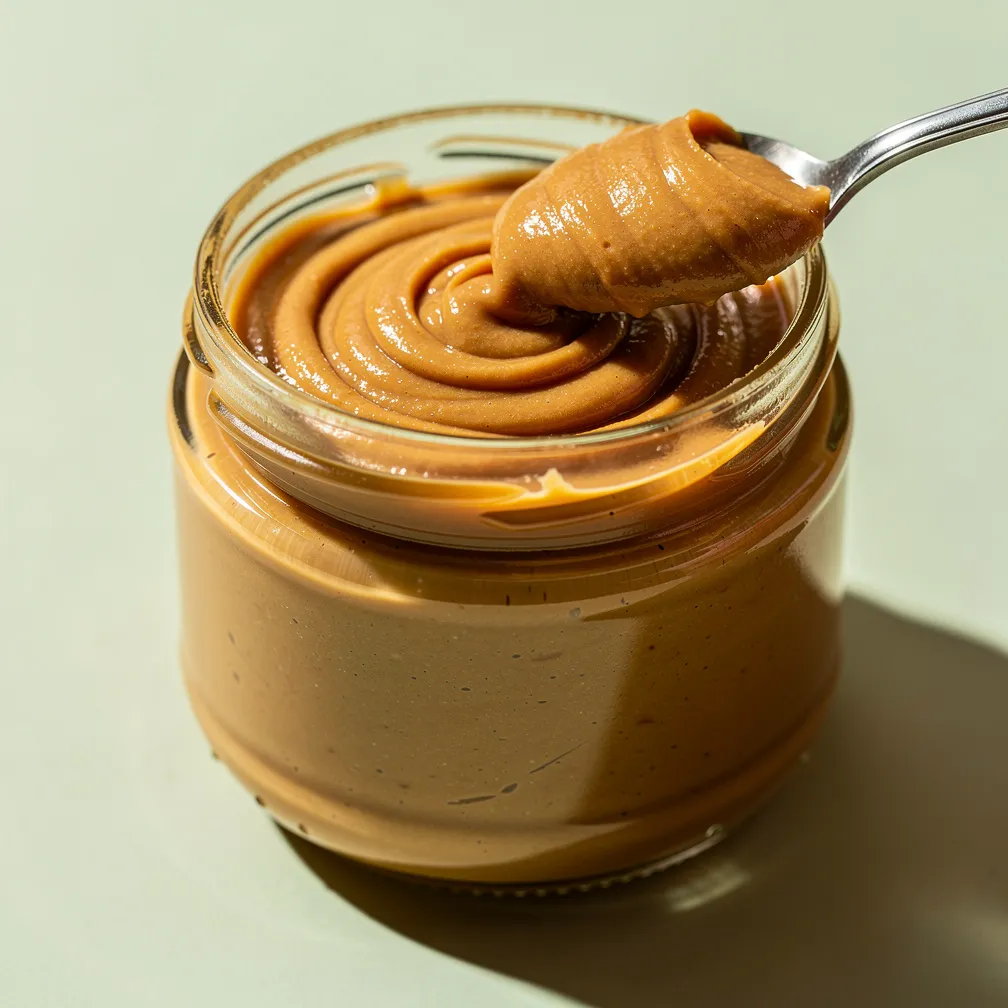
Peanut butter
Categories
| Macros | per 100 g |
|---|---|
| Calories | 588 kcal |
| Protein | 25.0 g |
| Fat | 50.0 g |
| Carbs | 20.0 g |
Peanut butter is a paste made from ground roasted peanuts, widely used as a spread on bread and toast, stirred into sauces, or eaten by the spoonful as a quick protein source. Per 100 g, it provides 588 kcal, 25 g of protein, 50 g of fat, 20 g of carbohydrates and 6 g of dietary fibre, with 9 g coming from sugars. It is notably rich in potassium (649 mg per 100 g), magnesium (168 mg per 100 g), niacin (13.2 mg per 100 g), folate (87 mcg per 100 g) and vitamin E (9 mg per 100 g). No glycemic index value is available for peanut butter. It fits vegan, vegetarian, pescatarian, gluten-free, dairy-free and Mediterranean dietary patterns.
How many calories in peanut butter?
Peanut butter contains 588 kcal per 100 g, making it one of the more calorie-dense everyday foods. A typical two-tablespoon serving weighs around 32 g, which works out to roughly 188 kcal.
How much protein is in peanut butter?
Peanut butter provides 25 g of protein per 100 g, which is relatively high for a plant-based food. A two-tablespoon serving (about 32 g) delivers around 8 g of protein.
Is peanut butter vegan?
Yes, plain peanut butter is vegan — it contains no animal-derived ingredients. Most standard varieties consist of peanuts and salt, though some commercial versions add sugar or palm oil, so checking the label is worthwhile.
Diets
Get Vnutri
Log meals, track daily totals, save favorites. Free on iOS and Android.
Glycemic Index
approximateMacros · per 100 g
| Macros | Amount |
|---|---|
| Calories | 588 kcal |
| Protein | 25.0 g |
| Fat | 50.0 g |
| Carbs | 20.0 g |
| Sugars | 9.0 g |
| Fiber | 6.0 g |
| Fats breakdown | Amount |
|---|---|
| Saturated | 10.0 g |
| Monounsaturated | 24.0 g |
| Polyunsaturated | 14.0 g |
| Minerals | Amount |
|---|---|
| Calcium | 49.0 mg |
| Iron | 1.9 mg |
| Magnesium | 168 mg |
| Potassium | 649 mg |
| Sodium | 17.0 mg |
| Vitamins | Amount |
|---|---|
| Vitamin E | 9.0 mg |
| Niacin (B3) | 13.2 mg |
| Folate (B9) | 87.0 mcg |