Feta cheese
Categories
| Macros | per 100 g |
|---|---|
| Calories | 264 kcal |
| Protein | 14.2 g |
| Fat | 21.3 g |
| Carbs | 4.1 g |
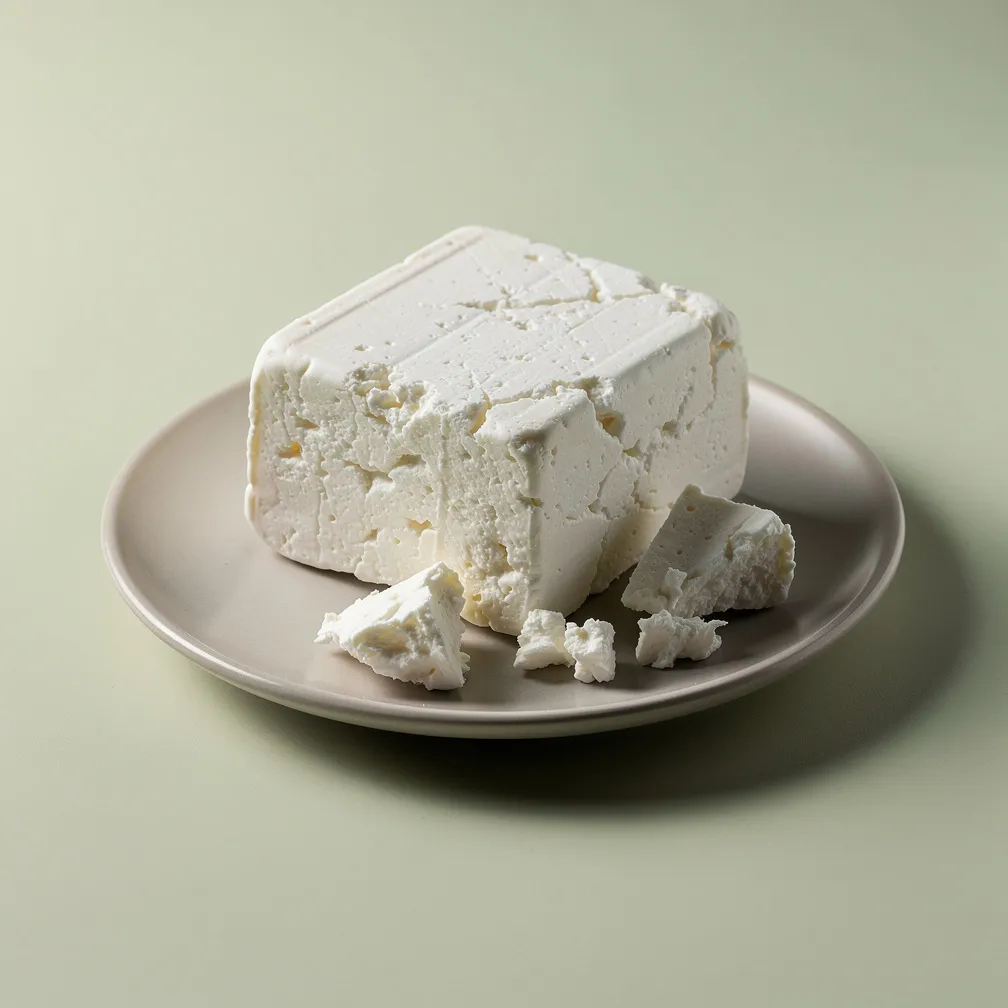
Feta is a brined white cheese originating from Greece, traditionally made from sheep's milk or a blend of sheep's and goat's milk, and used crumbled over salads, baked into pastries, or served alongside olives and bread. Per 100 g, feta provides 264 kcal, 14.2 g of protein, 21.3 g of fat, and 4.1 g of carbohydrates with no measurable fibre. It is notably high in sodium at 1,116 mg per 100 g, a direct result of the brining process, and delivers 493 mg of calcium and 337 mg of phosphorus per 100 g. It also contributes 422 mcg of vitamin A and 1.7 mcg of vitamin B12 per 100 g. Feta is compatible with vegetarian, pescatarian, gluten-free, keto, Mediterranean, and low-FODMAP dietary patterns.
How many calories in feta cheese?
Feta cheese contains 264 kcal per 100 g. A typical crumbled serving over a salad is around 30 g, which comes to roughly 79 kcal.
How much sodium is in feta cheese?
Feta cheese contains 1,116 mg of sodium per 100 g, which is high compared to most other cheeses. This comes from the brine used during production and storage, so rinsing feta before use can reduce the sodium content somewhat.
Is feta cheese keto-friendly?
Yes, feta cheese fits well within a keto dietary pattern. It contains only 4.1 g of carbohydrates per 100 g, while providing 21.3 g of fat and 14.2 g of protein.
Diets
Get Vnutri
Log meals, track daily totals, save favorites. Free on iOS and Android.
Macros · per 100 g
| Macros | Amount |
|---|---|
| Calories | 264 kcal |
| Protein | 14.2 g |
| Fat | 21.3 g |
| Carbs | 4.1 g |
| Sugars | 4.1 g |
| Fats breakdown | Amount |
|---|---|
| Saturated | 14.9 g |
| Cholesterol | 89.0 mg |
| Minerals | Amount |
|---|---|
| Calcium | 493 mg |
| Phosphorus | 337 mg |
| Sodium | 1116 mg |
| Zinc | 2.9 mg |
| Vitamins | Amount |
|---|---|
| Vitamin A | 422 mcg |
| Vitamin B12 | 1.7 mcg |