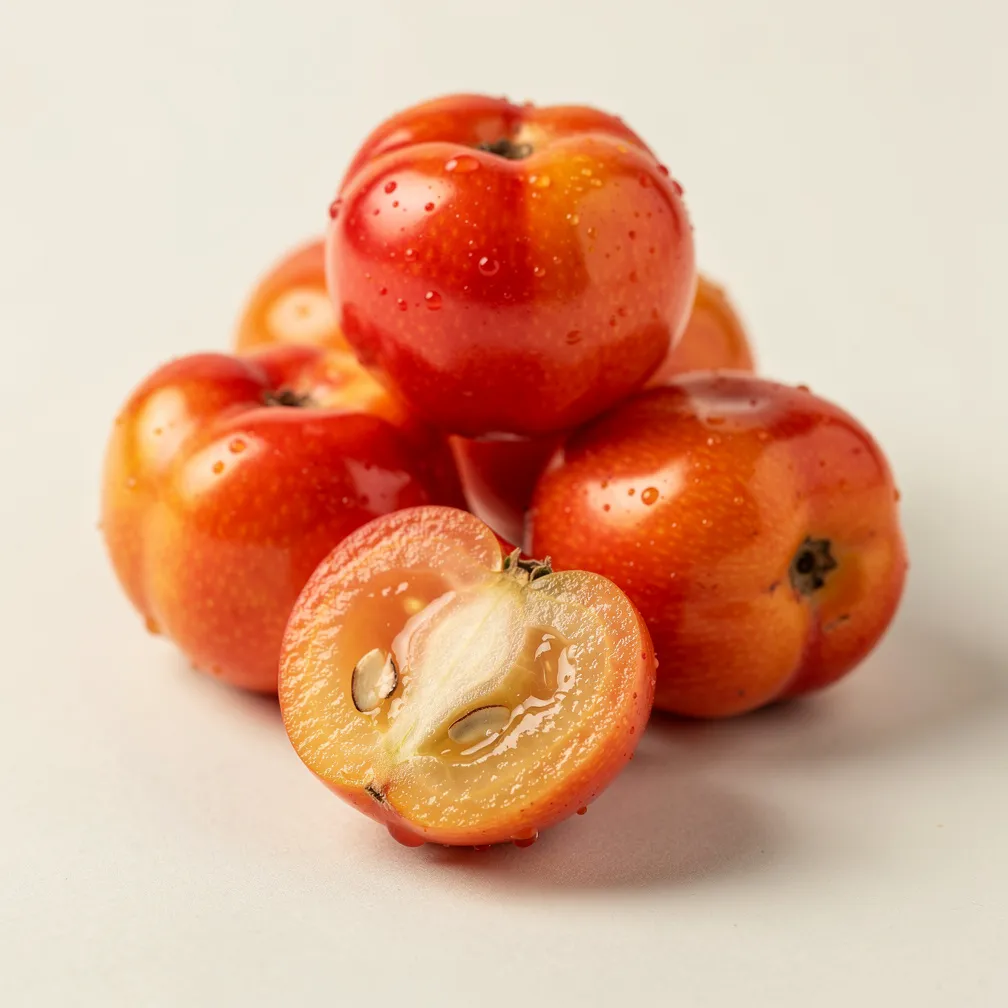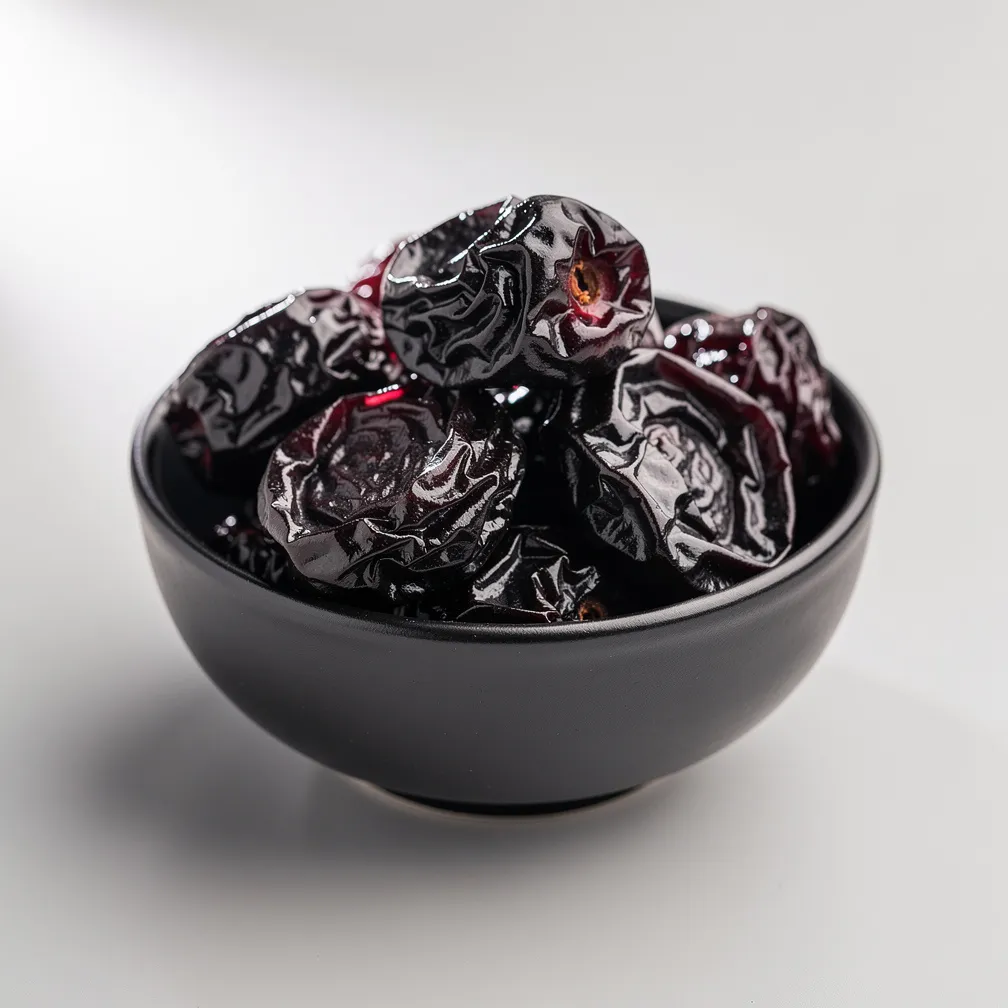
Prune is a dried plum, most commonly the dried form of European plum varieties, sold as a shelf-stable fruit used in baking, stewing, snacking and savoury dishes such as tagines and braises. Because the water has been removed, the nutritional values are considerably more concentrated than fresh plums: per 100 g, prunes provide 229 kcal, 1.6 g of protein, 0.4 g of fat, 55.4 g of carbohydrates and 5.1 g of dietary fibre, with 38.1 g coming from sugars. They are a notable source of potassium at 610 mg per 100 g, along with 66 mg of phosphorus and 50 mg of calcium. Prunes also contribute 14.9 mcg of vitamin A and 12.8 mcg of vitamin K per 100 g. Suitable for vegan, vegetarian, pescatarian, gluten-free, dairy-free, paleo and Mediterranean dietary patterns.
How many calories in prunes?
Prunes contain 229 kcal per 100 g, reflecting their concentrated sugar and carbohydrate content after drying. A single prune weighs roughly 8–10 g, putting one piece at around 18–23 kcal.
How much potassium is in prunes?
Prunes contain 610 mg of potassium per 100 g, making them one of the more potassium-dense dried fruits available. That figure is notably higher than fresh plums, simply because drying concentrates all nutrients.
Are prunes suitable for a vegan diet?
Yes, prunes are entirely plant-based and appear on the vegan, vegetarian and paleo compatible diets list. They are also gluten-free and dairy-free, so they fit a wide range of dietary patterns.
Diets
Get Vnutri
Log meals, track daily totals, save favorites. Free on iOS and Android.
Glycemic Index
approximateMacros · per 100 g
| Macros | Amount |
|---|---|
| Calories | 229 kcal |
| Protein | 1.6 g |
| Fat | 0.40 g |
| Carbs | 55.4 g |
| Sugars | 38.1 g |
| Fiber | 5.1 g |
| Starch | 0.35 g |
| Fats breakdown | Amount |
|---|---|
| Saturated | 0.16 g |
| Monounsaturated | 0.14 g |
| Polyunsaturated | 0.050 g |
| Trans | 0 g |
| Omega-3 | 0.030 g |
| Omega-6 | 0.060 g |
| Cholesterol | 0 mg |
| Minerals | Amount |
|---|---|
| Calcium | 50.0 mg |
| Iron | 0.38 mg |
| Magnesium | 30.0 mg |
| Phosphorus | 66.0 mg |
| Potassium | 610 mg |
| Sodium | 5.0 mg |
| Zinc | 0.28 mg |
| Copper | 0.23 mg |
| Manganese | 0.25 mg |
| Selenium | 20.0 mcg |
| Iodine | 0.80 mcg |
| Vitamins | Amount |
|---|---|
| Vitamin A | 14.9 mcg |
| Retinol | 0 mcg |
| Vitamin C | 0.50 mg |
| Vitamin D | 0.25 mcg |
| Vitamin E | 0.41 mg |
| Vitamin K | 12.8 mcg |
| Thiamin (B1) | 0.029 mg |
| Riboflavin (B2) | 0.034 mg |
| Niacin (B3) | 0.43 mg |
| Pantothenic acid (B5) | 0.38 mg |
| Vitamin B6 | 0.25 mg |
| Folate (B9) | 5.0 mcg |
| Vitamin B12 | 0 mcg |
Other cooking states of Prune
Dried prune (241 kcal).