Vegemite vs Marmite on Toast: Sodium, Iron, Calories
Vegemite on toast vs Marmite on toast per 100 g: 230 vs 255 kcal, 680 vs 820 mg sodium, 2.5 mg iron each. The Aussie vs Brit yeast-extract showdown.
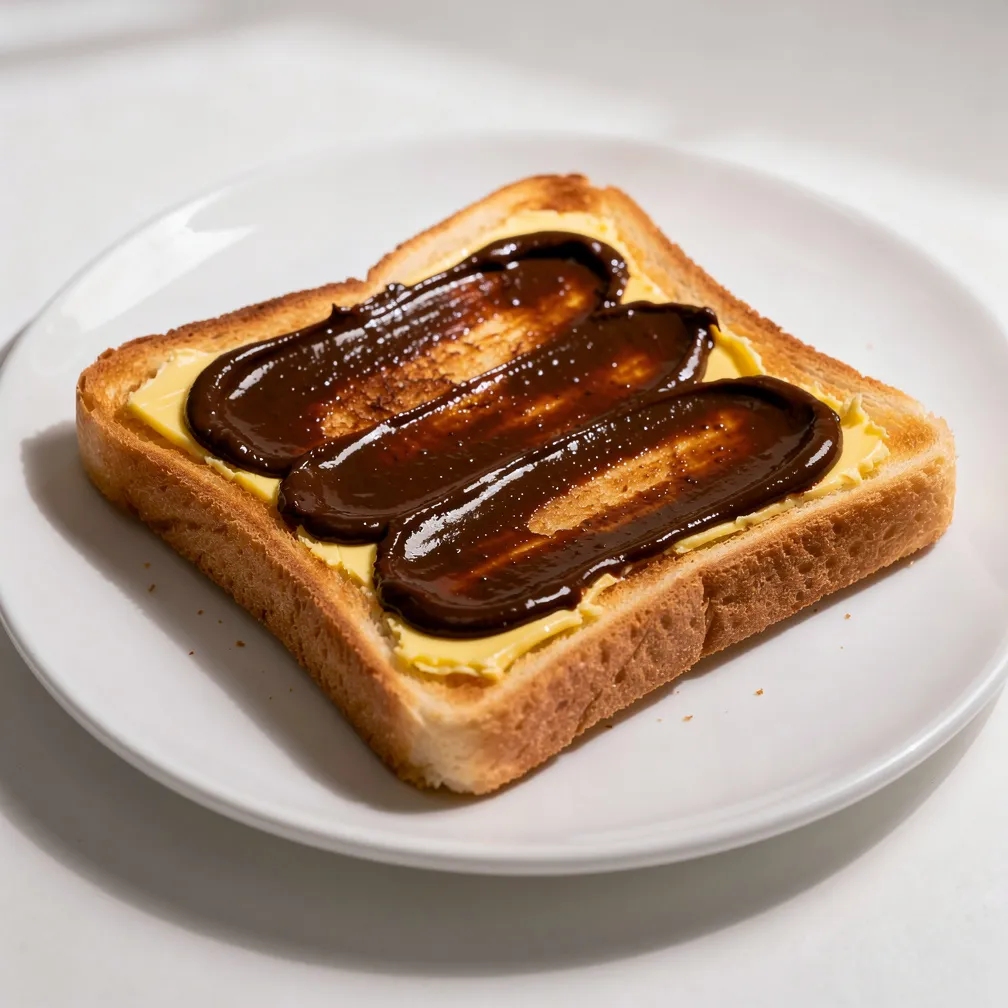
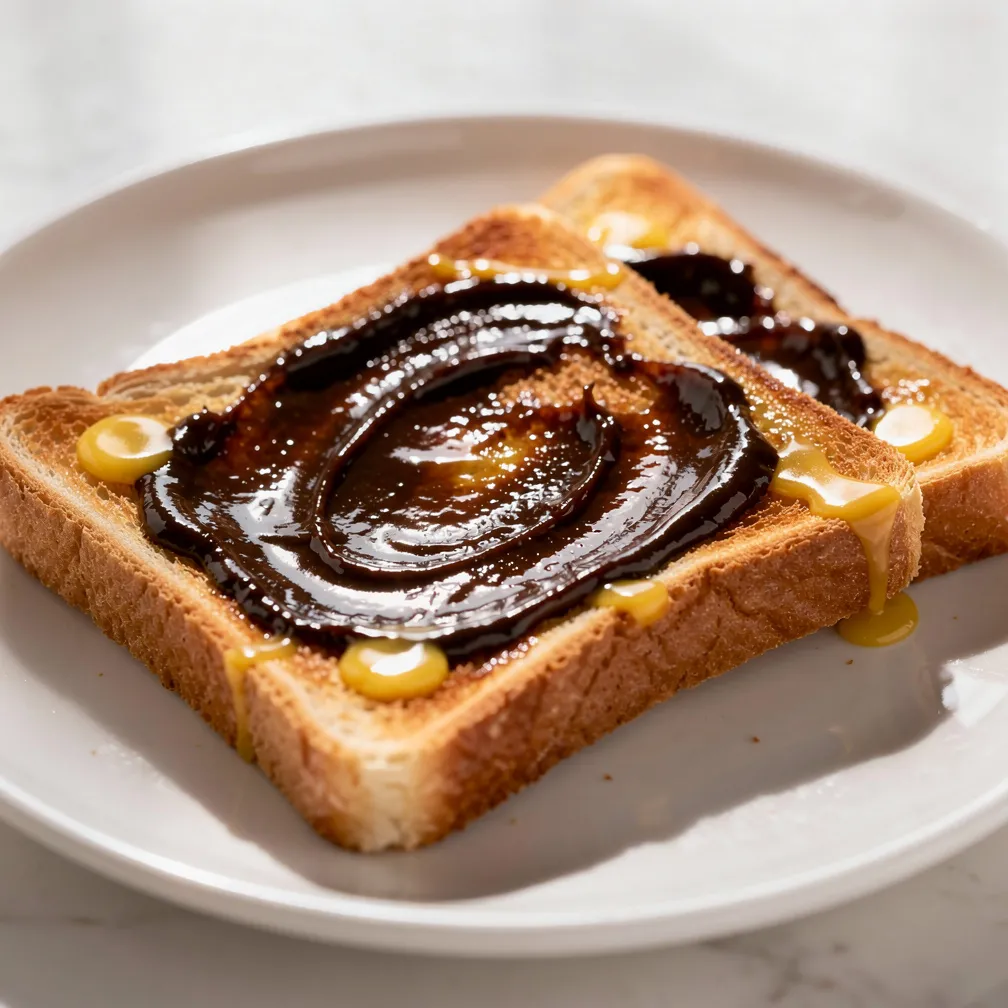
Vegemite on toast and Marmite on toast are the two great yeast-extract breakfasts of the English-speaking world — Australia's Vegemite and Britain's Marmite, both spread thin on buttered toast. They look alike, taste similar to outsiders, and provoke equally intense cultural defense from their native eaters. The nutritional comparison reveals smaller differences than the cultural debate would suggest.
Per 100 g, Vegemite on toast lands at 230 kcal with 680 mg sodium. Marmite on toast hits 255 kcal with 820 mg sodium — 21 % higher in sodium and 11 % heavier in calories. Iron lands identical at 2.5 mg per 100 g — both yeast extracts are fortified with iron and B vitamins, making each toast slice a surprising daily mineral contributor.
Quick comparison
| Per 100 g | Vegemite on toast | Marmite on toast |
|---|---|---|
| Calories | 230 kcal | 255 kcal |
| Protein | 7.5 g | 7.5 g |
| Fat | 5.5 g | 8.5 g |
| Saturated fat | 0.8 g | 4.8 g |
| Carbohydrate | 38.0 g | 37.0 g |
| Sugars | 2.5 g | 3.0 g |
| Fiber | 2.2 g | 2.0 g |
| Sodium | 680 mg | 820 mg |
| Potassium | 220 mg | 180 mg |
| Calcium | 55 mg | 80 mg |
| Iron | 2.5 mg | 2.5 mg |
Macros and calories
The 25 kcal-per-100 g gap is fat-driven. Marmite on toast carries 8.5 g fat per 100 g vs Vegemite's 5.5 — the difference is structural. British Marmite is traditionally eaten with a thick layer of butter on the toast underneath; Australian Vegemite culture uses a thinner butter layer with a thicker Vegemite spread. Same toast, different fat-and-yeast-extract ratio.
Saturated fat tells the same story sharply: Marmite on toast at 4.8 g vs Vegemite at 0.8 g per 100 g — six times the saturated fat. This is entirely the butter. Strip the butter (or use the Vegemite-only version with no butter), and both dishes converge on minimal saturated fat.
Protein is identical at 7.5 g per 100 g, from the toast and the yeast extract. Both yeast extracts deliver 6–8 % protein by weight; the toast contributes the rest.
Vitamins and minerals
Iron at 2.5 mg per 100 g in both dishes is the headline. A two-slice serving (~80 g of toast + spread) delivers 2 mg iron — about 11 % of an adult's daily target. Both Vegemite and Marmite are fortified with B vitamins (B1, B2, B3, B12, folate). The B12 fortification is especially valuable for vegetarian eaters who otherwise struggle to hit B12 targets from plant-based diets.
Vegemite edges potassium (220 vs 180 mg per 100 g) — yeast extract is potassium-rich and Vegemite uses a slightly higher concentration than UK Marmite. Marmite wins calcium (80 vs 55 mg) because of the butter layer.
For vegetarian or vegan eaters: both products are vegan-compatible (no animal ingredients). Marmite is the British answer; Vegemite is the Australian answer; both contribute meaningful daily B12.
Sodium: the structural limitation
Yeast extracts are concentrated salt-and-umami pastes. Vegemite is roughly 4 % sodium by weight; Marmite is roughly 3.5 % sodium. But Marmite on toast carries higher total sodium because British toast preparation uses salted butter and often slightly thicker spread layers.
A two-slice Vegemite-on-toast serving (~80 g total) delivers ~540 mg sodium — 27 % of the WHO daily limit. The same serving of Marmite on toast = ~660 mg sodium, 33 % daily limit.
Both are at the moderate-high end of breakfast sodium. For comparison, a single rasher of bacon delivers ~190 mg sodium. Yeast-extract toast is roughly equivalent to one rasher of bacon for sodium load.
Flavor and cultural identity
Vegemite is darker, sharper, and more bitter. The flavor profile leans heavily umami with sour-bitter undertones. Australians eat it from infancy and the taste pattern is hard-wired into the national palate.
Marmite is sweeter, slightly malty, with more caramelized notes from the yeast-extract process. British eaters describe it as "love it or hate it" — Marmite's own marketing leans into this binary.
The two products are not interchangeable for native eaters. Substituting one for the other produces immediate visible rejection. For non-native eaters, both taste roughly the same — intensely salty, deeply savory, an acquired adult flavor.
Diet compatibility
| Diet | Vegemite on toast | Marmite on toast |
|---|---|---|
| Vegan | Borderline (butter) | Borderline (butter) |
| Vegetarian | Yes | Yes |
| Gluten-free | No (wheat toast) | No (wheat toast) |
| Dairy-free | Borderline (butter) | Borderline (butter) |
| Paleo | No | No |
| Mediterranean | Borderline | Borderline |
| Keto | No (38 g carbs) | No (37 g carbs) |
| Low-FODMAP | Borderline | Borderline |
Both yeast extracts themselves are vegan, gluten-free (most versions), and low-allergen. The toast underneath is the dietary constraint. Gluten-free toast versions of either work without flavor compromise.
When to choose Vegemite on toast
- 17 % less sodium per 100 g — meaningfully friendlier for blood pressure.
- 6× less saturated fat per 100 g (with thinner butter tradition).
- 10 % less calories per 100 g.
- 22 % more potassium.
- 10 % more fiber (2.2 vs 2 g).
- Distinct Aussie flavor profile if you grew up with it.
When to choose Marmite on toast
- 45 % more calcium per 100 g from butter dairy.
- Slightly higher carbohydrate (denser wheat toast tradition).
- Sweeter, more accessible flavor for non-native eaters.
- British cultural classic — pairs with strong English Breakfast tea.
- Same iron and protein delivery as Vegemite.
- Easier to find outside its home country.
Practical pairings
Both yeast-extract toasts pair best with strong black tea — the tannic bitterness balances the yeast-extract umami. Coffee works similarly. Avoid orange juice or other sugar-heavy beverages; the sugar-and-salt combination creates an unfortunate flavor clash.
For protein density, add a poached or fried egg on top — pushes the meal from 230–255 kcal to 350–400 kcal and adds 7–8 g protein. The combination is satisfying through to lunch.
For a balanced breakfast with vegetable matter, pair the toast with sliced tomato or avocado (Aussie style). Avocado adds 50 kcal per quarter but contributes fiber, potassium, and monounsaturated fat that the toast lacks.
For weekly Anglo-Aussie breakfast eating: alternate between the two as variation on a yeast-extract breakfast theme. Either delivers a meaningful B12 and iron boost, plus the kind of intensely savory wake-up that sweeter breakfasts can't match.