Stilton vs Roquefort AOP: Blue Cheese Sodium and Calcium
Stilton vs Roquefort AOP per 100 g: 395 vs 369 kcal, 1100 vs 1800 mg sodium, 320 vs 530 mg calcium. UK cow's milk blue vs French sheep's milk blue.
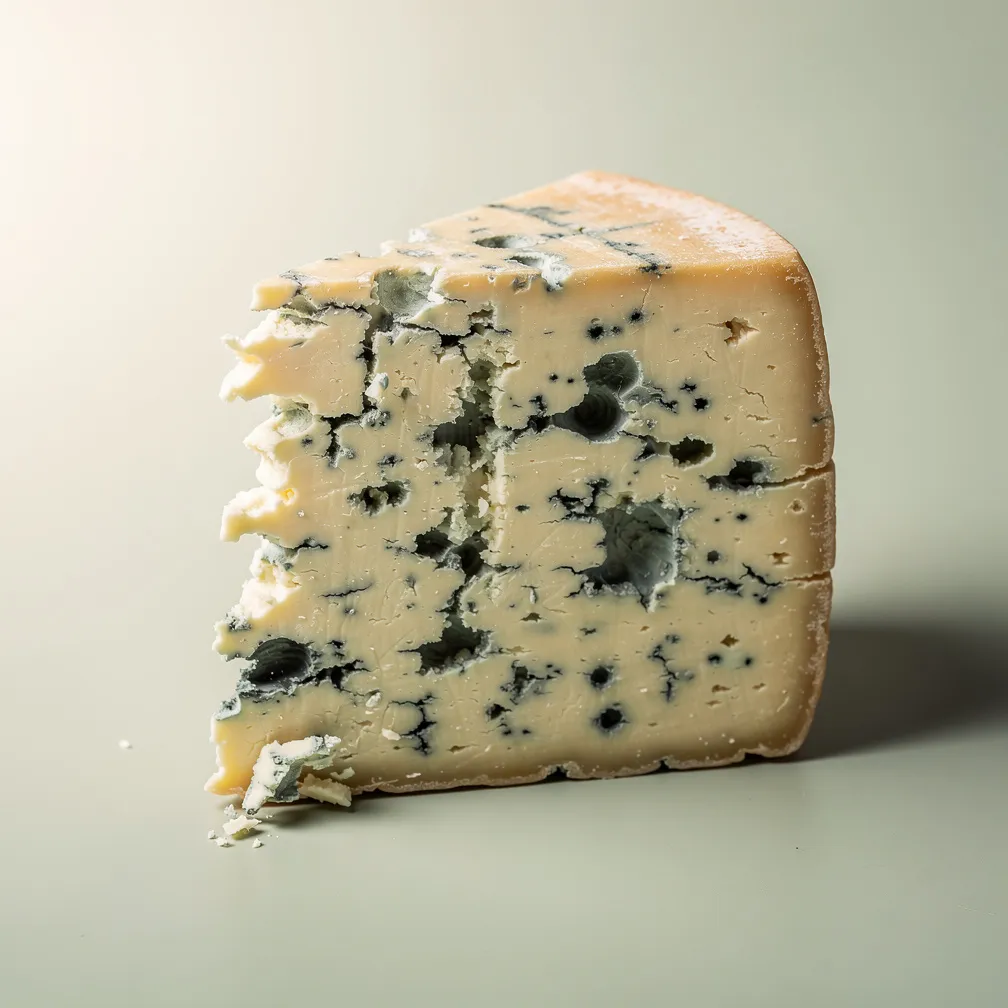
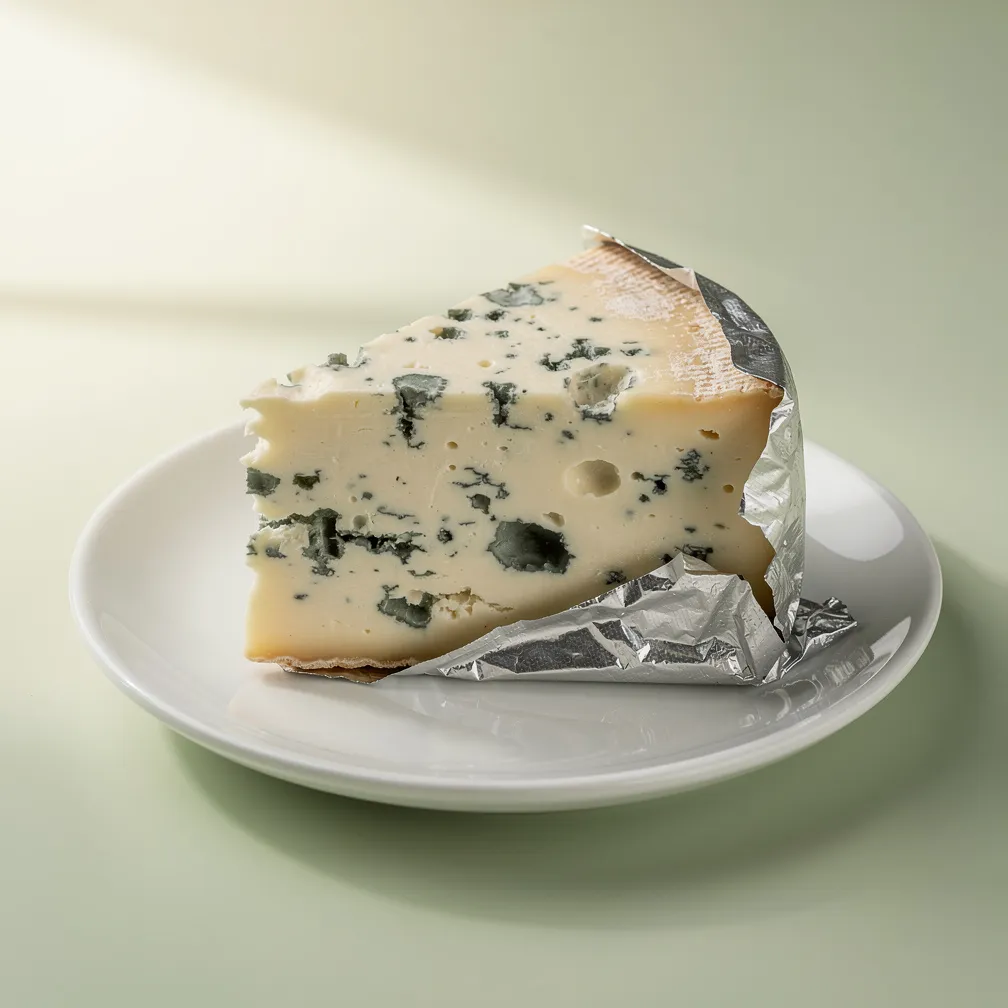
Stilton and Roquefort AOP are the two most famous blue cheeses in Western cuisine — Britain's cow's milk blue and France's sheep's milk blue, both protected designations of origin. The nutritional comparison reveals a much sharper contrast than the textural similarity suggests. Per 100 g, Stilton lands at 395 kcal with 1,100 mg of sodium and 320 mg of calcium. Roquefort hits 369 kcal — slightly lighter — but with a staggering 1,800 mg of sodium and 530 mg of calcium.
The sodium gap is the cardiovascular flag. Roquefort carries 64 % more salt per gram than Stilton, which itself is already one of the saltiest cheeses in the British catalog. This isn't a defect — it's structural. Roquefort is aged in the Combalou caves with salt-loving Penicillium roqueforti, and the salt is essential to both flavor and food safety in the traditional 90+ day aging process.
Quick comparison
| Per 100 g | Stilton | Roquefort AOP |
|---|---|---|
| Calories | 395 kcal | 369 kcal |
| Protein | 23.5 g | 22.0 g |
| Fat | 33.0 g | 31.0 g |
| Saturated fat | 20.5 g | 20.0 g |
| Carbohydrate | 0.5 g | 0.5 g |
| Sugars | 0.1 g | 0.5 g |
| Fiber | 0.0 g | 0.0 g |
| Sodium | 1100 mg | 1800 mg |
| Potassium | 130 mg | 110 mg |
| Calcium | 320 mg | 530 mg |
| Iron | 0.4 mg | 0.5 mg |
Macros and calories
A 30 g cheese-board portion: Stilton = 119 kcal, Roquefort = 111 kcal. The dishes converge at typical serving size; both deliver 6.6–7 g of protein per piece.
Fat and saturated fat are functionally identical (33 vs 31 g total, 20.5 vs 20 g saturated). Both are full-fat aged cheeses; neither is friendly on a cardiovascular saturated-fat budget. A 30 g portion of either delivers 6 g of saturated fat — about a quarter of the WHO daily allowance.
Carbohydrate is essentially zero in both. Aging breaks down the lactose. Both fit keto and low-carb plans freely.
Vitamins and minerals
Calcium favors Roquefort by a wide margin (530 vs 320 mg per 100 g). That's the sheep's milk doing the work — sheep's milk is naturally higher in calcium than cow's milk, and the long aging concentrates the mineral further. A 30 g serving of Roquefort delivers 159 mg calcium, vs Stilton's 96 mg.
The other minerals are close. Stilton edges potassium (130 vs 110 mg), Roquefort edges iron (0.5 vs 0.4 mg) and sugars (0.5 vs 0.1 g — slight residual milk sugars from sheep's milk).
Sodium: the big story
The 1,800 mg sodium per 100 g of Roquefort is one of the highest sodium concentrations of any food in the human diet. Anchovies, capers, and salt cod sit nearby. A 30 g serving = 540 mg sodium — 27 % of the WHO daily limit in a single piece of cheese.
Stilton at 1,100 mg per 100 g is 39 % less. A 30 g portion = 330 mg sodium, ~16 % daily limit. Still high, but workable in a moderate-sodium daily-eating pattern.
For anyone managing hypertension, kidney conditions, or following the DASH diet, Roquefort is essentially off the menu. Stilton can fit a once-a-week cheese-board pattern. For occasional indulgence at small portion sizes, both work; for daily eating, neither.
Sheep's milk vs cow's milk
The most fundamental difference between these blues is the source milk. Stilton uses pasteurized cow's milk; Roquefort uses raw sheep's milk from local Lacaune breeds. Sheep's milk has different fatty-acid composition (more short-chain fatty acids — caproic, caprylic, capric — which give Roquefort its tang) and more bioavailable calcium.
Lactose-sensitive eaters often tolerate Roquefort better than cow's milk blues because sheep's milk has slightly different lactose chemistry; both are aged enough that lactose is essentially absent.
For flavor: Roquefort is sharper, gamier, more pungent. Stilton is sweeter, creamier, more umami. Side-by-side tastings consistently show Roquefort as the more polarizing — people love it or refuse a second bite.
Diet compatibility
| Diet | Stilton | Roquefort AOP |
|---|---|---|
| Vegan | No | No |
| Vegetarian | Yes* | No (animal rennet) |
| Gluten-free | Yes | Yes |
| Dairy-free | No | No |
| Paleo | Borderline | Borderline |
| Mediterranean | No (high sodium) | No (high sodium) |
| Keto | Yes (0.5 g carbs) | Yes (0.5 g carbs) |
| Low-FODMAP | Yes (aged) | Yes (aged) |
*Stilton's vegetarian status depends on rennet source — modern vegetable-rennet versions exist and are labeled. Roquefort AOP is traditionally made with animal rennet only, putting it outside strict vegetarian compatibility.
Both fit keto and low-FODMAP plans. Neither suits Mediterranean or DASH eating patterns because of sodium levels.
When to choose Stilton
- 39 % less sodium per 100 g — meaningfully friendlier on blood pressure.
- More potassium (130 vs 110 mg per 100 g).
- Higher protein (23.5 vs 22 g).
- Vegetarian-compatible versions widely available.
- Sweeter, milder flavor — accessible for cheese-skeptical diners.
- Classic British Christmas tradition — Stilton with port at the holiday table.
When to choose Roquefort AOP
- 66 % more calcium per 100 g — substantial dairy mineral contribution.
- Slightly lower calories per 100 g.
- Distinct sheep's milk character cannot be matched by any cow's-milk blue.
- Often better tolerated by mild cow's-milk-sensitive eaters.
- Traditional pairing with sweet Sauternes wine — a legendary food-and-wine match.
- Foundational ingredient in classic French cooking — Roquefort sauce, Roquefort butter.
Practical pairings
Stilton pairs with port (the classic British combination), pears, walnuts, and oat cakes. The sweetness of port cuts the saltiness and complements the umami. A 30 g portion with a small glass of port = 220 kcal cheese-and-wine event.
Roquefort pairs with Sauternes (the canonical French match), figs, honey, walnuts, and rustic sourdough. As a sauce base for steak, Roquefort delivers maximum flavor from a small ingredient weight; a 20 g lump dissolved in cream is enough to coat 4 portions.
For everyday eating, neither cheese is daily food because of the sodium. For occasion eating, both are at the top of any blue-cheese list. A cheese board with both, 20 g each, plus other less salty cheeses (cheddar, brie) for balance, is a sensible structure.