Southern Fried Chicken vs Chicken and Waffles: Protein, Carbs, Calories
Southern fried chicken vs chicken and waffles per 100 g: 310 vs 295 kcal, 22 vs 14.5 g protein, twice the carbs from the waffle. Which fits your plate.
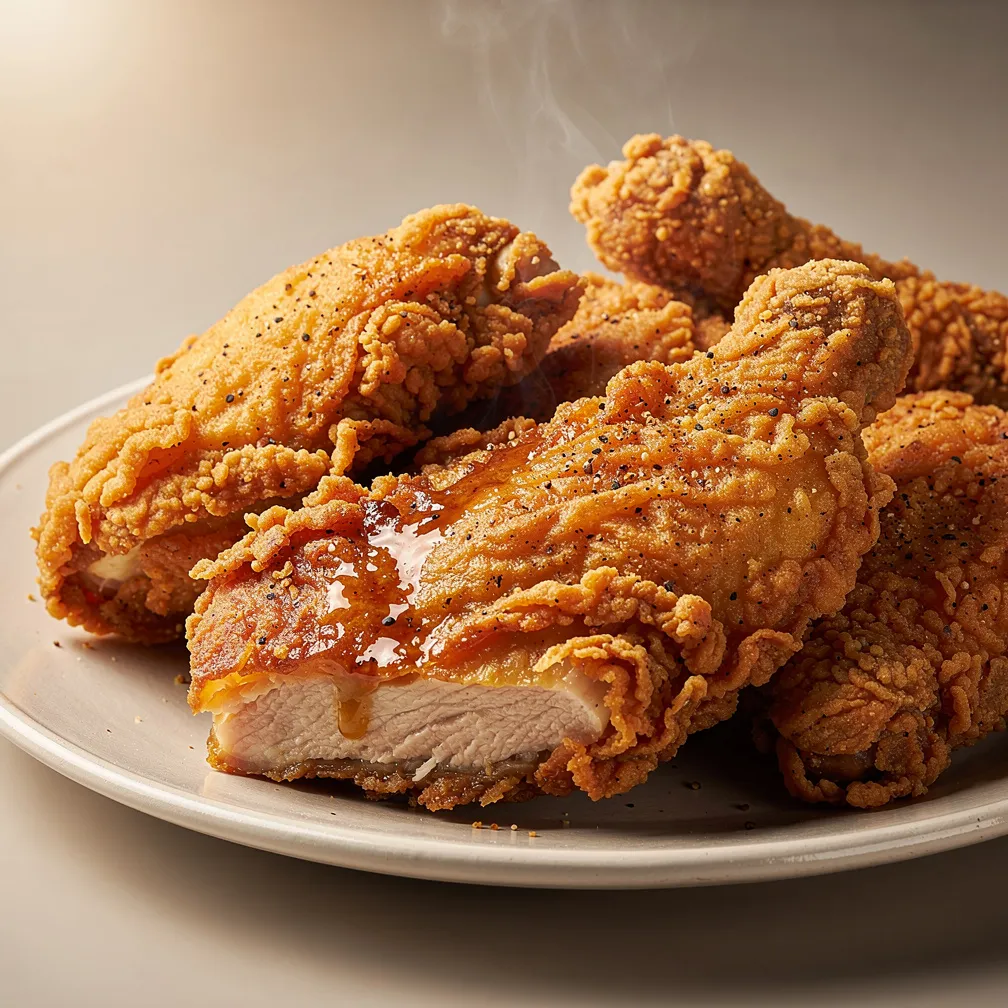
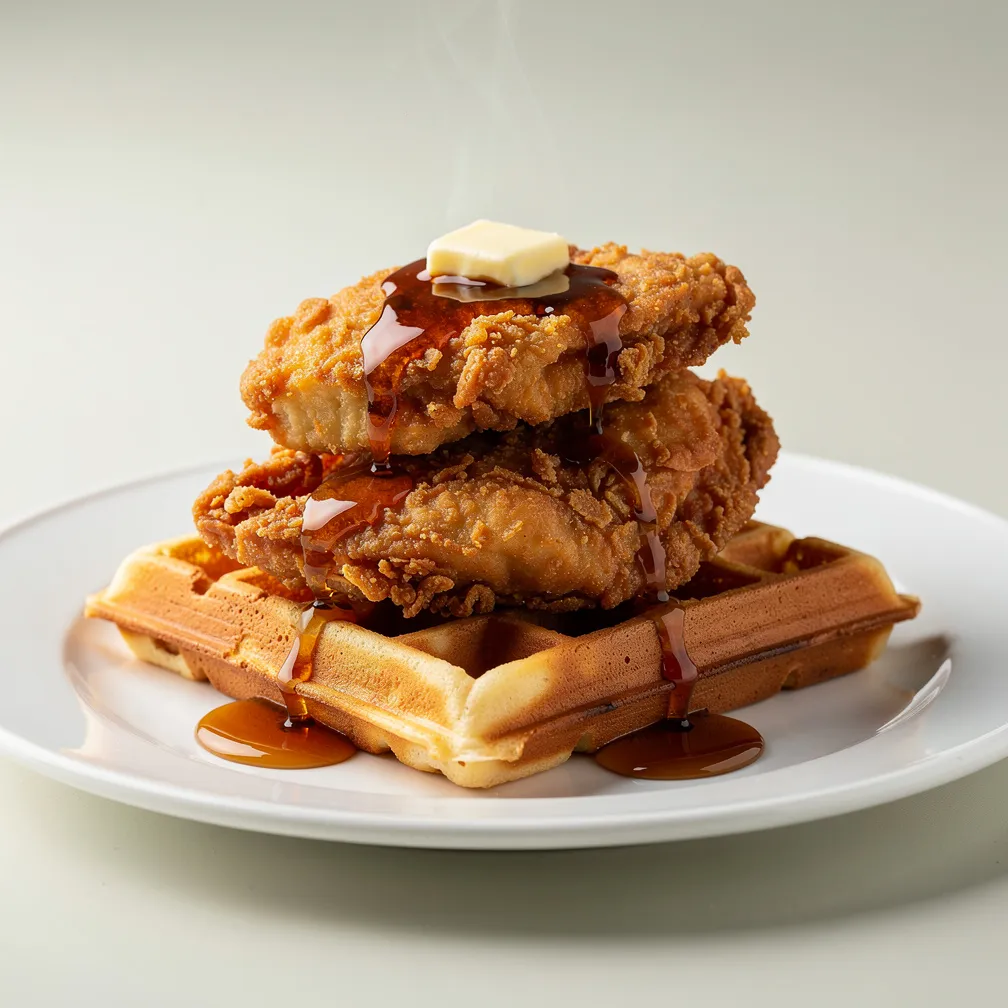
Southern fried chicken is a protein course; chicken and waffles is a plate. That single framing explains every nutritional gap between them. Per 100 g, calories are almost identical — 310 vs 295 kcal — but the macro split is completely different: fried chicken sits at 22 g of protein and 14 g of carbs, while the waffle plate carries 14.5 g protein and 29 g carbs, with maple syrup pushing free sugars to 8.5 g.
Brunch culture sells the combo as one dish; the body reads it as two. This comparison shows how the waffle and syrup transform a high-protein piece of meat into a sugar-leaning meal, and when each one earns its place.
Quick comparison
| Per 100 g | Southern fried chicken | Chicken and waffles |
|---|---|---|
| Calories | 310 kcal | 295 kcal |
| Protein | 22.0 g | 14.5 g |
| Fat | 18.0 g | 14.0 g |
| Saturated fat | 4.5 g | 4.0 g |
| Carbohydrate | 14.0 g | 29.0 g |
| Sugars | 0.5 g | 8.5 g |
| Fiber | 0.6 g | 0.8 g |
| Sodium | 520 mg | 480 mg |
| Potassium | 240 mg | 200 mg |
| Calcium | 40 mg | 80 mg |
| Iron | 1.4 mg | 1.5 mg |
Macros and calories
The calorie split looks close, but the protein gap is the headline. A 200 g portion of fried chicken delivers around 44 g of protein — a complete meal's worth on its own. The same 200 g across a waffle plate delivers 29 g, with the rest of the calories coming from refined wheat flour and syrup. For anyone tracking protein per dollar or per calorie, the chicken alone wins by a wide margin.
Carbohydrate density doubles on the waffle plate (29 g vs 14 g per 100 g) because the waffle is the carrier. Most of the carbs in plain fried chicken come from the seasoned flour dredge — 14 g is closer to a side of bread than a true starch base. Add maple syrup or honey on top and you push the combo plate's sugar content from ~3 g (waffle alone) to the 8 g range seen here.
Fat sits roughly equal — 14–18 g per 100 g — because both dishes rely on a deep-frying step. Saturated fat is the metric that really matters for cardiovascular risk, and at 4–4.5 g per 100 g, both land in moderate territory.
Vitamins and minerals
Fried chicken contributes more potassium (240 mg vs 200 mg) and a touch more iron, both from the meat itself. Chicken and waffles carries more calcium — 80 mg vs 40 mg — because the waffle batter includes milk and sometimes buttermilk. Neither dish is a meaningful source of vitamin C or A, and the breading adds little beyond carbs and salt.
The sodium gap (520 vs 480 mg per 100 g) reflects the seasoned dredge and brining step on the chicken. A typical 250 g entrée of fried chicken pushes sodium past 1,300 mg — more than half the WHO daily limit — before any gravy or sauce.
Sugars and brunch energy
This is the cleanest contrast between the two. Fried chicken at 0.5 g sugar per 100 g is essentially zero. Chicken and waffles at 8.5 g lands closer to a glazed pastry once the syrup is on the plate. Net carbs land around 13 g for fried chicken vs 28 g for the combo — a difference of two slices of bread per serving.
The combo is built for a slow weekend brunch where the sugar lift is part of the experience. Eat it at 10 a.m. with coffee and the morning runs fine; eat it before a desk shift and the post-meal glucose-then-crash arc will hit hard. The chicken alone is steady fuel.
Diet compatibility
| Diet | Southern fried chicken | Chicken and waffles |
|---|---|---|
| Vegan | No | No |
| Vegetarian | No | No |
| Gluten-free | No (flour dredge) | No (waffle batter) |
| Dairy-free | Borderline (buttermilk) | No (milk in batter) |
| Paleo | No | No |
| Mediterranean | No | No |
| Keto | No (14 g carbs) | No (29 g carbs) |
| Low-FODMAP | Borderline | No (wheat) |
Both dishes use wheat flour and dairy, which kills compatibility with gluten-free, dairy-free, and Paleo plans. Air-fried or oven-baked variants of Southern fried chicken with almond flour and a buttermilk substitute can fit a keto bracket; the waffle version cannot without a full recipe overhaul.
When to choose Southern fried chicken
- Pure protein density — 22 g per 100 g, the highest you'll get from a typical Southern entrée.
- No added sugar, so it pairs cleanly with vegetable sides without spiking glucose.
- Reheats well — leftover thighs hold texture and flavor for two days in a refrigerator.
- Works as a transportable lunch without the syrup-soaked mess of the waffle version.
- Cheaper per gram of protein than the brunch plate by 30–40 %.
When to choose chicken and waffles
- Brunch-format meal — syrup, carbs, and protein in one plate cover a 4-hour stretch.
- Higher calcium (80 mg vs 40 mg) from the dairy in the batter.
- Sugar boost helps after long endurance training or before a physical shift.
- Sweet-and-savory profile beats a single-note plate when appetite is already tired.
- Family-friendly format — the waffle softens the heat of any cayenne in the chicken dredge.
Practical pairings
Fried chicken pairs well with collard greens, slaw, or pickles to add fiber and vitamin C the chicken lacks. The waffle plate already carries enough carbs; the right side is a sharp salad or fresh fruit, not more starch. If you want the waffle experience but a tighter macro profile, halve the syrup and add a poached egg — protein jumps 8 g, sugar drops 4 g.
For sustained energy without sugar drop-off, fried chicken with a green side keeps blood glucose stable past three hours. The waffle combo is comfort food in the literal calorie-and-sugar-delivery sense; treat it as a weekend ritual, not a weekday default.