Scotch Egg vs Welsh Rarebit: Protein, Fat, Calcium
Scotch egg vs Welsh rarebit per 100 g: 240 vs 290 kcal, 14 vs 13.5 g protein, 45 vs 280 mg calcium. Pub snack protein bomb vs cheese toast.
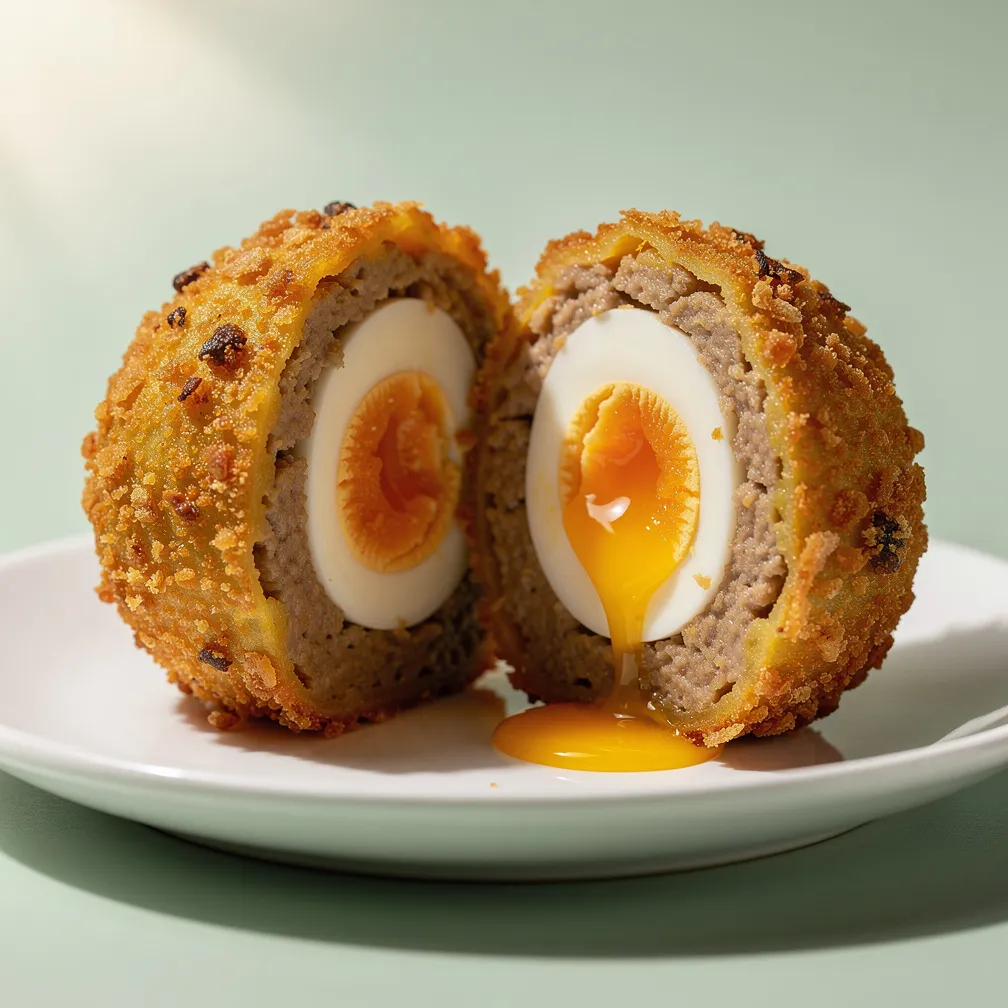
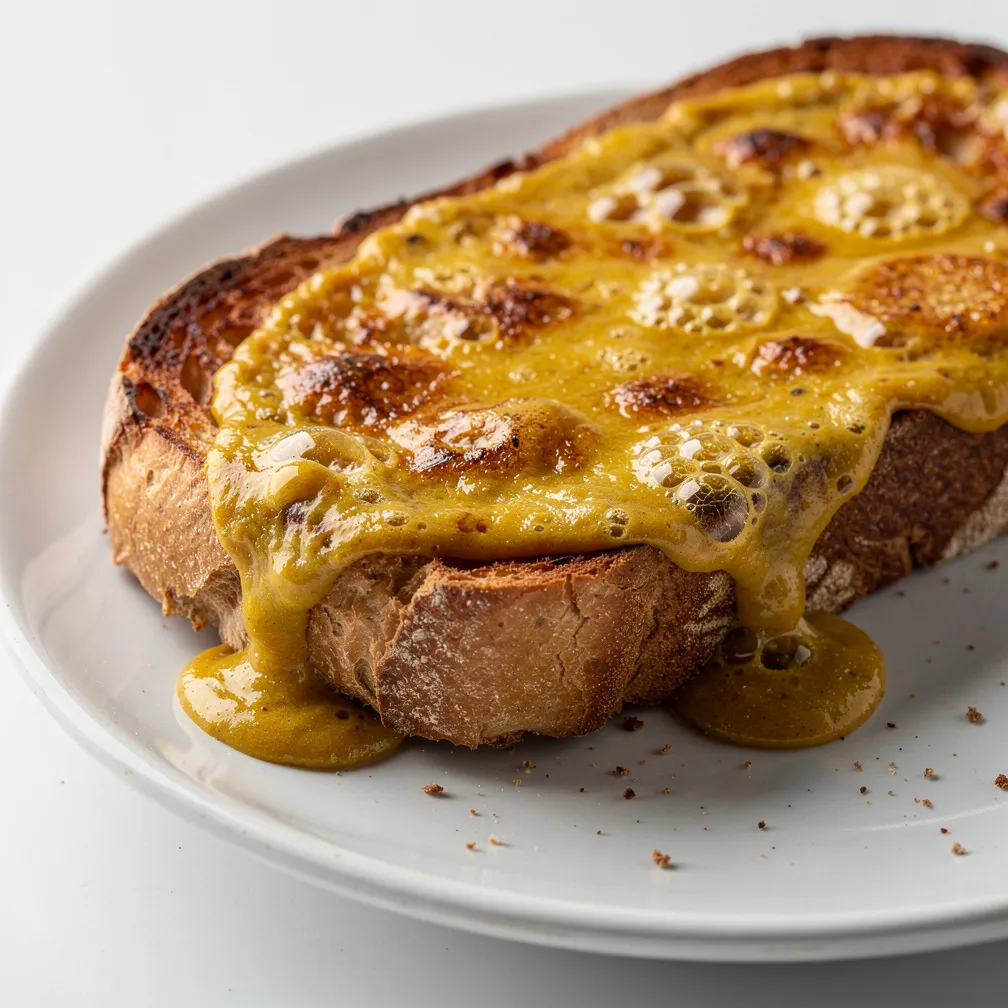
The scotch egg and Welsh rarebit are two icons of British pub-and-tea food, but nutritionally they're chalk and cheese. Per 100 g, the scotch egg lands at 240 kcal and 14 g of protein — among the most protein-dense pub snacks available. Welsh rarebit at 290 kcal carries 13.5 g protein and a massive 280 mg of calcium per 100 g, because it's essentially cheese-on-toast in its most concentrated form.
The structural difference: scotch egg is a hard-boiled egg wrapped in sausage meat and deep-fried. Welsh rarebit is a thick cheese sauce (cheddar + mustard + beer + Worcestershire) poured over toast and grilled until bubbling. Same calorie ballpark, completely different macro and micronutrient profile.
Quick comparison
| Per 100 g | Scotch egg | Welsh rarebit |
|---|---|---|
| Calories | 240 kcal | 290 kcal |
| Protein | 14.0 g | 13.5 g |
| Fat | 16.0 g | 16.5 g |
| Saturated fat | 5.0 g | 9.5 g |
| Carbohydrate | 10.0 g | 22.0 g |
| Sugars | 1.0 g | 2.5 g |
| Fiber | 0.5 g | 1.2 g |
| Sodium | 480 mg | 620 mg |
| Potassium | 210 mg | 175 mg |
| Calcium | 45 mg | 280 mg |
| Iron | 1.8 mg | 1.8 mg |
| Vitamin C | 1.0 mg | 0.5 mg |
| Glycemic index | 45 | 60 |
Macros and calories
A typical 120 g scotch egg = 288 kcal. A typical 150 g Welsh rarebit = 435 kcal. The rarebit is the bigger calorie commitment despite similar density, because portions are larger when served on toast.
Protein is essentially tied per 100 g (14 vs 13.5 g), but the protein quality differs. Scotch egg combines complete protein from egg with complete protein from pork sausage — both score high on PDCAAS. Welsh rarebit's protein is cheese-based, also complete, but typically lower in total quantity per real-world portion.
The saturated fat split is the headline. Welsh rarebit at 9.5 g per 100 g vs scotch egg's 5 g — nearly double. The rarebit is built on aged cheddar and butter; both are dense saturated fat sources. A 150 g rarebit portion delivers 14 g sat fat — more than half the WHO daily allowance.
Carbohydrate is the other meaningful split. Scotch egg's 10 g per 100 g comes from the breadcrumb coating; rarebit's 22 g comes from the toast underneath. Eat the rarebit cheese without the toast and the carbs drop near zero.
Vitamins and minerals
Calcium is the most lopsided number on this page. Welsh rarebit delivers 280 mg per 100 g vs scotch egg's 45 mg — six times as much, in usable dairy form. A single 150 g rarebit serving delivers ~420 mg calcium, or 42 % of an adult's daily target.
Iron is identical (1.8 mg per 100 g) — the egg yolk in scotch egg roughly equals the bread-and-cheese iron in rarebit.
Scotch egg edges potassium (210 vs 175 mg) thanks to egg yolk and pork. Vitamin C is essentially zero in both.
Sodium load
Welsh rarebit at 620 mg per 100 g is one of the highest-sodium pub items by composition. The cheese, the Worcestershire sauce, the salted bread, and the seasoned mustard all stack salt. A 150 g serving = 930 mg sodium, almost half the WHO daily limit.
Scotch egg at 480 mg per 100 g is high but more moderate. A 120 g serving = 576 mg sodium. The sausage and breadcrumb carry most of it.
For anyone managing blood pressure, the scotch egg is the meaningfully lower-sodium pub choice.
Diet compatibility
| Diet | Scotch egg | Welsh rarebit |
|---|---|---|
| Vegan | No | No |
| Vegetarian | No (sausage) | Yes |
| Gluten-free | No (breadcrumb) | No (toast) |
| Dairy-free | Yes | No (cheese, butter) |
| Paleo | No | No |
| Mediterranean | No | No |
| Keto | Borderline (10 g) | No (22 g carbs) |
| Low-FODMAP | Borderline | Borderline |
The scotch egg fits keto better than Welsh rarebit (10 vs 22 g carbs per 100 g). Dairy-free eaters can have the scotch egg but not the rarebit. Vegetarians can have the rarebit but not the scotch egg. This split makes them complementary on a mixed-diet pub board.
When to choose scotch egg
- Half the saturated fat (5 vs 9.5 g per 100 g) — friendlier on heart health.
- 23 % less sodium per 100 g — better fit for blood-pressure care.
- More potassium (210 vs 175 mg).
- Dairy-free without modification.
- Portable hand food — picnic-ready, lunchbox-compatible.
- Combines two complete proteins (egg + pork) in a single bite.
When to choose Welsh rarebit
- 6× the calcium per 100 g — meaningful daily mineral contribution.
- Vegetarian without modification.
- Cheese-and-toast comfort that cannot be replicated elsewhere.
- More fiber per 100 g (1.2 vs 0.5 g) from the bread.
- Pairs uniquely well with ale or stout — savory cheese-beer combination.
- Excellent late-supper food when a full meal would be too heavy.
Practical pairings
Scotch egg traditionally comes with English mustard, branston pickle, or piccalilli — all near-zero calorie, all flavor-boosting. As part of a ploughman's lunch, a scotch egg with a sharp cheddar, pickles, and a chunk of bread = 600 kcal complete meal.
Welsh rarebit is the meal itself — needs only a side salad or a small soup to round out. A bowl of leek-and-potato soup before a rarebit makes a complete Welsh evening menu under 700 kcal. Beer pairing: a smooth bitter or a porter; skip lager (the carbonation fights the cheese).
For a high-protein lunch on the go, scotch egg + apple + small piece of cheese = 400 kcal, 25 g protein, complete. For a cozy weeknight supper, Welsh rarebit + green salad = comfort food at moderate calorie cost.