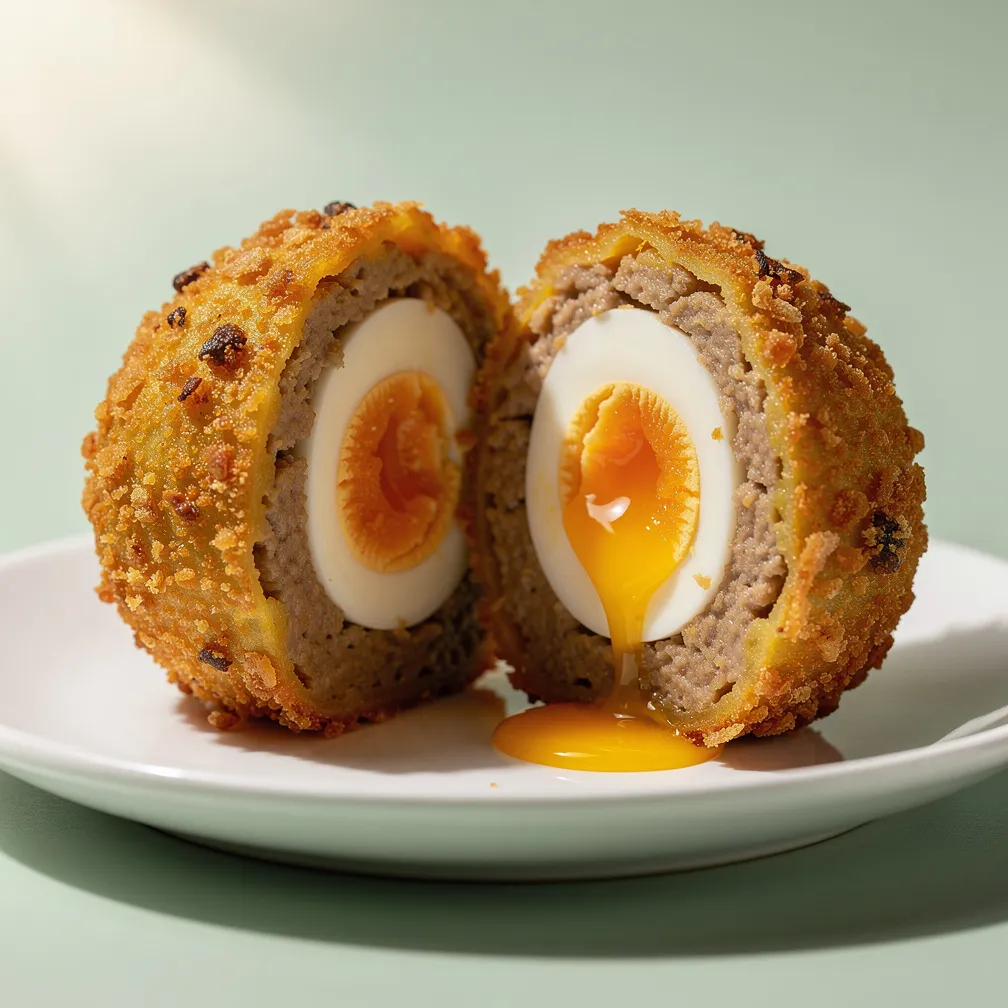
Scotch egg
| Macros | per 100 g |
|---|---|
| Calories | 240 kcal |
| Protein | 14.0 g |
| Fat | 16.0 g |
| Carbs | 10.0 g |
A scotch egg is a hard-boiled egg wrapped in seasoned sausage meat, coated in breadcrumbs, and typically deep-fried or baked — a classic British snack and picnic staple often eaten cold or at room temperature. Per 100 g, a scotch egg provides 240 kcal, 14 g of protein, 16 g of fat, and 10 g of carbohydrates, with just 0.5 g of dietary fibre and 1 g of sugars. The sodium content is notable at 480 mg per 100 g, largely from the seasoned meat and coating, while potassium comes in at 210 mg. It also contributes 65 mcg of vitamin A and 1 mcg of vitamin B12 per 100 g. No glycemic index data is available. Among common dietary patterns, scotch eggs are suitable for dairy-free diets.
How many calories in a scotch egg?
A scotch egg contains 240 kcal per 100 g. A typical whole scotch egg weighs around 120–130 g, putting a single egg at roughly 290–310 kcal.
How much sodium is in a scotch egg?
Scotch eggs contain 480 mg of sodium per 100 g, which is relatively high compared to many snack foods. This comes primarily from the seasoned sausage meat and the breadcrumb coating.
Is a scotch egg high in protein?
Scotch eggs provide 14 g of protein per 100 g, making them a reasonably protein-dense snack. The protein comes from both the egg at the centre and the surrounding sausage meat.
Diets
Get Vnutri
Log meals, track daily totals, save favorites. Free on iOS and Android.
Glycemic Index
approximateMacros · per 100 g
| Macros | Amount |
|---|---|
| Calories | 240 kcal |
| Protein | 14.0 g |
| Fat | 16.0 g |
| Carbs | 10.0 g |
| Sugars | 1.0 g |
| Fiber | 0.50 g |
| Fats breakdown | Amount |
|---|---|
| Saturated | 5.0 g |
| Monounsaturated | 7.0 g |
| Polyunsaturated | 2.5 g |
| Cholesterol | 215 mg |
| Minerals | Amount |
|---|---|
| Calcium | 45.0 mg |
| Iron | 1.8 mg |
| Potassium | 210 mg |
| Sodium | 480 mg |
| Vitamins | Amount |
|---|---|
| Vitamin A | 65.0 mcg |
| Vitamin C | 1.0 mg |
| Vitamin B12 | 1.0 mcg |