Rye Bread vs White Bread: Glycemic Index, Fiber, Nutrients Compared
Rye bread vs white bread nutrition per 100 g: calories, fiber, glycemic index, minerals, sugar, and when to pick one over the other for blood sugar or satiety.
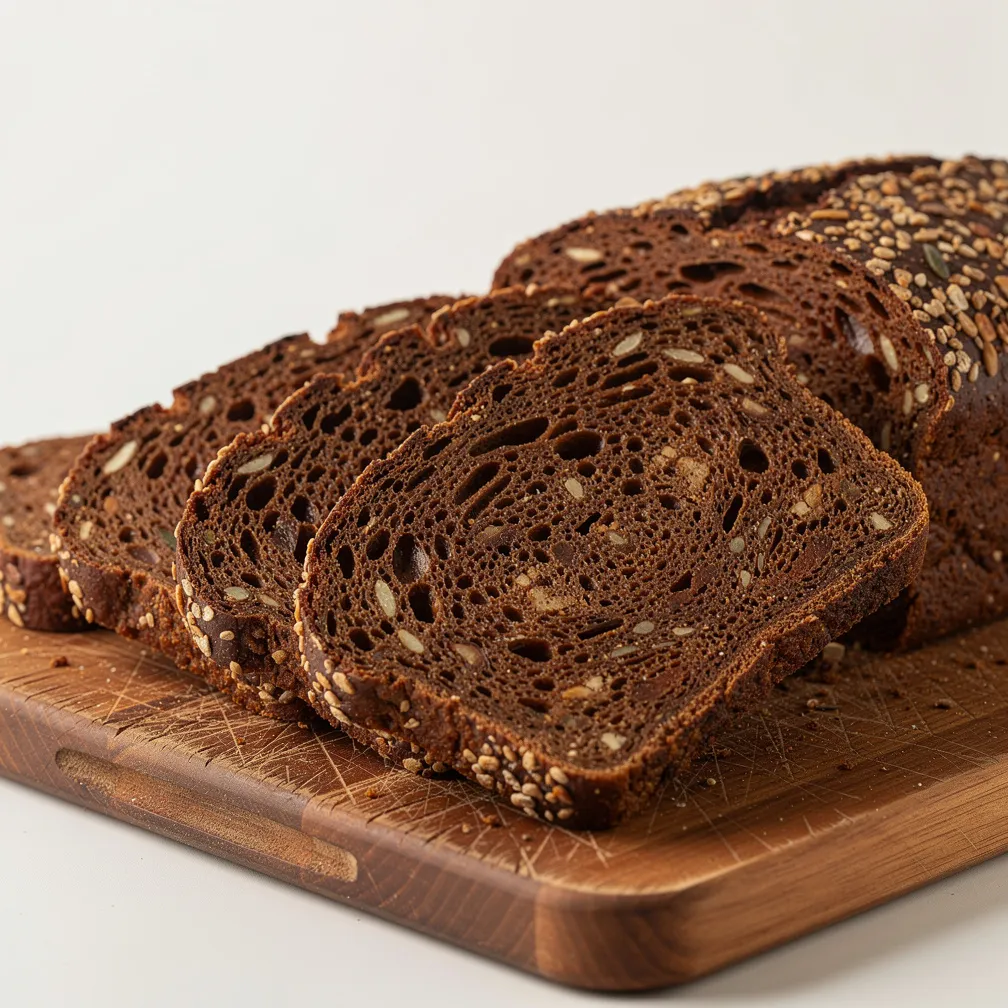
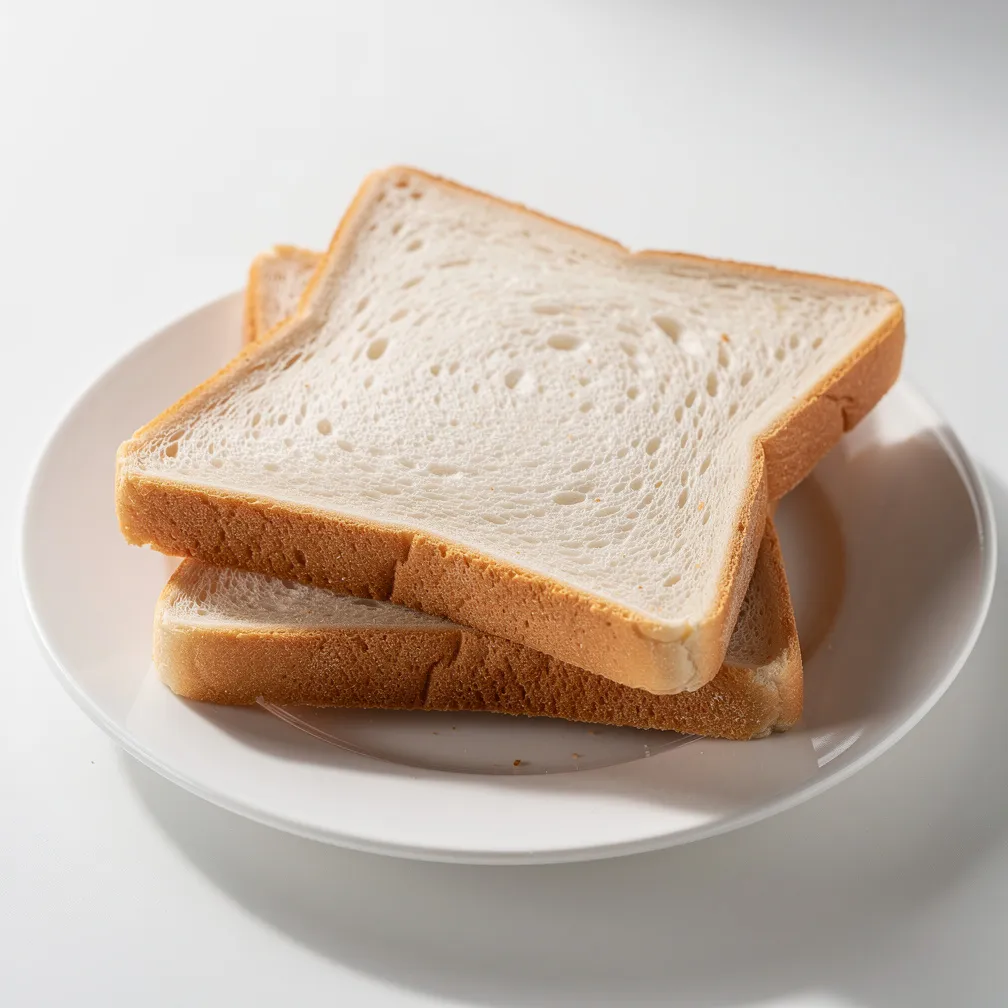
Rye bread and white bread look interchangeable in a sandwich and land within 2 kcal of each other on a label. The numbers stop converging at fiber — rye carries nearly twice as much — and at glycemic index, where rye sits at 48 (low) and white at 72 (high). That gap reshapes the post-meal blood-sugar curve more than almost any other one-for-one bread swap.
This article puts the two side by side on macros, micronutrients, glycemic index, and diet compatibility — and shows which one fits each goal.
Quick comparison
| Per 100 g | Rye bread | White bread |
|---|---|---|
| Calories | 267 kcal | 265 kcal |
| Protein | 9.1 g | 9.0 g |
| Fat | 2.7 g | 3.2 g |
| Carbohydrate | 49.4 g | 49.0 g |
| Sugars | 3.0 g | 5.0 g |
| Fiber | 4.8 g | 2.7 g |
| Iron | 2.0 mg | 3.6 mg |
| Calcium | 60 mg | 144 mg |
| Potassium | 178 mg | n/a |
| Magnesium | 39 mg | n/a |
| Glycemic index | 48 (low) | 72 (high) |
Macros and calories
Calories, protein, and total carbs are nearly identical — 267 vs 265 kcal, 9.1 vs 9.0 g protein, 49.4 vs 49.0 g carbs. The macro split looks like the same bread on paper. What's hiding inside the carb number is what matters: rye carries 4.8 g of fiber per 100 g vs white's 2.7 g, and white carries 5.0 g of sugar vs rye's 3.0 g. So while total carbs match, the fraction that hits your blood as glucose differs by close to a third.
Fat is slightly higher in commercial white bread because most recipes include added oil or fat for crumb softness; traditional rye uses none. Neither is a meaningful fat source.
Fiber and digestion
Rye carries 4.8 g of fiber per 100 g — nearly twice white bread's 2.7 g. Rye's fiber is a mix of arabinoxylans (soluble, gut-friendly), beta-glucan in smaller amounts, and insoluble bran fiber. The soluble fraction is what slows gastric emptying and flattens blood-sugar response; the insoluble fraction is what bulks the stool. Both fractions are largely absent from refined white bread.
A two-slice (60 g) rye sandwich contains around 3 g of fiber — close to 10 % of the daily recommended target. The same sandwich in white bread is 1.6 g. Over a year of daily lunches, that's a meaningful gap in total fiber intake. The fiber guide covers why most adults eat half the daily target.
For people with IBS or FODMAP sensitivity, both breads contain fructans from wheat or rye and land outside the safe list during the elimination phase. Sourdough rye is more tolerated than regular rye because the long fermentation partially breaks down the fructans — see the low-FODMAP guide.
Vitamins and minerals
The mineral story is mixed. Rye bread wins on potassium (178 mg vs negligible), magnesium (39 mg), zinc (1.0 mg), and manganese (0.8 mg) — all from the rye grain's intact bran and germ. White bread wins on calcium (144 mg vs 60 mg) and iron (3.6 mg vs 2.0 mg), but the reason is fortification — US and EU regulations mandate iron and B-vitamin enrichment of refined wheat flour, and many commercial white breads add calcium propionate as a preservative that contributes to the calcium total.
In bread that hasn't been fortified — most artisan loaves, most international markets — white bread loses on every mineral. The enrichment story is a baseline that closes the gap on paper but doesn't restore the phytochemicals (lignans, ferulic acid, polyphenols) that the bran layer carries in rye.
Rye bread also delivers meaningful folate (45 µg), niacin (2.3 mg), and thiamin (0.32 mg) per 100 g — most of which survive the bake because rye flour is typically less refined than wheat.
Glycemic index and blood sugar
Rye bread sits at GI 48 (low); white bread at GI 72 (high). The gap of 24 points is the largest in any common bread comparison and the reason rye is the default recommendation for people managing blood sugar. Glycemic load per 60 g serving (two slices) is roughly 14 for rye vs 21 for white — both meaningful, but rye's curve is markedly flatter and longer.
The mechanism is the arabinoxylan fiber and the intact starch granules in less-refined rye flour. White bread's starch has been mechanically disrupted into fine, easily-digested fragments; rye's starch sits inside cell walls and digests more slowly. Whole-grain rye (Vollkornbrot, German-style dense rye) drops the GI further into the low 40s. Sourdough fermentation drops it another 5–10 points by acidifying the dough. More context in the glycemic index guide.
Diet compatibility
| Diet | Rye bread | White bread |
|---|---|---|
| Vegan | Usually | Usually |
| Vegetarian | Yes | Yes |
| Gluten-free | No | No |
| Dairy-free | Yes | Usually (check label) |
| Paleo | No (grain) | No (grain) |
| Mediterranean | Yes | Yes |
| Keto | No (49 g carbs) | No (49 g carbs) |
| Low-FODMAP | No (fructans) | No (fructans) |
Neither fits keto (half a 100 g serving is the whole carb budget), paleo (grain), or gluten-free (both contain gluten — rye even more than wheat on a protein-percentage basis). Most commercial breads of both types are technically vegan, but check the label for milk, eggs, or butter in enriched and brioche-style white loaves. Both fit the Mediterranean diet, where dense whole-grain breads — including rye — are encouraged.
When to choose rye bread
- GI 48 vs 72 — the single largest blood-sugar advantage in any common bread swap.
- Roughly twice the fiber per 100 g, almost all of it from the intact rye grain rather than added wheat bran.
- Higher potassium, magnesium, and zinc — meaningful for a daily sandwich habit.
- Lignans in rye are linked in observational data to lower hormone-related cancer risk and improved cardiovascular markers.
- Denser crumb extends satiety — two slices fill you up where two white slices often leave you hungry within an hour.
- Pairs better with savory, fatty, fermented toppings — smoked fish, aged cheese, pickled herring, mustard.
When to choose white bread
- Faster digestion — useful before endurance training, in athletes hitting calorie targets, or for picky eaters.
- Softer crumb and milder flavor — better for kids' sandwiches, French toast, bread pudding, anything where the bread should disappear under the topping.
- More iron and calcium in fortified loaves — closes part of the mineral gap on paper.
- Easier on the gut for people with sensitive digestion, recovering from gastrointestinal illness, or following a low-residue diet.
- Universal — works with any spread, any filling, any country's sandwich tradition.
How to use them in practice
Default to rye for everyday sandwiches if blood sugar, satiety, or fiber are concerns. Look for dense, dark loaves with "whole rye" or "Vollkorn" on the label — pale rye-blends are mostly wheat with caramel coloring and GI behavior closer to white bread. Sourdough rye (long fermentation, no added yeast) is the lowest-GI bread you can buy at most bakeries.
Use white bread when texture and flavor profile demand it — a delicate French toast, a tomato sandwich in summer, kids' lunches. Toasting either bread drops the GI by a few points because retrograded starch is harder to digest; freezing and thawing has a similar small effect.
Pair both with protein and fat to flatten the glucose curve: a slice of rye with smoked salmon, cream cheese, and cucumber produces a fundamentally different blood-sugar response than a slice of white bread with jam. The pairing matters as much as the bread choice for any single meal.
How Vnutri shows both
The rye bread food page and white bread food page include the full nutrient profile, GI value, and diet compatibility tags. The grains category lists rye bread alongside other low-GI grain options, and the low-glycemic filter surfaces it alongside oats, barley, and legumes.
Frequently asked questions
Is rye bread really healthier than white bread?
For most metrics that matter — fiber, glycemic index, mineral density (in unenriched bread), polyphenols — yes. The 24-point GI gap is the most meaningful single difference and the reason rye is the default recommendation for people managing diabetes or insulin resistance. The exception is bioavailable iron and calcium in fortified white bread, which can run higher.
Does rye bread contain gluten?
Yes. Rye contains secalin, a gluten-related protein, plus a smaller amount of gliadin. It's not safe on a gluten-free diet and triggers reactions in people with celiac disease or wheat allergy. Rye is sometimes tolerated by people with non-celiac gluten sensitivity due to its different fructan and protein profile, but this varies individually.
What's the difference between rye bread and pumpernickel?
Pumpernickel is a specific kind of dense, dark, long-baked rye bread originating in Germany. It uses coarsely ground whole rye, sometimes with cracked rye berries, and bakes at low temperature for 16–24 hours, which caramelizes the natural sugars and creates the dark color. Pumpernickel is the lowest-GI bread on most charts (~41) and the densest in fiber and minerals.
Is rye bread good for weight loss?
Yes — its fiber and slower glycemic curve extend satiety, which reduces between-meal snacking. A controlled trial showed rye bread breakfasts produced lower hunger ratings up to 8 hours later compared to wheat bread. Total calorie intake still matters, but rye makes calorie restriction easier to stick to.
Can I eat rye on low-FODMAP?
Not during the elimination phase — rye is high in fructans. Sourdough rye is often tolerated because the long fermentation partially breaks down the fructans; one slice of true sourdough rye is sometimes allowed in the reintroduction phase. Test individually.
Why does white bread have more iron than rye?
US and EU regulations mandate iron, niacin, thiamin, and folic acid enrichment of refined wheat flour to replace nutrients lost during milling. Rye is typically unenriched because rye flour retains more of its native bran. Unenriched white bread (artisan loaves, traditional baguette) has substantially less iron than commercial supermarket white bread.
References
- USDA FoodData Central — Bread, rye (FDC ID: 172686).
- USDA FoodData Central — Bread, white, commercially prepared (FDC ID: 172684).
- Atkinson FS, Brand-Miller JC, Foster-Powell K. International tables of glycemic index and glycemic load values 2021. Am J Clin Nutr. 2021;114(5):1625–1632.
- Rosén LA, Östman EM, Björck IM. Effects of cereal breakfasts on postprandial glucose, appetite regulation and voluntary energy intake. Food Funct. 2011;2(8):520–529.
- Jacobs DR, Marquart L, et al. Whole-grain intake and cancer: a review of the literature. Nutr Cancer. 1998;30(2):85–96.