Pulled Pork BBQ vs Beef Brisket BBQ: Protein, Sugar, Fat
Pulled pork BBQ vs beef brisket BBQ per 100 g: 220 vs 245 kcal, 19 vs 22 g protein, 8 vs 0.5 g sugar. Which barbecue cut fits your plan.
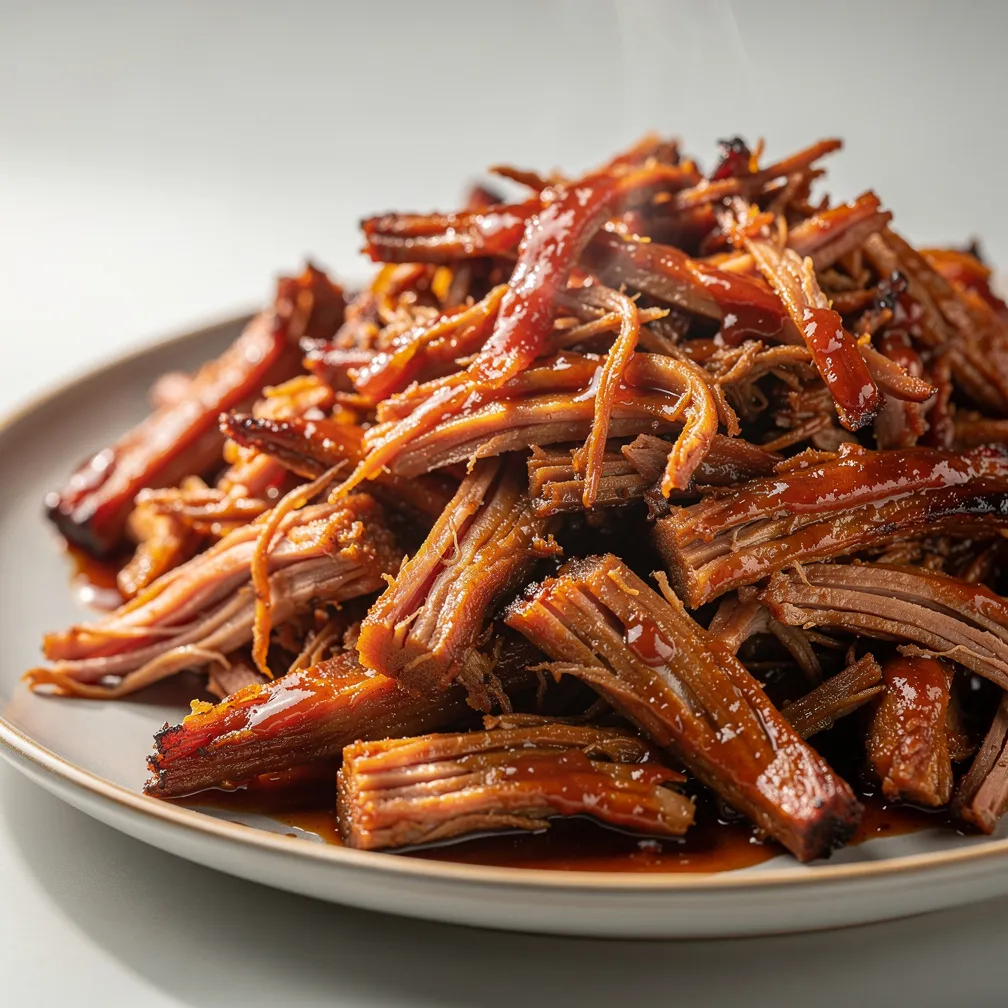
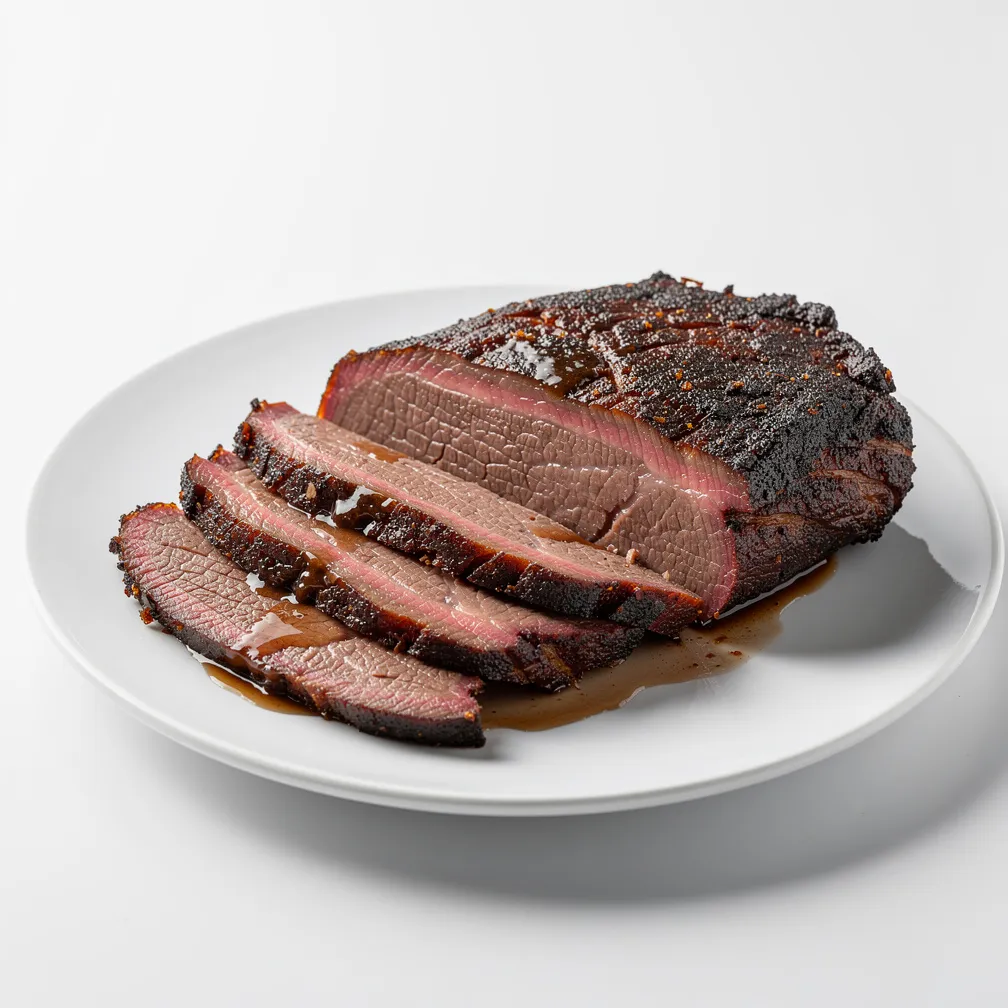
Pulled pork and beef brisket are the two pillars of American low-and-slow barbecue, and the catalog numbers reveal a sharper divide than most pitmasters admit. Per 100 g, brisket lands at 245 kcal vs pulled pork's 220, and that extra calorie load is almost entirely fat — 16 g vs 11 g. Protein density tilts beef-ward (22 g vs 19 g), but the more telling gap is in carbohydrate: pulled pork carries 10 g per 100 g, 8 g of it sugar from the sauce, while brisket sits at 1.5 g carbs, half a gram of it sugar.
That second number reframes the comparison. Pulled pork's nutritional profile is barbecue sauce as much as it is meat. Brisket — when prepared in the Central Texas style with salt-and-pepper bark and no sauce — is essentially a slow-rendered roast.
Quick comparison
| Per 100 g | Pulled pork BBQ | Beef brisket BBQ |
|---|---|---|
| Calories | 220 kcal | 245 kcal |
| Protein | 19.0 g | 22.0 g |
| Fat | 11.0 g | 16.0 g |
| Saturated fat | 3.8 g | 6.0 g |
| Carbohydrate | 10.0 g | 1.5 g |
| Sugars | 8.0 g | 0.5 g |
| Fiber | 0.3 g | 0.2 g |
| Sodium | 520 mg | 580 mg |
| Potassium | 310 mg | 340 mg |
| Calcium | 25 mg | 18 mg |
| Iron | 1.2 mg | 2.5 mg |
Macros and calories
Brisket gives you 22 g of protein per 100 g — close to the upper limit of any meat at that weight after fat rendering. A 200 g brisket serving lands at 44 g protein. Pulled pork at the same weight delivers 38 g — still high, but with 16 g of sugar coming along from the sauce coating. For protein-per-calorie efficiency on a cut basis, brisket wins.
Fat is the second-largest gap. Brisket carries 16 g per 100 g vs pulled pork's 11 g, and the saturated fat split (6 g vs 3.8 g) tracks the same way. Brisket comes from a heavily marbled cut of beef; pulled pork is most commonly Boston butt, which renders down to a much higher meat-to-fat ratio after 12 hours of slow cooking.
The sugar gap is sauce gap. Sauceless brisket holds 0.5 g sugar per 100 g; pulled pork with the typical sweet vinegar or Kansas City-style sauce holds 8 g — equivalent to two teaspoons of table sugar per 100 g of pulled meat. For anyone tracking added sugar, this matters more than the calorie line.
Vitamins and minerals
Iron is the standout: brisket carries 2.5 mg per 100 g, more than twice pulled pork's 1.2 mg. That's beef's signature mineral and a meaningful contribution to daily iron needs, especially for women of reproductive age. Brisket also edges potassium 340 vs 310 mg.
Sodium runs high in both because dry rubs are heavily salted and sauces add more. Brisket at 580 mg per 100 g is salt-bark territory; a 200 g serving delivers 1,160 mg, half the WHO daily limit. Pulled pork at 520 mg lands close. Anyone managing blood pressure should treat a barbecue plate as the salt event of the day.
Saturated fat and cardiovascular load
The 6 g of saturated fat per 100 g of brisket is the number a cardiologist would flag. WHO recommends keeping daily saturated fat under 20 g for a 2,000 kcal diet; one 250 g brisket portion delivers 15 g of that single-handedly. Pulled pork's 3.8 g per 100 g is half the saturated load — eat it sauce-light and the same 250 g serving holds the diet's sat-fat budget at 9.5 g.
This is not an argument against brisket; it's an argument for portion control. The flavor density of properly rendered brisket means most people stop at 150–180 g satisfied; pulled pork piled into a sandwich format tends to spiral to 250–300 g.
Diet compatibility
| Diet | Pulled pork BBQ | Beef brisket BBQ |
|---|---|---|
| Vegan | No | No |
| Vegetarian | No | No |
| Gluten-free | Depends on sauce | Yes |
| Dairy-free | Yes | Yes |
| Paleo | No (sauce sugar) | Yes |
| Mediterranean | No | No (high sat fat) |
| Keto | No (10 g carbs) | Yes (1.5 g carbs) |
| Low-FODMAP | Check sauce (garlic) | Yes |
Brisket is the cleanly carnivore-, Paleo-, and keto-compatible option of the two. Pulled pork's sauce drags it out of every low-carb framework unless you switch to a vinegar-only Eastern North Carolina-style mop, which has near-zero sugar.
When to choose pulled pork BBQ
- Lower saturated fat — 3.8 g vs 6 g per 100 g, easier on a heart-conscious plan.
- Less sodium and lower calories per gram of meat.
- Sweet-savory profile pairs beautifully with sharp slaw and vinegar pickles.
- Shreds into sandwiches, tacos, salads, and bowls — most versatile of the two.
- Boston butt is significantly cheaper per pound than brisket flat.
When to choose beef brisket BBQ
- Highest protein density of the two (22 g per 100 g), and 14 % more per portion.
- Twice the iron — meaningful for women, athletes, or anyone with anemia risk.
- Sauceless preparation keeps carbs and sugar near zero, fitting keto and Paleo plans.
- Texture holds up to reheating better than pulled pork — bark stays bark.
- Pure smoke-and-salt flavor profile if you want to taste the beef, not the bottle.
Practical pairings
Both meats benefit from a vinegary, fiber-rich side: slaw with cider vinegar, pickled jalapeños, or quick-pickled cucumbers. Neither carries fiber on its own, so a 100 g side of beans, greens, or coleslaw closes that gap. Skip the sweet baked beans with pulled pork — you'll triple the plate's sugar load.
For brisket, point cut is fattier and richer than the flat; the flat is leaner and slices cleaner. For pulled pork, choose the bark and outer meat for sodium-aware portions and the inner shreds for milder bites. Both freeze well at 90 days — vacuum-seal for the cleanest reheat.