Pavlova vs Eton Mess: Calories, Sugar, Vitamin C
Pavlova vs Eton mess per 100 g: both 265 kcal but very different macros. 35 vs 26 g sugar, 12 vs 16 g fat, 18 vs 22 mg vitamin C. The meringue dessert duel.
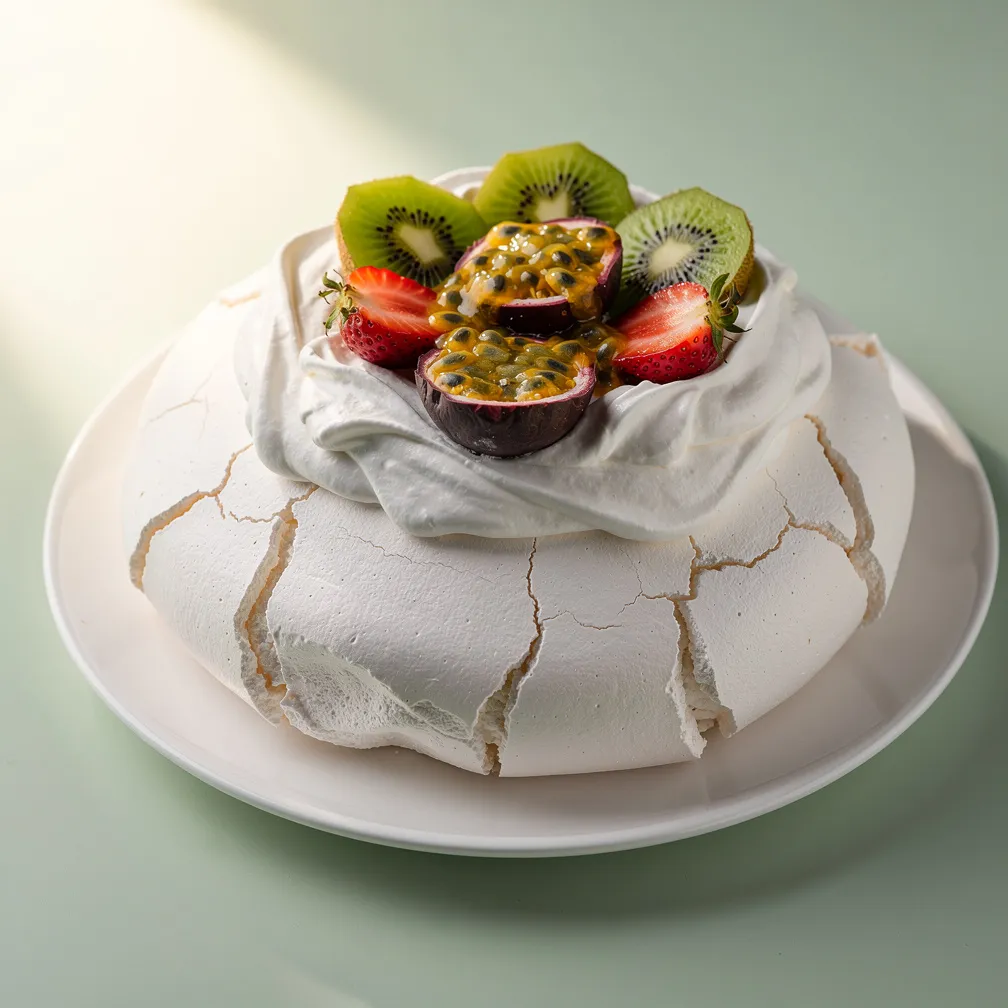
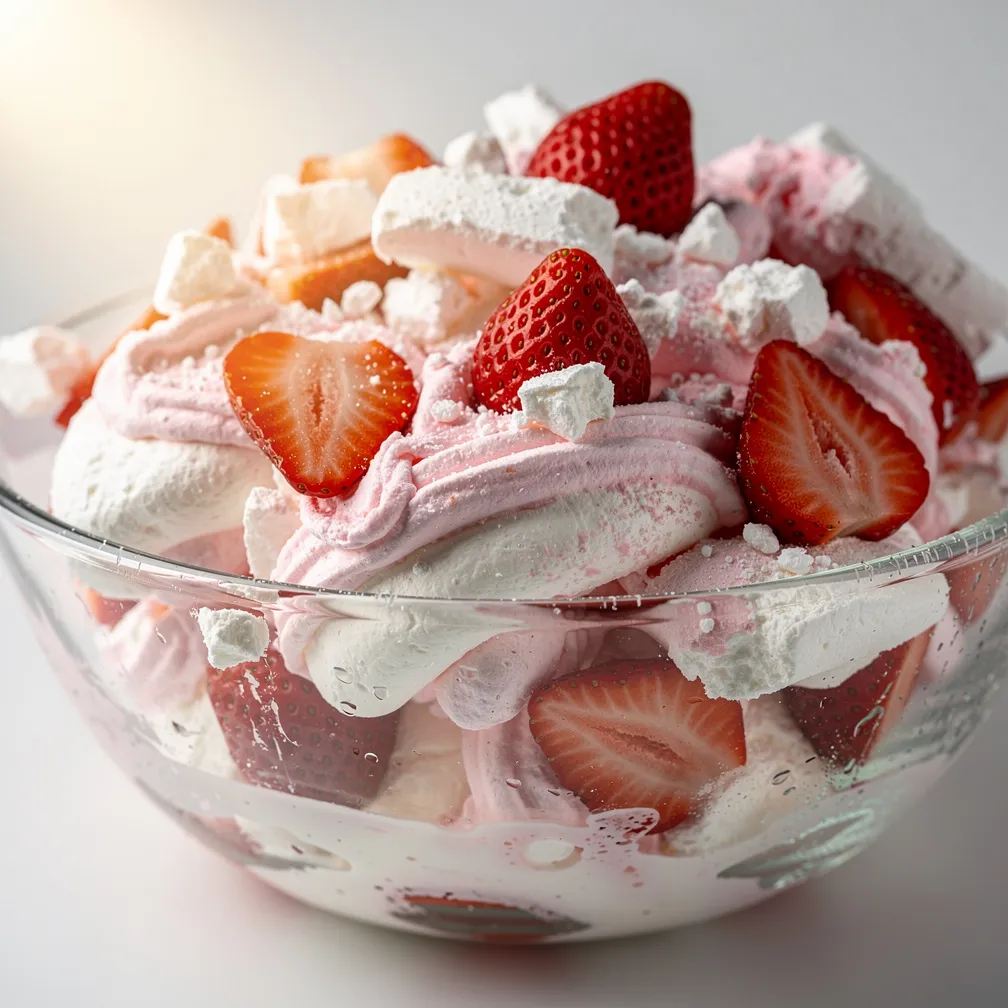
Pavlova and Eton mess are both meringue-and-cream-and-berries desserts that occupy the same summer-dinner-party slot. They share ingredients down to the gram — egg whites, sugar, double cream, mixed berries — but the construction is opposite. Pavlova is a structured meringue base with cream and berries piled on top. Eton mess is the same elements broken up and folded together into a deconstructed mass. Same calorie count per 100 g (both 265 kcal), but completely different sugar and fat distributions.
Per 100 g, pavlova carries 35 g sugar and 12 g fat. Eton mess carries 26 g sugar and 16 g fat. The pavlova's higher sugar comes from the larger meringue base; the Eton mess's higher fat comes from the higher cream-to-meringue ratio when broken up.
Quick comparison
| Per 100 g | Pavlova | Eton mess |
|---|---|---|
| Calories | 265 kcal | 265 kcal |
| Protein | 3.0 g | 2.5 g |
| Fat | 12.0 g | 16.0 g |
| Saturated fat | 7.5 g | 10.0 g |
| Carbohydrate | 37.0 g | 28.0 g |
| Sugars | 35.0 g | 26.0 g |
| Fiber | 1.0 g | 0.8 g |
| Sodium | 55 mg | 55 mg |
| Potassium | 130 mg | 120 mg |
| Calcium | 35 mg | 55 mg |
| Iron | 0.3 mg | 0.3 mg |
| Vitamin C | 18.0 mg | 22.0 mg |
Macros and calories
A 120 g slice of pavlova = 318 kcal. A 120 g bowl of Eton mess = 318 kcal. The dishes converge at calorie cost per typical portion. The difference is what those calories carry.
Pavlova is carb-heavy (37 g per 100 g, almost all sugar) because the meringue is the structural element. The meringue is roughly 95 % sugar-and-egg-white by weight; even with cream and fruit on top, the sugar dominates.
Eton mess is fat-heavier (16 vs 12 g per 100 g) because the broken-meringue-and-cream ratio leans more toward cream. The dish is mostly whipped cream with crushed meringue and berries folded through. Saturated fat at 10 g per 100 g is notably high — a 120 g portion delivers 12 g sat fat, more than half the WHO daily allowance.
Vitamins and minerals
Both desserts deliver meaningful vitamin C from fresh berries — 18 mg per 100 g for pavlova, 22 mg for Eton mess. The Eton mess's edge comes from the higher proportion of fresh fruit when broken up; the pavlova's fruit sits on top of a much larger meringue base.
Calcium runs higher in Eton mess (55 vs 35 mg per 100 g) — more cream per gram of dessert. Both deliver minor calcium contributions; neither is a meaningful dairy source.
Iron is trace in both. Sodium is essentially the same (55 mg per 100 g) — the meringue's salt is minimal in both versions.
Sugar load: where the dishes really diverge
The 35 vs 26 g sugar gap per 100 g is the headline. Pavlova at 35 g sugar per 100 g approaches candy-bar density. A 120 g slice delivers 42 g of free sugar — 168 % of the WHO daily added-sugar limit (25 g) in a single dessert.
Eton mess at 26 g sugar per 100 g is still high but meaningfully lower. A 120 g serving delivers 31 g of sugar — also over the daily limit, but closer to a borderline-acceptable single indulgence.
The structural reason: pavlova's meringue dome is large relative to the cream and fruit topping. Eton mess uses crushed meringue dispersed through a higher proportion of cream and berries, so the same total dish has less meringue per gram.
Saturated fat: the cream tax
Eton mess's 10 g saturated fat per 100 g is 33 % higher than pavlova's 7.5 g. A 120 g portion of Eton mess = 12 g sat fat, just over half the WHO daily allowance. Pavlova's same portion = 9 g sat fat.
For cardiovascular care, pavlova is the slightly better choice on saturated fat despite carrying more sugar. The trade-off depends on which metric is more important to the eater.
Diet compatibility
| Diet | Pavlova | Eton mess |
|---|---|---|
| Vegan | No (egg, cream) | No (cream) |
| Vegetarian | Yes | Yes |
| Gluten-free | Yes | Yes |
| Dairy-free | No | No |
| Paleo | No | No |
| Mediterranean | Borderline | Borderline |
| Keto | No (37 g carbs) | No (28 g carbs) |
| Low-FODMAP | Borderline (fruit) | Borderline (fruit) |
Both are naturally gluten-free, which makes them solid choices for gluten-restricted eaters. Both can be modified for dairy-free with coconut cream. Vegan versions use aquafaba (chickpea brine) instead of egg whites for the meringue base.
Australia vs New Zealand: the pavlova question
A note on national identity: Australia and New Zealand have a long-running cultural argument about which country invented pavlova. Most food historians lean New Zealand (Perth's Hotel claimed it in 1935, but Kiwi sources predate that by years). Modern Australian Tourism marketing aggressively claims it. Both countries serve it at Christmas and summer dinner parties.
Eton mess is straightforwardly British, originating at Eton College in the 1930s as a serving solution after a meringue dish "messed up" at the cricket match against Winchester.
When to choose pavlova
- 25 % less fat per 100 g — slightly lighter on fat content.
- 25 % less saturated fat — friendlier for heart-conscious eaters.
- Theatrical presentation — a structured dessert centerpiece.
- Slightly more protein (3 vs 2.5 g per 100 g) from larger egg-white meringue.
- Easier to portion accurately — slicing a structured dessert.
- More fiber per 100 g (1 vs 0.8 g).
When to choose Eton mess
- 25 % less sugar per 100 g — meaningfully friendlier on a daily sugar budget.
- 22 % more vitamin C from higher fruit ratio.
- 57 % more calcium per 100 g from higher cream-to-meringue ratio.
- Faster to make — no oven required, no meringue technique needed.
- Forgiving construction — broken meringue and rough cream folding.
- Better for groups — scales to any portion size without slicing concerns.
Practical pairings
Both desserts pair with sparkling wine (Prosecco, Champagne, or Australian sparkling) — the acidity cuts the sweetness. Strong black coffee works too, especially after a dinner-party meal.
Berries are the canonical fruit for both, but pavlova historically uses passion fruit, kiwi, or stone fruit in Australia and New Zealand summer recipes. The fruit choice dramatically affects vitamin C content — passion fruit and kiwi add 30–60 mg vitamin C per 100 g.
For weekly summer eating: Eton mess as a casual Sunday lunch dessert, pavlova as a special-occasion birthday or Christmas centerpiece. Both are summer foods that don't translate well to winter — the cream and fresh-fruit format wants warm weather and outdoor eating.