Mayonnaise vs Greek Yogurt: Calories, Fat, Protein Compared
Mayonnaise vs Greek yogurt per 100 g: calories, fat, protein, sodium, calcium and when the yogurt swap actually works in dressings, dips, and sauces.

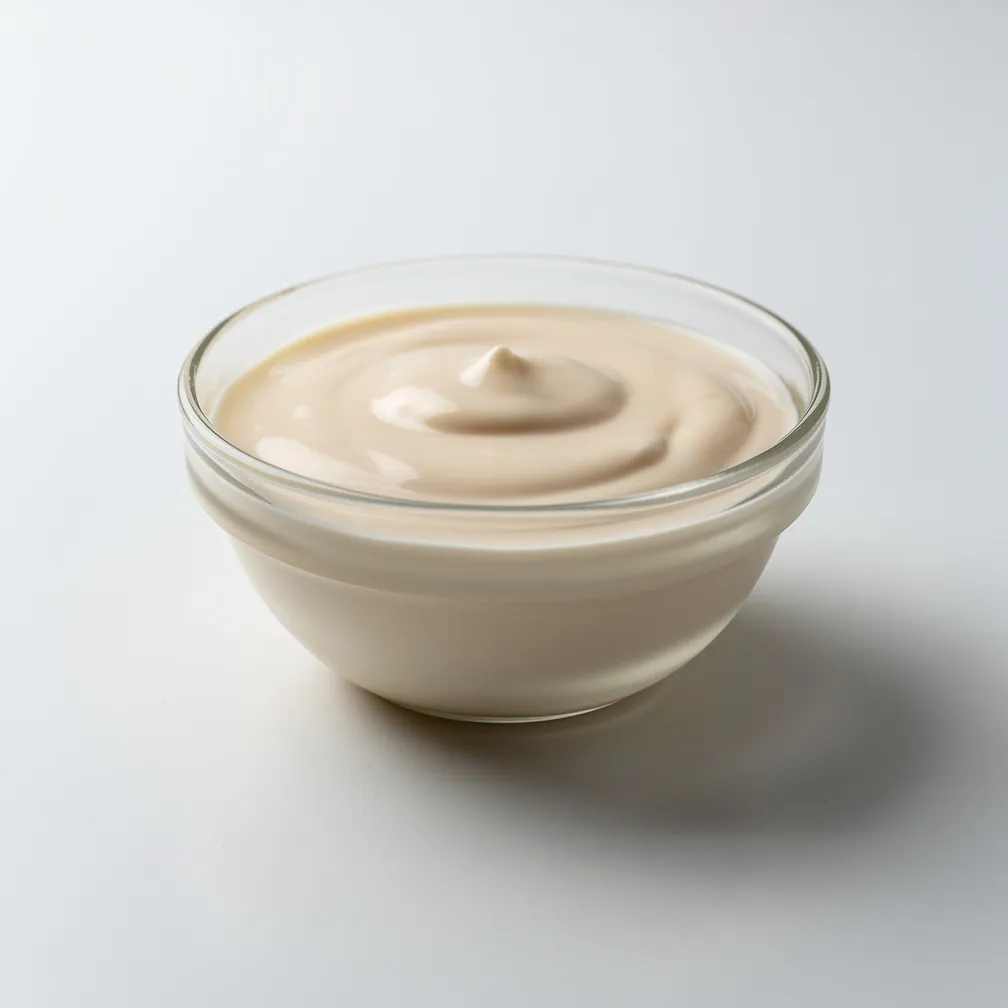
Mayonnaise and Greek yogurt are the two go-to bases for creamy sauces, dressings, and dips — but they live at opposite ends of the calorie chart. Mayo packs 680 kcal per 100 g; plain Greek yogurt sits at 83. Swap one for the other and you cut roughly 88 % of the calories and 97 % of the fat, while gaining about 8× the protein.
This article compares the two on macros, micronutrients, sodium, and diet compatibility — and shows where the swap holds up (sandwich spread, dressing, dip) and where the recipe genuinely needs the mayo.
Quick comparison
| Per 100 g | Mayonnaise | Greek yogurt (plain) |
|---|---|---|
| Calories | 680 kcal | 83 kcal |
| Protein | 1.0 g | 8.6 g |
| Fat | 75.0 g | 1.9 g |
| Carbohydrate | 0.6 g | 9.5 g |
| Sugars | 0.6 g | 9.5 g (lactose) |
| Fiber | 0 g | 0 g |
| Sodium | 635 mg | 34 mg |
| Calcium | n/a | 100 mg |
| Cholesterol | 42 mg | 5 mg |
| Glycemic index | n/a | 12 (low) |
Numbers come from the Vnutri food catalog.
Macros and calories
Mayonnaise is almost pure fat — 75 g per 100 g, which is why it lands at 680 kcal. Most of that fat is the polyunsaturated and monounsaturated profile of the base oil (typically soybean or canola), with a small saturated fraction. Protein and carbohydrate are negligible.
Greek yogurt flips the macro profile entirely. At 83 kcal per 100 g it's protein-dominant (8.6 g) with modest carbohydrate (9.5 g, almost all naturally occurring lactose) and only 1.9 g of fat. The protein-to-calorie ratio is one of the most favourable in any dairy product, which is why Greek yogurt is a staple of body-recomposition and high-protein patterns.
The headline trade: same volume of dressing, fundamentally different calorie load. A two-tablespoon dollop of mayonnaise (~30 g) costs ~200 kcal; the same dollop of Greek yogurt costs ~25 kcal.
Protein, fat, and the sauce question
Where this comparison tips depends on what the sauce has to do.
For a sandwich spread, dressing, dip, or chicken/tuna salad binder, the fat in mayonnaise mostly delivers mouthfeel — and Greek yogurt's protein gives a similar creaminess at a fraction of the calories. The 1.9 g of fat in yogurt is enough to read as "rich" on the palate, especially full-fat varieties.
For mayonnaise-as-emulsifier in baking, in homemade dressings that need oil thickness, or in classical recipes like aïoli or coleslaw where the fat is structural — Greek yogurt breaks down. The water content (yogurt is roughly 80 % water vs mayonnaise's 25 %) thins the sauce and won't hold an emulsion the same way.
A 50/50 blend is often the sweet spot: keep half the mouthfeel, halve the calorie load. Many low-calorie ranch and tartare recipes use this trick.
Vitamins and minerals
Greek yogurt is the clear micronutrient winner. Per 100 g it delivers 100 mg of calcium, meaningful potassium (133 mg), vitamin B12 (0.5 µg), riboflavin, and phosphorus — the standard dairy mineral profile. The strained-curd process concentrates protein and minerals while removing some of the whey lactose.
Mayonnaise contains trace vitamin K, vitamin E, and choline from the egg yolk base, but the amounts are small and the fat dominance crowds out any meaningful daily contribution.
The sodium gap is large: mayonnaise carries 635 mg per 100 g vs 34 mg in plain yogurt. Two tablespoons of mayo can deliver 200 mg of sodium — meaningful for people watching salt intake. Flavoured Greek yogurts close some of that gap if they contain added salt, but plain stays low.
Glycemic index and blood sugar
Mayonnaise has effectively no carbohydrate and isn't ranked on the GI scale. Greek yogurt sits at GI 12 — very low — because the lactose is buffered by protein and fat. Neither produces a significant blood-sugar spike on its own.
The blood-sugar question matters more for what the sauce gets paired with. Mayo on a white-bread sandwich and yogurt on a similar sandwich behave similarly for the bread's GI; the difference is the calorie load you're stacking on top. Background in glycemic index explained.
Diet compatibility
| Diet | Mayonnaise | Greek yogurt |
|---|---|---|
| Vegan | No (eggs) | No (dairy) |
| Vegetarian | Yes | Yes |
| Pescatarian | Yes | Yes |
| Gluten-free | Yes | Yes |
| Dairy-free | Yes | No |
| Keto | Yes (zero carb) | Borderline (full-fat fits, low-fat doesn't) |
| Paleo | No (industrial oils) | No (dairy) |
| Mediterranean | Limited (low-fat yogurt preferred) | Yes |
| Low-FODMAP | Yes | Yes (small portions, lactose-tolerant) |
Mayonnaise is the better pick for keto because of the zero net carbs and high-fat profile — provided the base oil meets your preference (avocado-oil mayonnaise is the cleanest option). Greek yogurt is the better pick for almost every other pattern, especially Mediterranean and high-protein diets.
When to choose Greek yogurt
- Roughly 8× the calorie cut on creamy sauces, dressings, and dips.
- 8× the protein — turns a sauce into a small protein contribution rather than empty fat calories.
- 100 mg of calcium per 100 g — meaningful dairy mineral profile.
- Far lower sodium per gram, useful for low-sodium diets.
- Works as a base for tzatziki, raita, dill dressing, sour-cream substitute, marinade, and dip.
When to choose mayonnaise
- When the recipe needs a stable oil-in-water emulsion that won't break (aïoli, classical coleslaw, mayo-based binding sauces).
- For keto and low-carb patterns where fat is the target macro.
- When the texture has to hold under heat — baked dressings, grilled-sandwich glazes (e.g. mayo on the outside of a grilled cheese).
- For people who don't tolerate dairy and don't want a coconut or aquafaba substitute.
How to use them in practice
For sandwiches, wraps, and chicken salad, swap straight 1:1. Plain full-fat Greek yogurt is closer to mayo's mouthfeel than fat-free varieties; the 1.9 g of fat per 100 g matters for the spread's character.
For dressings, season aggressively — yogurt is more acidic and less salty than mayo, so the base needs more salt, mustard, and lemon to land in the same flavour register. A starter ranch: 100 g yogurt + 1 tsp Dijon + 1 tsp lemon juice + garlic + dill + salt produces a dressing in the 30 kcal/tbsp range vs ~100 kcal/tbsp for mayo-based.
For dips, blend yogurt with the same ratio of garlic, herbs, and spices you'd use in a mayo-based equivalent. Strain Greek yogurt for an hour through cheesecloth (or use labneh) to thicken it further if texture matters.
How Vnutri shows both
The mayonnaise food page shows the full per-100g profile, while the Greek yogurt page does the same plus calcium, B12, and the protein density. Both appear in their respective categories; Greek yogurt also shows up in the high-protein filter.
Frequently asked questions
Is Greek yogurt really healthier than mayonnaise?
For most uses where mayo is a creamy base, yes — Greek yogurt delivers 88 % fewer calories, 97 % less fat, and 8× the protein at the same volume. The exception is recipes where mayo's fat structure is functional rather than decorative.
Can I substitute Greek yogurt for mayonnaise in tuna salad?
Yes, and it's one of the cleanest swaps. Use plain full-fat Greek yogurt 1:1 for the mayo, add a teaspoon of mustard and a squeeze of lemon for flavour, and season with salt. Some recipes call for a 50/50 blend to keep some of the classic mouthfeel.
Which has more protein, Greek yogurt or mayonnaise?
Greek yogurt has roughly 8× the protein — 8.6 g vs 1.0 g per 100 g. That's why it functions as a small protein contribution to a meal rather than an empty calorie load.
Is Greek yogurt low-carb enough for keto?
Plain full-fat Greek yogurt has about 9.5 g of carbs per 100 g, mostly lactose. That's borderline for strict keto (under 20 g daily) but fits relaxed keto and most low-carb patterns. Full-fat over low-fat varieties — the fat slows the small lactose absorption further.
Does Greek yogurt work in coleslaw?
Yes, but the texture is closer to a German-style slaw than the classic American mayo-based version. A 50/50 yogurt-mayo blend keeps the texture intact while cutting roughly half the calories. Add a teaspoon of olive oil to compensate for the thinner consistency.
Is mayonnaise really 75 % fat?
Yes — by USDA standards, real mayonnaise must be at least 65 % oil, and most commercial mayos sit between 70–80 % fat by weight. Reduced-fat mayos cut the oil and replace it with water, starch, and emulsifiers — sometimes a worse choice than just using yogurt.
References
- USDA FoodData Central — Salad dressing, mayonnaise, regular (FDC ID: 173427); Yogurt, Greek, plain, whole milk (FDC ID: 170887).
- Wang DD, Li Y, Bhupathiraju SN, et al. Fruit and vegetable intake and mortality. Circulation. 2021;143(17):1642–1654.
- Drouin-Chartier JP, Brassard D, Tessier-Grenier M, et al. Systematic review of the association between dairy product consumption and risk of cardiovascular disease. Adv Nutr. 2016;7(6):1026–1040.
- Atkinson FS, Brand-Miller JC, Foster-Powell K. International tables of glycemic index and glycemic load values 2021. Am J Clin Nutr. 2021;114(5):1625–1632.