Mature Cheddar vs Stilton: Calories, Sodium, Calcium
Mature Cheddar vs Stilton per 100 g: 410 vs 395 kcal, 670 vs 1100 mg sodium, 720 vs 320 mg calcium. The two great British cheeses compared in detail.
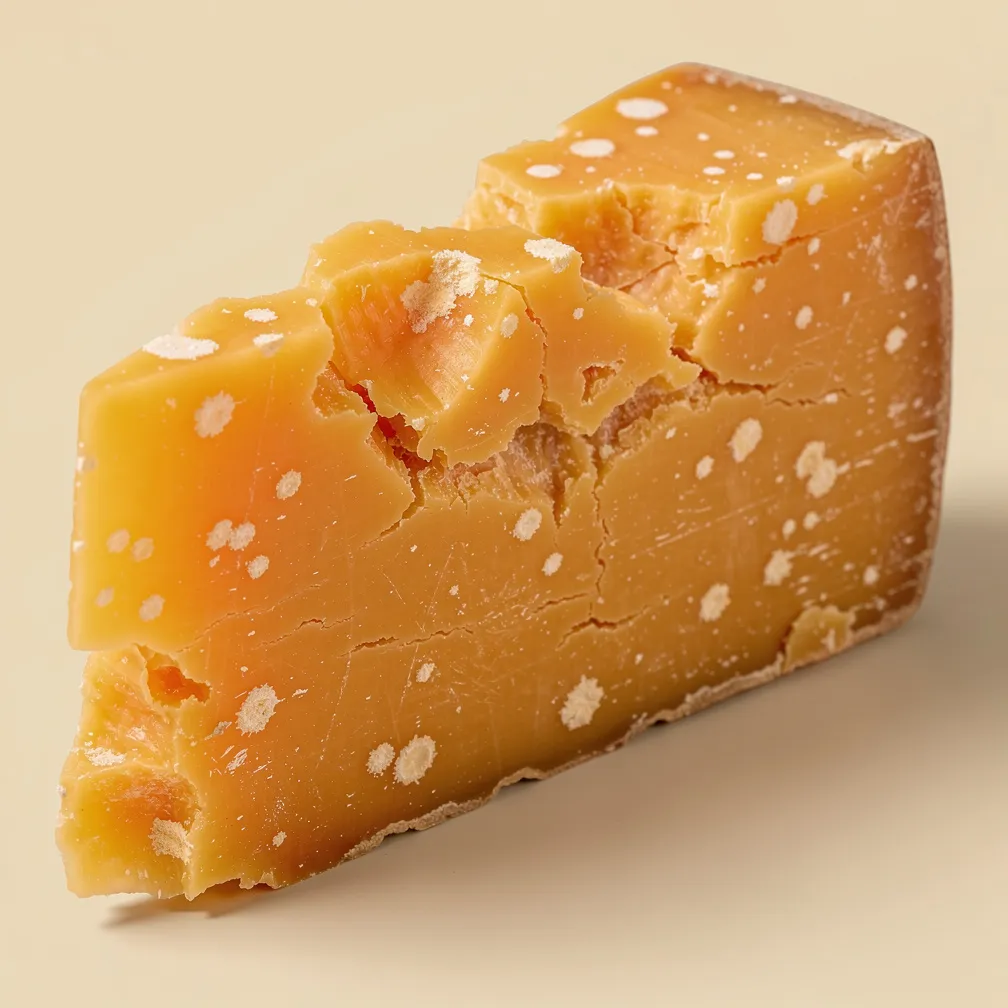
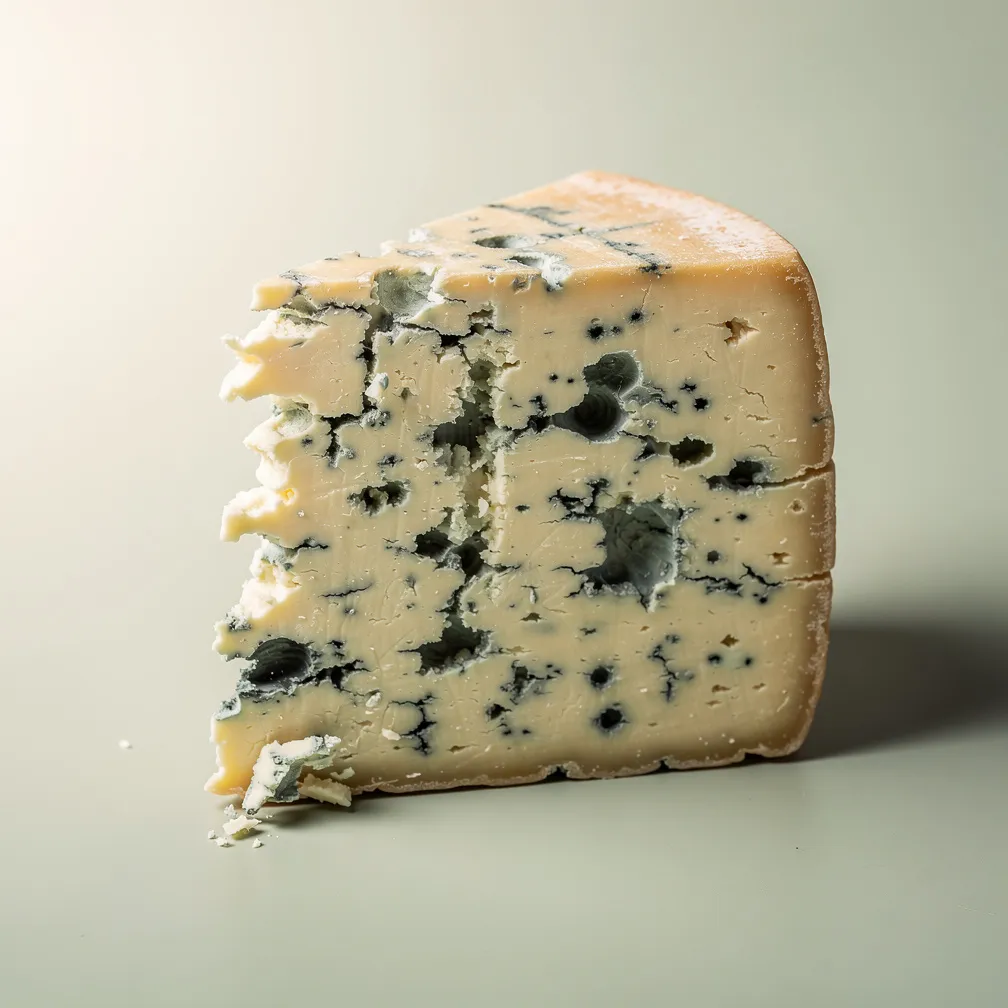
Mature cheddar and Stilton are the two most internationally recognized British cheeses, and they're both made from cow's milk — but the resemblance ends there. Per 100 g, cheddar runs 410 kcal with 720 mg of calcium and 670 mg of sodium. Stilton sits at 395 kcal with 320 mg of calcium and a staggering 1,100 mg of sodium. The sodium gap is the headline: Stilton carries 64 % more salt per gram, because blue mold needs a heavily salted environment to thrive.
The calcium reversal is the second key story. Cheddar's longer pressed-and-aged structure concentrates calcium; Stilton's softer, mold-veined texture holds less mineral per gram. Same milk, completely different mineral outcomes.
Quick comparison
| Per 100 g | Mature Cheddar | Stilton |
|---|---|---|
| Calories | 410 kcal | 395 kcal |
| Protein | 25.5 g | 23.5 g |
| Fat | 34.0 g | 33.0 g |
| Saturated fat | 21.5 g | 20.5 g |
| Carbohydrate | 0.4 g | 0.5 g |
| Sugars | 0.1 g | 0.1 g |
| Fiber | 0.0 g | 0.0 g |
| Sodium | 670 mg | 1100 mg |
| Potassium | 98 mg | 130 mg |
| Calcium | 720 mg | 320 mg |
| Iron | 0.3 mg | 0.4 mg |
Macros and calories
A typical 30 g serving of cheese is the right reference for a cheese-board portion. At that weight: cheddar = 123 kcal, Stilton = 119 kcal. Almost identical calorie cost per slice. The 15 kcal-per-100 g gap is mostly fat (34 vs 33 g per 100 g), within the margin of normal variation.
Protein and saturated fat are also close. Both cheeses sit at the top end of the British cheese category for protein density — 25.5 vs 23.5 g per 100 g — and both carry the high saturated fat load typical of aged cow's milk cheese. A 30 g serving of either delivers 6 g of saturated fat, or about a quarter of the WHO daily allowance.
Carbohydrate is essentially zero in both, which is why aged cheeses fit keto frameworks better than fresh dairy.
Vitamins and minerals
Calcium is the surprise gap. Cheddar's 720 mg per 100 g delivers 22 % of an adult's daily calcium target in a single 30 g serving. Stilton's 320 mg per 100 g is half that — still substantial, but blue cheeses lose calcium to whey during the mold development process. The veined texture is structurally less mineral-dense.
Potassium runs slightly higher in Stilton (130 vs 98 mg) but neither is a meaningful source. Iron is trace in both (0.3–0.4 mg).
The mineral story really is calcium-and-sodium. Cheddar is the calcium-dense, moderate-sodium choice; Stilton is the calcium-modest, very-high-sodium choice.
Sodium: the Stilton problem
At 1,100 mg of sodium per 100 g, Stilton is one of the highest-sodium foods in the British catalog. A 30 g portion delivers 330 mg — 16 % of the WHO daily limit. Two pieces of Stilton at a cheese board plus a sodium-heavy meal pushes daily intake over 2,000 mg fast.
Cheddar at 670 mg per 100 g is high but not extreme — a 30 g portion = 200 mg sodium, ~10 % daily limit. Workable in most daily-eating patterns.
For anyone with hypertension, kidney concerns, or sodium-restricted diet, mature cheddar is the meaningfully better cheese choice. Stilton becomes once-a-month food.
Aging and texture
Mature cheddar is hard-pressed and aged 12–24 months for the "extra mature" or "vintage" labels. The result is a firm, crumbly cheese with concentrated umami and a sharp finish.
Stilton is much younger (8–12 weeks) and uses Penicillium roqueforti molds injected during aging. The blue veins develop in the moisture-holding pockets of the curd. Stilton's flavor is sharper, saltier, and more complex than cheddar's; many tasters find it overwhelming in larger portions, which conveniently limits intake.
For melting: cheddar is dramatically better. For crumbling into salads or pasta: Stilton's structure is purpose-built.
Diet compatibility
| Diet | Mature Cheddar | Stilton |
|---|---|---|
| Vegan | No | No |
| Vegetarian | Yes (no rennet)* | Yes (no rennet)* |
| Gluten-free | Yes | Yes |
| Dairy-free | No | No |
| Paleo | Borderline | Borderline |
| Mediterranean | Borderline | No (high sodium) |
| Keto | Yes (0.4 g carbs) | Yes (0.5 g carbs) |
| Low-FODMAP | Yes (aged) | Yes (aged) |
*Vegetarian compatibility depends on the rennet source. Modern microbial or vegetable rennet versions of both cheeses are vegetarian-friendly; traditional animal-rennet versions are not.
Both cheeses are keto- and low-FODMAP-compatible — aging breaks down lactose to negligible levels, and the carb content is essentially zero.
When to choose mature Cheddar
- 2.3× the calcium per 100 g — substantial daily-target contribution.
- 39 % less sodium per 100 g — friendlier for blood-pressure management.
- Higher protein (25.5 vs 23.5 g).
- Melts cleanly — fits cooking applications Stilton cannot.
- Milder flavor profile makes it more versatile in sandwiches and snacks.
- Cheaper per kilogram than aged Stilton.
When to choose Stilton
- Distinct blue-mold complexity unmatched by any cheddar.
- Slightly more potassium per 100 g (130 vs 98 mg).
- Pairs uniquely with port, sherry, or sweet wines — a textbook cheese-and-wine match.
- Crumbles into salads, pasta, or onto steak — texture for specific applications.
- Holiday table tradition — Christmas Stilton is a British cultural staple.
- More umami density per bite — a smaller portion satisfies a cheese craving.
Practical pairings
Mature cheddar pairs broadly: apples, pears, walnuts, branston pickle, mature ale, dry cider. As a melting cheese, it fits in toasted sandwiches, mac and cheese, baked potatoes, omelets. Daily usage potential is high.
Stilton wants sweet contrasts: pear, fig, honey, walnut, port, sweet wine. As a sauce base (Stilton sauce on steak) it brings huge flavor with a small ingredient weight. Best at room temperature on a cracker, not melted.
For weekly cheese-eating: cheddar 30 g most days as a calcium-and-protein snack. Stilton 30 g once a week as a board cheese paired with wine. The combination delivers strong dairy mineral support without sodium overload.