Irish Stew vs Lancashire Hotpot: Calories, Protein, Sodium
Irish stew vs Lancashire hotpot per 100 g: 112 vs 145 kcal, 8.5 vs 10.5 g protein. Two lamb-and-potato regional traditions — and which fits when.
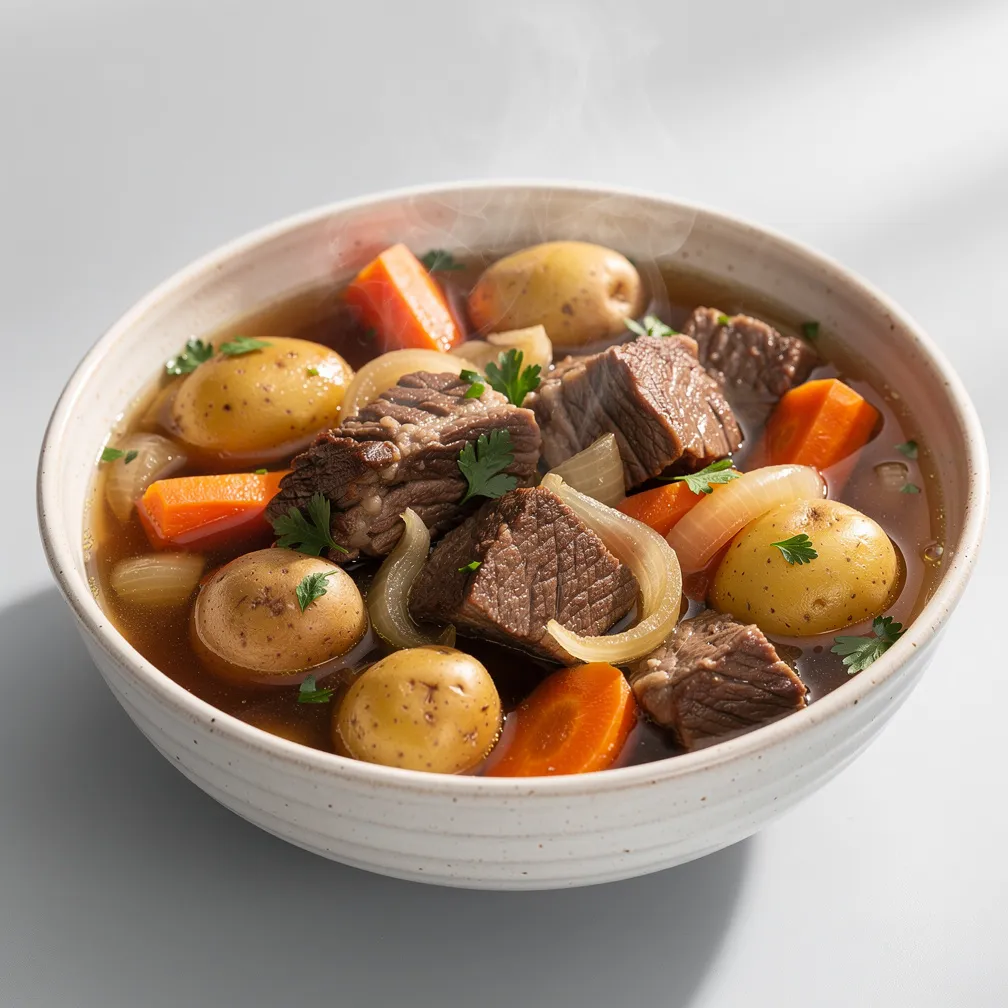
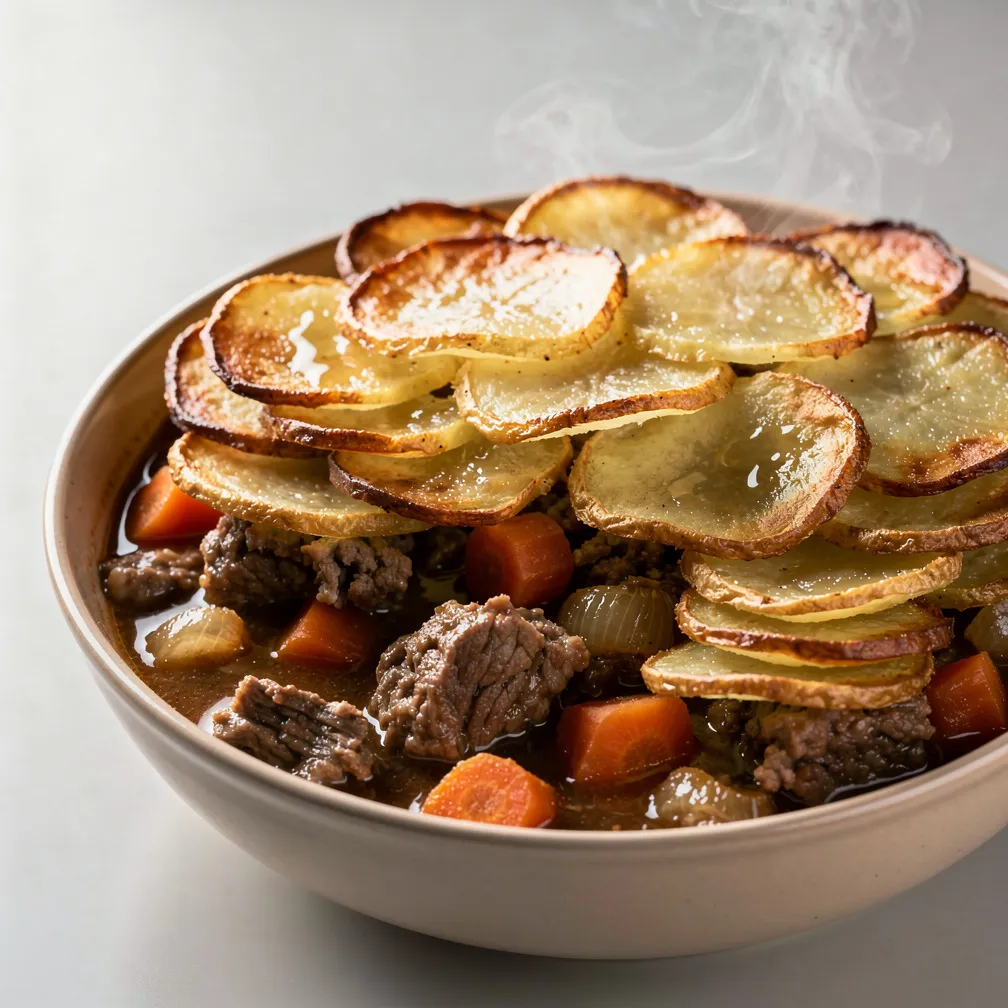
Irish stew and Lancashire hotpot are both slow-cooked lamb-and-potato dishes from neighboring British Isles cuisines, but they're built on opposite principles. Irish stew is a broth-thin braise where everything cooks in a single pot of water. Lancashire hotpot is a layered baked dish where sliced potatoes form a crisp top crust over a deep braise. Same ingredients in roughly the same proportions, completely different texture and density.
Per 100 g, hotpot lands at 145 kcal vs Irish stew's 112 — a 29 % calorie premium driven by the denser potato layer and longer reduction of the cooking liquid. Hotpot also carries more protein (10.5 vs 8.5 g) and slightly more iron, reflecting the more concentrated meat-and-liquid ratio.
Quick comparison
| Per 100 g | Irish stew | Lancashire hotpot |
|---|---|---|
| Calories | 112 kcal | 145 kcal |
| Protein | 8.5 g | 10.5 g |
| Fat | 4.5 g | 6.0 g |
| Saturated fat | 1.8 g | 2.5 g |
| Carbohydrate | 9.5 g | 13.5 g |
| Sugars | 2.0 g | 2.0 g |
| Fiber | 1.5 g | 1.8 g |
| Sodium | 320 mg | 380 mg |
| Potassium | 310 mg | 380 mg |
| Calcium | 22 mg | 22 mg |
| Iron | 1.2 mg | 1.4 mg |
| Vitamin C | 8.0 mg | 8.0 mg |
Macros and calories
A 350 g portion of Irish stew = 392 kcal. The same weight of hotpot = 508 kcal — a 116 kcal gap. For weekly-meal calorie management, Irish stew is the lighter pick.
Protein favors hotpot (10.5 vs 8.5 g per 100 g) because the longer reduction concentrates protein in less water. Across portions, hotpot delivers ~37 g protein vs Irish stew's ~30 g — a meaningful 7 g difference for muscle-recovery or satiety goals.
Carbohydrate is the second meaningful split (13.5 vs 9.5 g per 100 g). Hotpot's layered potato topping plus potato in the braise pushes carbs higher; Irish stew has potato but spreads across a wetter base. Fiber tracks the same (1.8 vs 1.5 g).
Fat is moderately higher in hotpot (6 vs 4.5 g per 100 g). The slower reduction concentrates the rendered lamb fat that would otherwise be skimmed off in a wetter Irish stew.
Vitamins and minerals
Iron lands 1.4 vs 1.2 mg per 100 g, hotpot edging slightly. Potassium runs 380 vs 310 mg — hotpot wins again because the reduction concentrates mineral content. Vitamin C and calcium are essentially tied.
Both dishes rely on similar inputs (lamb, potato, carrot, onion, optional swede or pearl barley) and produce similar micronutrient profiles. The numerical differences are explained almost entirely by water content — hotpot is denser, Irish stew is thinner.
For someone using these dishes as iron support (anemia recovery, female athletes, vegetarians-leaning-meat occasionally), either works at a 350 g portion delivering 4.2–4.9 mg iron.
Sodium load
Hotpot's 380 mg per 100 g is 19 % higher than Irish stew's 320 mg. The reason is the longer reduction concentrating salt that was added at the start. A 350 g hotpot portion = 1,330 mg sodium vs Irish stew's 1,120 mg.
Both are moderate-sodium meals, well below the WHO 2,000 mg daily limit at a single serving. Home cooks have full control here — unsalted stock cuts both numbers by 30–40 %.
For everyday eating, both are acceptable; for sodium-restricted diets, Irish stew is the marginally easier dish to fit.
Construction and method
Irish stew is a single-pot dish. Everything goes into a casserole or Dutch oven with water (or light stock), covered, and simmered for 2–3 hours. No browning, no layering, no separate steps. The simplicity is the point — rural Irish cookery designed for an open hearth.
Lancashire hotpot uses a deeper construction: lamb pieces and root vegetables go into a casserole, then sliced potatoes are layered on top, slightly overlapping, and finished uncovered to crisp the potato. The bottom braises while the top crisps — a two-textures-in-one-dish approach.
Both take 2–3 hours and both improve overnight. Both originated as poor-people cookery — using tough cuts of meat that became palatable through long cooking.
Diet compatibility
| Diet | Irish stew | Lancashire hotpot |
|---|---|---|
| Vegan | No | No |
| Vegetarian | No | No |
| Gluten-free | Yes | Yes |
| Dairy-free | Yes | Yes |
| Paleo | No (potato) | No (potato) |
| Mediterranean | Borderline | Borderline |
| Keto | No (9.5 g carbs) | No (13.5 g carbs) |
| Low-FODMAP | Borderline (onion) | Borderline |
Both are naturally gluten-free and dairy-free, which makes them solid options for restricted eaters. Neither fits keto or Paleo due to potato content.
When to choose Irish stew
- 23 % fewer calories per 100 g — easier to fit a daily target.
- 16 % less sodium per 100 g — friendlier for blood pressure.
- Lighter, broth-style consistency — easier on the digestion.
- Simpler preparation — single pot, no layering, hands-off cooking.
- More flexible with cuts of lamb — works even with bone-in shoulder.
When to choose Lancashire hotpot
- 24 % more protein per 100 g — better recovery-meal density.
- 23 % more potassium — meaningful electrolyte support.
- 17 % more iron — minor but real mineral gain.
- Two-textures-in-one-dish — crisp potato top with tender braise underneath.
- More substantial mouthfeel — feels like a complete winter meal.
- Authentic Lancashire regional dish with a specific cooking tradition.
Practical pairings
Both stews work with the same accompaniments: pickled red cabbage, soda bread or crusty white bread, mushy peas. A 100 g serving of mushy peas adds 80 kcal but 5 g protein and 4 g fiber — a genuine net-positive addition.
For an Irish-themed meal: Irish stew + Irish soda bread + pint of stout. Total around 700 kcal complete dinner.
For a Lancashire-themed meal: hotpot + pickled red cabbage + half-pint of bitter. Total around 750 kcal.
Both freeze well at 90 days. Both reheat better than fresh — the flavors deepen overnight. Make a double batch on a Sunday afternoon and you have three or four weeknight dinners in the freezer.