Irish Stew vs Guinness Beef Stew: Calories, Protein, Iron
Irish stew vs Guinness beef stew per 100 g: 112 vs 148 kcal, 8.5 vs 11.5 g protein. Lamb-and-potato classic vs beef-and-stout reduction.
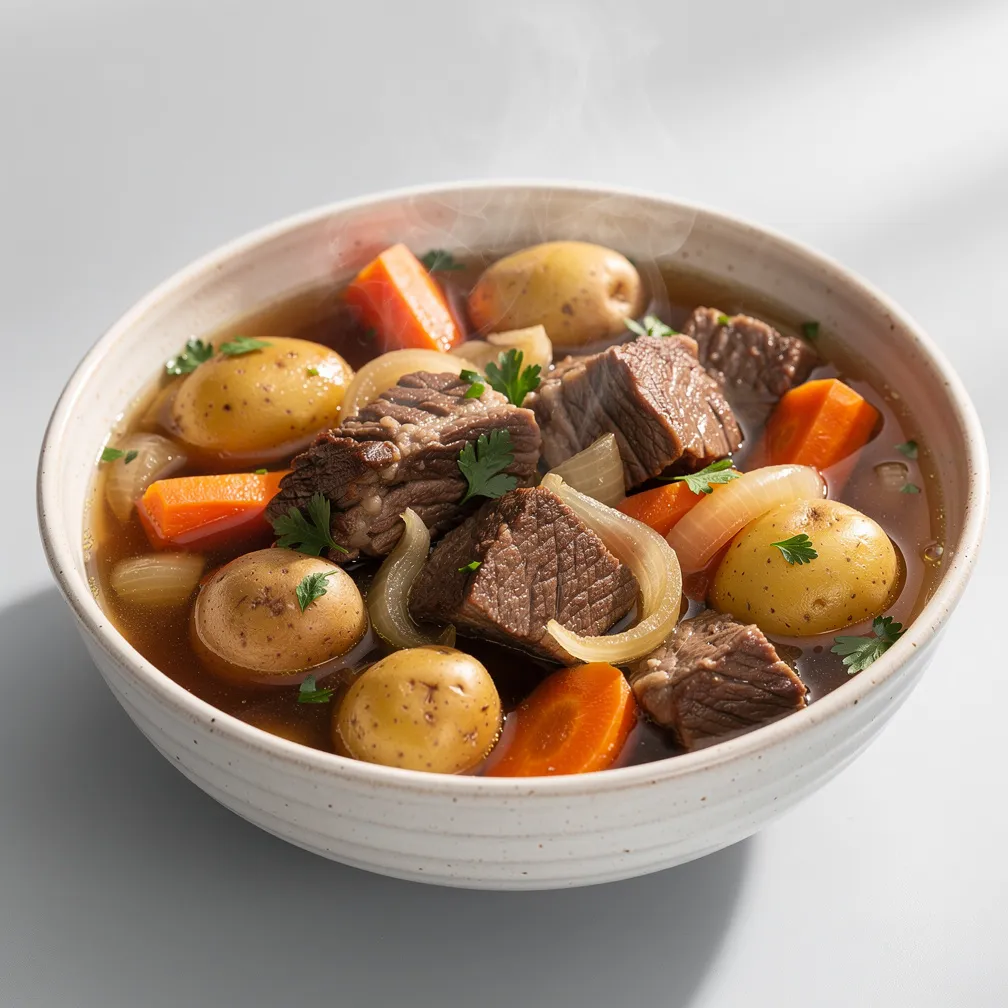
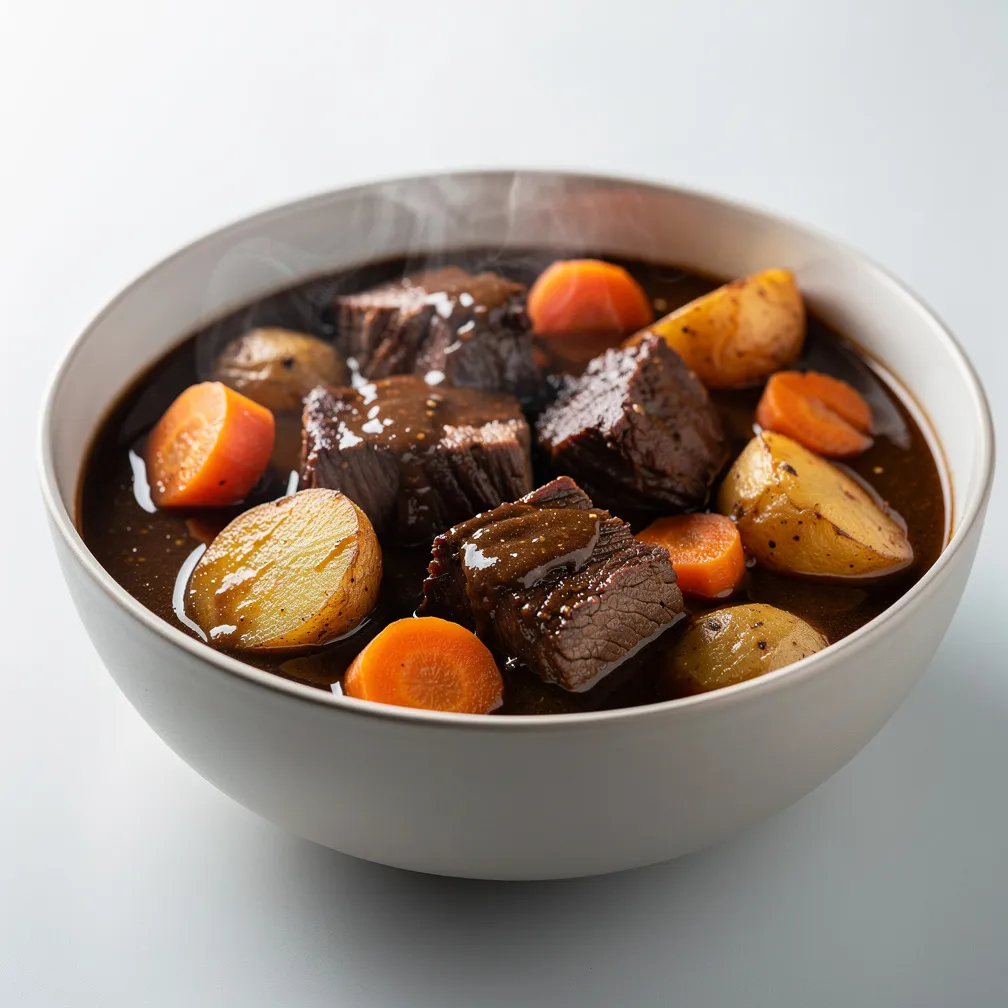
Irish stew and Guinness beef stew are the two great hot Irish bowls, and they tell the country's two food stories. Irish stew is the older, simpler dish — lamb (or mutton), potato, onion, carrot, water, salt. Guinness beef stew is the newer pub-and-restaurant evolution — beef chuck slow-cooked in stout with caramelized onion and root vegetables. Per 100 g, the Guinness version runs 148 kcal vs Irish stew's 112 — a 32 % calorie premium that pays for 35 % more protein.
The structural difference: traditional Irish stew is broth-thin and relies on the meat's own fat and the potato's starch for body. Guinness beef stew uses a reduced beer-and-stock base that concentrates calories and umami per gram. Both are slow-cooked, both age well overnight, both serve as Sunday lunch or cold-weather dinner.
Quick comparison
| Per 100 g | Irish stew | Guinness beef stew |
|---|---|---|
| Calories | 112 kcal | 148 kcal |
| Protein | 8.5 g | 11.5 g |
| Fat | 4.5 g | 6.0 g |
| Saturated fat | 1.8 g | 2.2 g |
| Carbohydrate | 9.5 g | 10.0 g |
| Sugars | 2.0 g | 2.5 g |
| Fiber | 1.5 g | 1.5 g |
| Sodium | 320 mg | 380 mg |
| Potassium | 310 mg | 360 mg |
| Calcium | 22 mg | 25 mg |
| Iron | 1.2 mg | 2.0 mg |
| Vitamin C | 8.0 mg | 7.0 mg |
Macros and calories
A 350 g portion of Irish stew = 392 kcal, 30 g protein. The same weight of Guinness beef stew = 518 kcal, 40 g protein. The Guinness version is the more substantial meal — 10 g more protein per portion, useful for anyone treating dinner as a recovery slot.
Fat splits Guinness-higher (6 vs 4.5 g per 100 g), but neither dish is calorie-dense by stew standards. The slow-braise renders much of the fat into the cooking liquid, which is often skimmed before serving.
Carbohydrate is essentially tied (9.5 vs 10 g per 100 g). Both dishes rely on potato and root vegetables for starch; the Guinness version's beer adds 1–2 g of residual carb from the stout itself.
The 32 % calorie premium of the Guinness version is mostly protein and slightly more fat — a meaningful nutritional upgrade, not just empty calories.
Vitamins and minerals
Iron is the standout: Guinness beef stew delivers 2.0 mg per 100 g vs Irish stew's 1.2 mg — 67 % more. Beef carries more heme iron than lamb in equivalent cuts, and the long slow-cook concentrates it. A 350 g portion of Guinness stew delivers 7 mg iron, almost 40 % of an adult's daily target.
Potassium also tilts Guinness-higher (360 vs 310 mg per 100 g) — the beer reduction concentrates potassium from the stout (Guinness has notable potassium from the barley). Calcium runs close (25 vs 22 mg), both modest.
Vitamin C lands 7 vs 8 mg per 100 g — both retain some C from the slow-cooked carrots and parsnips, though heat degrades much of it. Neither is a meaningful vitamin C source.
Slow-cook chemistry
Both stews rely on the same braising principle: tough collagen-rich cuts (lamb shoulder for Irish, beef chuck for Guinness) break down over 2–3 hours at low temperature, becoming tender as connective tissue converts to gelatin. The gelatin gives the broth body and the mouthfeel of richness without high fat content.
Guinness adds maltose, melanoidins, and slight bitterness to the braise. Alcohol cooks off during the long heat, but the flavor compounds remain. The result is a darker, more umami-forward stew.
Irish stew traditionally avoids browning the meat or vegetables — it's a "white stew" that uses water and the natural juices of the ingredients. Modern restaurant versions often brown the lamb for better color and flavor, but the canonical home version skips that step.
Diet compatibility
| Diet | Irish stew | Guinness beef stew |
|---|---|---|
| Vegan | No | No |
| Vegetarian | No | No |
| Gluten-free | Yes | No (Guinness) |
| Dairy-free | Yes | Yes |
| Paleo | No (potato) | No (potato, beer) |
| Mediterranean | Borderline | Borderline |
| Keto | No (9.5 g carbs) | No (10 g carbs) |
| Low-FODMAP | Borderline (onion) | Borderline (onion) |
Irish stew is the more diet-flexible: gluten-free by default, dairy-free, and adaptable to low-FODMAP with the onion removed. Guinness beef stew is locked out of gluten-free plans because Guinness (and most stouts) contain barley malt. Gluten-free beer-and-beef stews exist but use a substitute beer or skip the alcohol entirely.
When to choose Irish stew
- 24 % fewer calories per 100 g — easier to fit into a calorie budget.
- 16 % less sodium per 100 g (320 vs 380 mg).
- Gluten-free without modification.
- Slightly more vitamin C from the potato and carrot.
- Traditional preparation — actual rural Irish recipe.
- More forgiving with lower-quality cuts of lamb.
When to choose Guinness beef stew
- 35 % more protein per 100 g — closer to a recovery-level dinner.
- 67 % more iron — meaningful daily mineral contribution.
- More potassium (360 vs 310 mg).
- Deeper, more umami-forward flavor profile from beer reduction.
- Tender beef cuts become silky after 3 hours of slow-cook.
- Pairs naturally with stout or a robust red wine.
Practical pairings
Both stews are essentially complete meals. The traditional pairing is a slice of soda bread or brown bread for sopping up the broth — adds 100–150 kcal per piece. Mashed potato on the side is the pub-style accompaniment; either dish already contains enough potato that adding more is unnecessary unless you're feeding a hungry table.
For Irish stew, a fresh parsley or chive garnish at the table brightens the flavor and adds a small dose of vitamin C. For Guinness beef stew, a half-pint of Guinness (or a glass of dry stout) at the same meal is the classic Dublin pub move — adds 110 kcal per 250 ml.
For weekly Irish cooking: alternate between the two as Sunday-lunch base. Both freeze well (90 days) and improve on day two. Make a double batch.