Grits vs Cornbread: Calories, Carbs, Fat
Grits vs cornbread per 100 g: 130 vs 265 kcal, 20 vs 38 g carbs. Same corn, different format — and why grits is a breakfast, cornbread is a side.
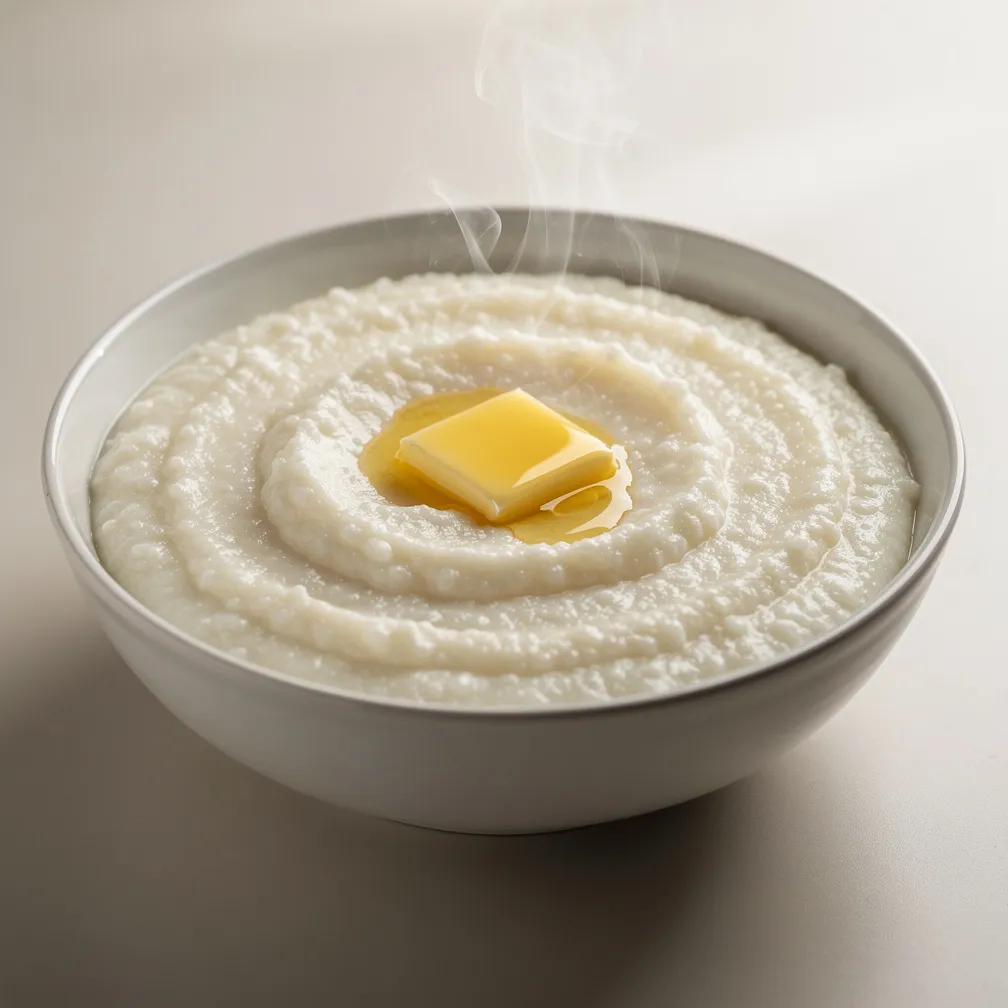
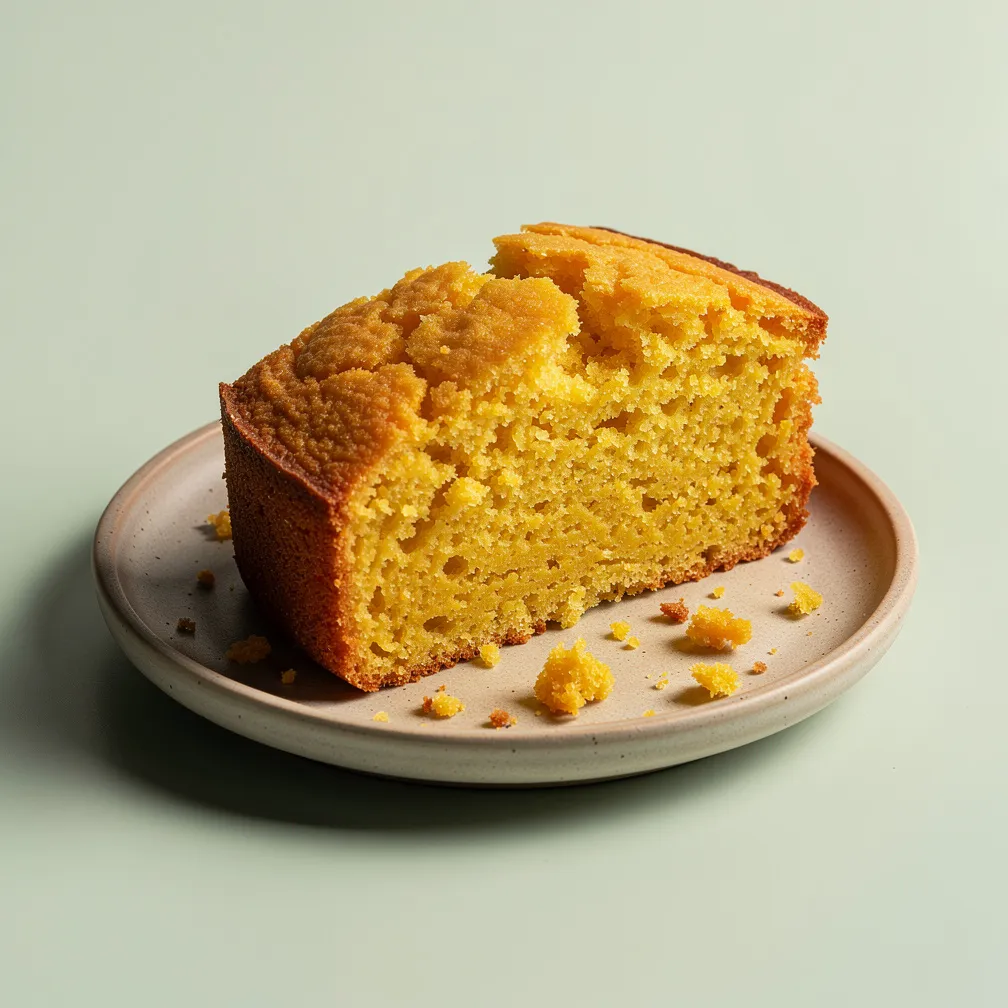
Grits and cornbread both start with coarse corn meal and ground hominy. Grits is cooked in water or milk into a porridge; cornbread is mixed with egg, fat, and dairy, then baked. The water content is the entire story. Grits at 130 kcal per 100 g is half cornbread's 265 kcal — because half its weight is added cooking liquid that never leaves.
Per 100 g, grits delivers 3 g protein, 4.5 g fat, 20 g carbs. Cornbread doubles each macro: 5.5 g protein, 10 g fat, 38 g carbs. They're not competing dishes; they're different formats of the same grain at different moisture levels.
Quick comparison
| Per 100 g | Grits | Cornbread |
|---|---|---|
| Calories | 130 kcal | 265 kcal |
| Protein | 3.0 g | 5.5 g |
| Fat | 4.5 g | 10.0 g |
| Saturated fat | 2.5 g | 3.5 g |
| Carbohydrate | 20.0 g | 38.0 g |
| Sugars | 0.5 g | 3.5 g |
| Fiber | 1.0 g | 1.8 g |
| Sodium | 280 mg | 430 mg |
| Potassium | 75 mg | 130 mg |
| Calcium | 55 mg | 80 mg |
| Iron | 0.8 mg | 1.5 mg |
Macros and calories
A standard 250 g bowl of grits = 325 kcal. A 70 g slab of cornbread = 185 kcal. The grits portion looks bigger but eats lighter because most of its mass is water. By calorie, a cornbread side and a grits bowl are not far apart in a real meal.
The fat split is the practical metric. Grits without butter is a low-fat breakfast (~1 g per 100 g). The 4.5 g shown here assumes the Southern standard — butter stirred in at finish. Skip the butter and grits drops below 110 kcal per 100 g, becoming one of the most calorie-light starches available.
Cornbread's fat is structural — you can't bake it without butter or oil — so 10 g per 100 g is built in. Lower-fat cornbread recipes exist but compromise texture.
Vitamins and minerals
Both rely on enriched cornmeal for their iron content, but cornbread's denser formulation almost doubles every mineral per 100 g. Cornbread delivers 1.5 mg iron, 80 mg calcium, and 130 mg potassium; grits sits at roughly half those across the board.
The sugar difference (0.5 g vs 3.5 g) reflects the recipe split. Plain grits is unsweetened. Cornbread, especially the Northern style, includes 1–2 tablespoons of sugar per loaf. Southern-style "no-sugar" cornbread closes that gap but is the minority recipe in commercial settings.
Sodium runs higher in cornbread (430 vs 280 mg per 100 g) because baking powder contributes ~150 mg per recipe and many recipes salt aggressively.
Format and use case
This is the comparison most home cooks resolve practically. Grits is breakfast or a savory side served hot, plated wet, eaten with a spoon. Cornbread is a vehicle: it cuts into squares, travels, and pairs with a stew or chili at room temperature.
For meal-prep efficiency, grits cooks in 5 minutes from instant or 20 minutes from stone-ground. Cornbread needs 25 minutes of oven time plus rest. Both freeze well; cornbread reheats more reliably.
Diet compatibility
| Diet | Grits | Cornbread |
|---|---|---|
| Vegan | Yes (no butter) | No (egg, milk) |
| Vegetarian | Yes | Yes |
| Gluten-free | Yes | Usually yes (corn) |
| Dairy-free | Yes (water-cooked) | No (buttermilk) |
| Paleo | No (grain) | No |
| Mediterranean | Borderline | No |
| Keto | No (20 g carbs) | No (38 g carbs) |
| Low-FODMAP | Yes | Borderline |
Grits is the more flexible dish for dietary restrictions: water-cooked grits with olive oil instead of butter is vegan, dairy-free, and Mediterranean-friendly. Cornbread requires egg and milk substitutes to fit those frameworks.
When to choose grits
- Half the calories per 100 g — lighter starch base for breakfast or as a side.
- Quick to prepare — 5 minutes for instant, 20 for stone-ground.
- Carries flavor of whatever you add: cheese, shrimp, sausage, butter, syrup.
- Lower-sodium baseline (280 vs 430 mg) before any seasoning.
- Vegan-compatible when cooked with water and oil instead of butter and milk.
When to choose cornbread
- Twice the iron (1.5 vs 0.8 mg) and twice the calcium per 100 g.
- More protein per gram (5.5 vs 3 g).
- Holds at room temperature for hours — better for picnics, road trips, lunchboxes.
- Pairs with chili, BBQ, and stews as a starch sponge — grits doesn't transport.
- Bakes ahead and freezes for 30 days without losing texture on reheat.
Practical pairings
Grits's classic pairings are shrimp (Lowcountry shrimp and grits), bacon, eggs, or cheese. The dish absorbs whatever fat-and-protein lands on top. A 200 g portion with 100 g shrimp = ~370 kcal, 25 g protein — a solid breakfast macro split.
Cornbread pairs with chili (the Tex-Mex default), beans, collards, or BBQ. As a Thanksgiving stuffing base it picks up sage, onion, and stock — same dish, completely different mouthfeel.
For meal planning: grits handles the savory breakfast slot or the side for a seafood dinner. Cornbread handles the chili-and-stew accompaniment slot. They rarely sub for each other on a plate.