Full English vs Full Irish Breakfast: Calories, Sodium, Protein
Full English breakfast vs full Irish breakfast per 100 g: 215 vs 215 kcal, identical protein and sodium. The white pudding and soda bread are what really differ.
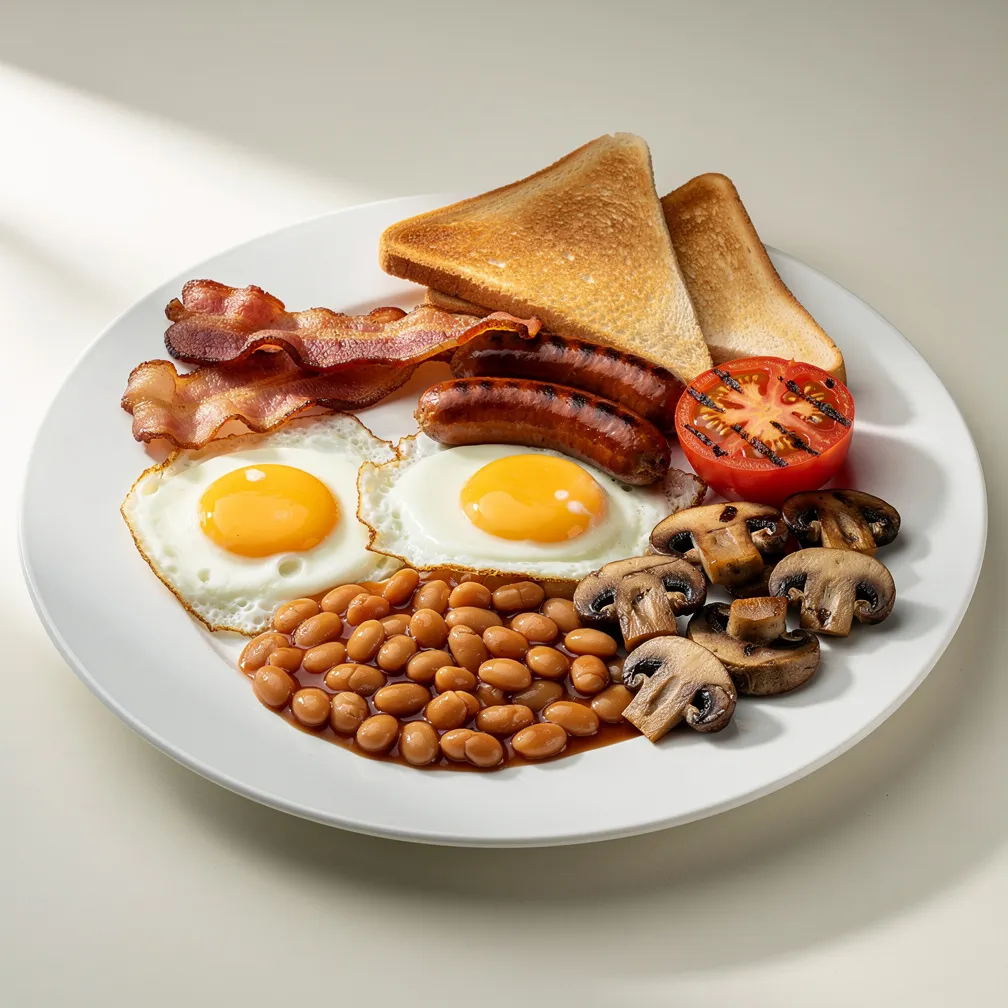
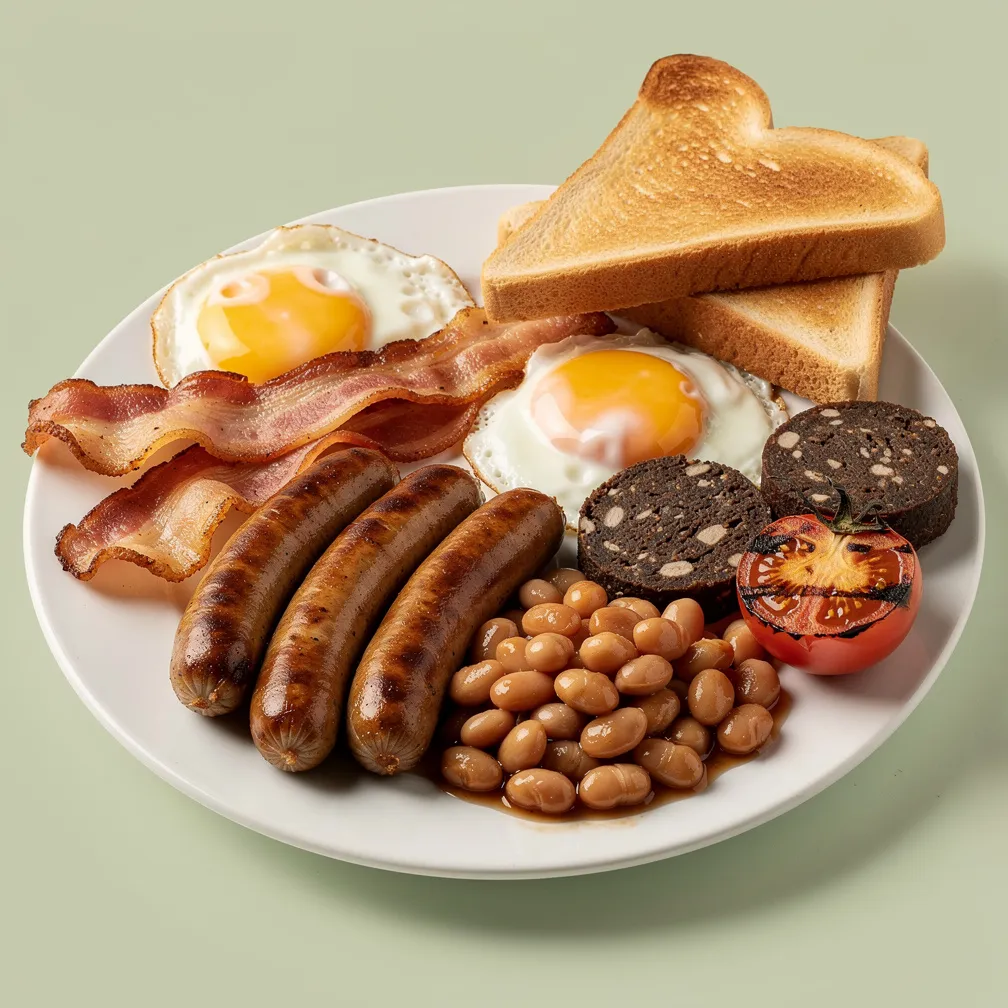
The full English and the full Irish breakfast are sibling fry-ups, and the catalog numbers prove it: per 100 g, both deliver 215 kcal and 680 mg of sodium, with nearly identical macros. The differences are structural — Irish breakfast typically includes white pudding alongside black pudding, soda bread instead of toast, and sometimes potato farl. English versions emphasize baked beans and grilled tomato.
Per 100 g, the Irish version is slightly higher carb (11.5 vs 8.5 g) and slightly lower fat (13.5 vs 14.8 g) because soda bread and potato farl add starch density while the white pudding has a lower fat content than the English bacon-and-sausage center of gravity. Both dishes are calorically dense fry-ups that take a single sitting close to half a daily energy target.
Quick comparison
| Per 100 g | Full English breakfast | Full Irish breakfast |
|---|---|---|
| Calories | 215 kcal | 215 kcal |
| Protein | 12.5 g | 12.5 g |
| Fat | 14.8 g | 13.5 g |
| Saturated fat | 5.2 g | 5.0 g |
| Carbohydrate | 8.5 g | 11.5 g |
| Sugars | 2.2 g | 2.5 g |
| Fiber | 1.4 g | 1.5 g |
| Sodium | 680 mg | 680 mg |
| Potassium | 310 mg | 290 mg |
| Calcium | 38 mg | 45 mg |
| Iron | 2.4 mg | 1.8 mg |
| Vitamin C | 6.0 mg | 6.0 mg |
| Glycemic index | 45 | — |
Macros and calories
A 350 g full English plate = 753 kcal. The same plate of full Irish = 753 kcal. By total calorie count, the dishes are interchangeable, and that's not a coincidence — both evolved as filling fry-ups for working-class breakfasts in the 20th century with similar economic constraints and similar pub-and-cafe service models.
The fat split slightly favors Irish (13.5 vs 14.8 g per 100 g). English breakfast tends to lean harder on streaky bacon and sausages cooked in their own fat. Irish breakfast spreads the protein across pork sausage, white pudding, black pudding, and rashers — each item contributes fat, but the average is slightly lower because white pudding (oats, pork fat, seasoning) is leaner per gram than English-style bacon.
Carbohydrate runs Irish-higher (11.5 vs 8.5 g per 100 g) because soda bread is denser than the typical English white-bread toast and many Irish versions add potato farl. English breakfast's baked beans contribute most of the carb count there.
Vitamins and minerals
The full English wins on iron (2.4 vs 1.8 mg per 100 g) because black pudding — included in both but typically a larger portion of an English plate — is one of the highest-iron foods in any cuisine. A single 30 g black pudding slice can deliver 4–5 mg of heme iron.
Full Irish carries slightly more calcium (45 vs 38 mg per 100 g), reflecting the milk used in soda bread. Potassium and vitamin C are essentially tied; the grilled tomato is on both plates and the principal C source.
Sodium load
Both plates carry 680 mg sodium per 100 g — among the highest sodium concentrations of any breakfast category. A 350 g plate delivers 2,380 mg sodium, exceeding the WHO daily limit (2,000 mg) before lunch.
The sources are the same in both: cured bacon, salted sausage, salted beans (English) or salted pudding (Irish), butter on toast. The only way to reduce sodium meaningfully is to swap two of those components for unsalted alternatives (poached egg instead of bacon, fresh tomato instead of baked beans).
For anyone with hypertension, blood-pressure-related medication, or kidney concerns, both breakfasts are weekend-only food. Anyone eating either daily should expect cardiovascular feedback.
Diet compatibility
| Diet | Full English breakfast | Full Irish breakfast |
|---|---|---|
| Vegan | No | No |
| Vegetarian | Borderline (some items) | Borderline |
| Gluten-free | Borderline (sausage) | No (soda bread) |
| Dairy-free | Yes (no toast butter) | Borderline |
| Paleo | No (toast, beans) | No (soda bread) |
| Mediterranean | No | No |
| Keto | No (8.5 g carbs) | No (11.5 g carbs) |
| Low-FODMAP | No (beans, onion) | Borderline |
The English is the more diet-flexible if you can pick around the toast and beans; the Irish is harder to disassemble because of the soda bread integration. Vegetarian versions of both exist with mushrooms, tomato, eggs, beans, and a vegetable sausage substitute.
When to choose full English breakfast
- 33 % more iron per 100 g — the black pudding does heavy lifting.
- Lower carb count (8.5 g) — fits a lower-carb day better.
- Vegetable-friendly: grilled tomato, mushrooms, baked beans contribute fiber.
- More widely available outside Ireland — pub menus across England carry the dish.
- Pairs naturally with Earl Grey or strong English Breakfast tea.
When to choose full Irish breakfast
- 18 % more calcium per 100 g (45 vs 38 mg) from soda bread dairy.
- 9 % less fat per 100 g — slightly leaner profile.
- White pudding adds oat-and-pork richness that English plates skip.
- Soda bread soaks up egg yolks more elegantly than English toast.
- Cultural specificity — actual Dublin or Cork breakfast experience.
Practical pairings
Both plates are complete meals on their own. The traditional pairing is strong black tea (English Breakfast or Irish Breakfast blend), which cuts the fat and salt with tannin. Black coffee works similarly. Skip orange juice — the sugar load on top of the salt-and-fat fry-up creates an unfortunate insulin spike.
For lighter versions: cut the bacon to one rasher, skip the sausage entirely, add an extra grilled tomato and a portion of mushrooms. This halves the calories and sodium while keeping the dish recognizable.
For weekly eating: one full breakfast per month maximum. For travel: a once-a-trip dish at a Dublin or London pub, treated as the calorie centerpiece of the day with a salad-and-soup dinner to balance.