Cornbread vs Hush Puppies: Calories, Fat, Fiber
Cornbread vs hush puppies per 100 g: 265 vs 310 kcal, 10 vs 14.5 g fat. Baked cornmeal side vs deep-fried fritter — the calorie difference and when each fits.
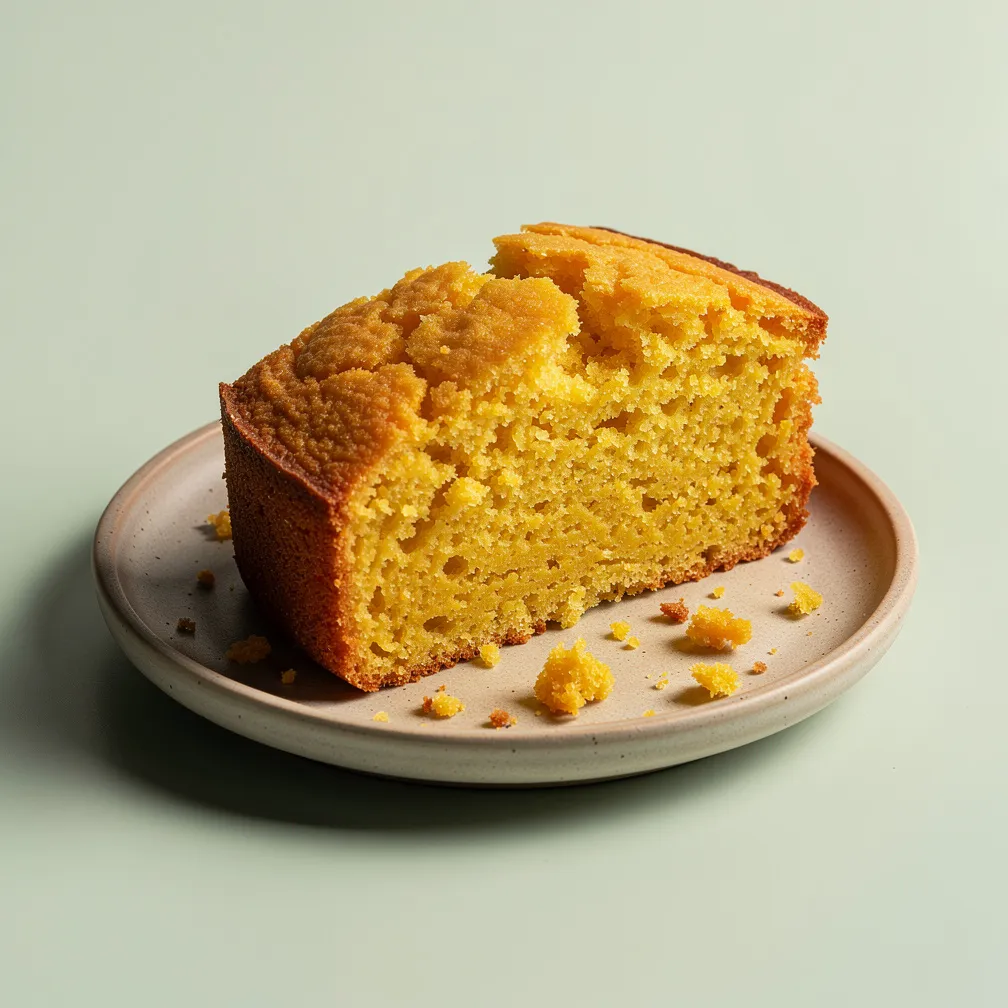
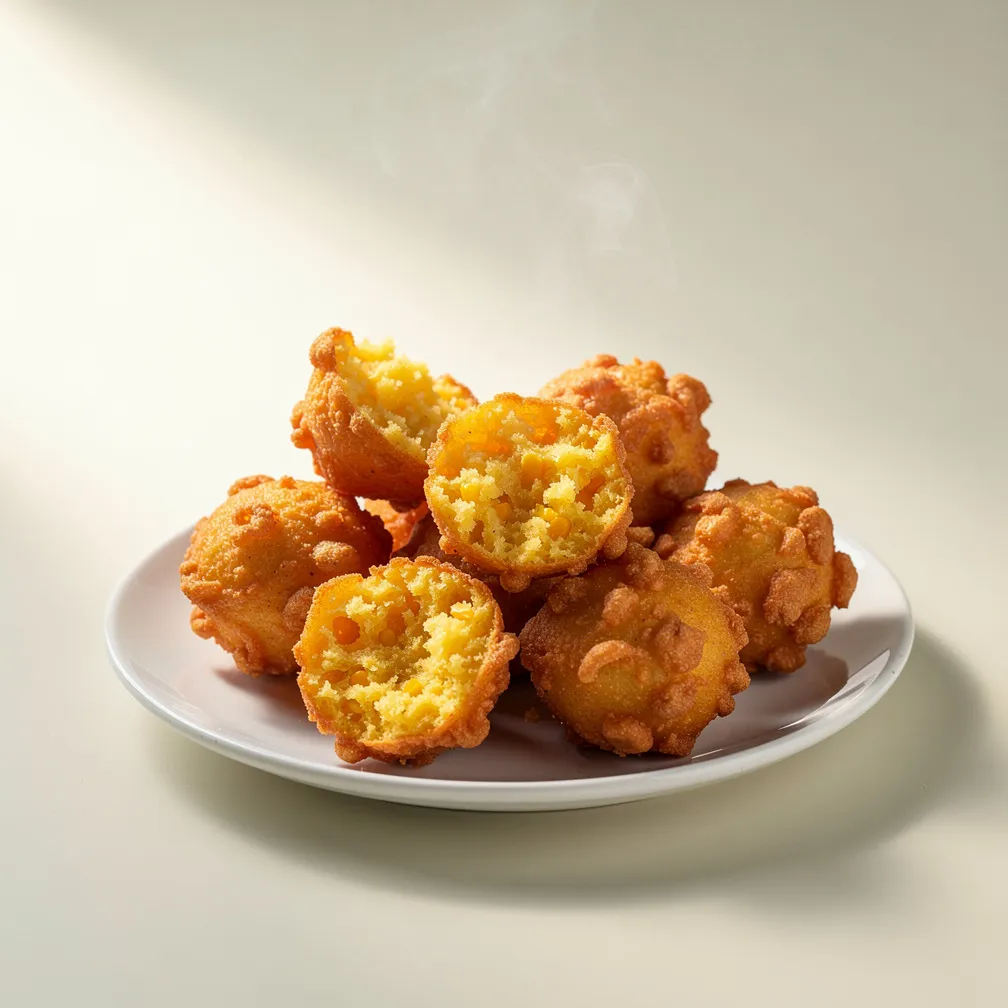
Cornbread and hush puppies share a single ingredient backbone — cornmeal, buttermilk, egg, sugar, baking powder, salt — and differ only in the cooking method. Cornbread is baked in a skillet or pan. Hush puppies are scooped into hot oil and deep-fried. That single divergence costs the hush puppy 45 kcal and 4.5 g of fat per 100 g.
Per 100 g, cornbread holds 265 kcal and 10 g of fat. Hush puppies hit 310 kcal and 14.5 g of fat. Protein and carbs land close (5.5–6 g protein, 38–40 g carbs), so the entire premium is oil absorption during the fry.
Quick comparison
| Per 100 g | Cornbread | Hush puppies |
|---|---|---|
| Calories | 265 kcal | 310 kcal |
| Protein | 5.5 g | 6.0 g |
| Fat | 10.0 g | 14.5 g |
| Saturated fat | 3.5 g | 2.5 g |
| Carbohydrate | 38.0 g | 40.0 g |
| Sugars | 3.5 g | 4.0 g |
| Fiber | 1.8 g | 2.0 g |
| Sodium | 430 mg | 490 mg |
| Potassium | 130 mg | 140 mg |
| Calcium | 80 mg | 75 mg |
| Iron | 1.5 mg | 1.8 mg |
Macros and calories
A 70 g square of cornbread (typical skillet portion) = 185 kcal. A handful of 4 hush puppies at ~60 g = 185 kcal. The dishes eat at roughly equal calories per typical serving, but the densities differ: hush puppies pack 17 % more calories into the same gram count, so a careless second handful adds up faster.
Fat composition splits oddly. Cornbread's saturated fat is higher (3.5 g vs 2.5 g per 100 g) because butter and buttermilk are baked into the batter. Hush puppies are deep-fried in vegetable oil — usually peanut, canola, or soybean — which is mostly unsaturated. So hush puppies carry more total fat but the lipid profile tilts toward poly- and monounsaturated.
Carbs and fiber are nearly identical. Both deliver about 2 g fiber per 100 g, which is mediocre — the cornmeal husk does most of the fiber work, but commercial degerminated cornmeal strips much of it out.
Vitamins and minerals
Iron is the standout mineral in both (1.5–1.8 mg per 100 g), reflecting enriched cornmeal in modern commercial mixes. Calcium runs close (75–80 mg) from baking powder and dairy. Hush puppies edge sodium higher (490 vs 430 mg) because diner versions often season the batter more aggressively to compensate for the bland deep-fry.
Neither dish is a real source of vitamin C, A, or any micronutrient at meaningful daily-value levels. They're carb-and-fat carriers, judged on craveability and the dish they accompany rather than mineral density.
Saturated vs total fat profile
This is the most interesting nutritional twist. If you only look at total fat, hush puppies look worse (14.5 vs 10 g per 100 g). If you look at saturated fat — the type linked most directly to LDL cholesterol elevation — cornbread is the heavier dish (3.5 vs 2.5 g).
The practical translation: for someone on a cardiologist's saturated-fat budget, an extra-small hush puppy serving causes less harm than an extra-large slice of cornbread. For someone counting total calories, cornbread is the leaner option.
Diet compatibility
| Diet | Cornbread | Hush puppies |
|---|---|---|
| Vegan | No (egg, milk) | No (egg, milk) |
| Vegetarian | Yes | Yes |
| Gluten-free | Usually yes (corn) | Usually yes (corn) |
| Dairy-free | No (buttermilk) | No (buttermilk) |
| Paleo | No | No |
| Mediterranean | No | No |
| Keto | No (38 g carbs) | No (40 g carbs) |
| Low-FODMAP | Borderline | Borderline |
Both are typically gluten-free when made with pure cornmeal, though restaurant versions sometimes use a small amount of wheat flour for tenderness — confirm before ordering. Both are vegetarian. Vegan versions exist with flax egg and oat milk substitutes for the buttermilk.
When to choose cornbread
- Slightly fewer calories per 100 g — 17 % lighter than the fried alternative.
- More controlled fat profile — bake-only, no oil absorption variability.
- Versatile vehicle: serves as a chili base, stuffing, sweet breakfast slice, or bbq side.
- Skillet preparation requires no fryer setup — accessible in any kitchen.
- Easier to portion accurately (cut squares) than count fritters.
When to choose hush puppies
- Lower saturated fat per 100 g (2.5 vs 3.5 g) — better lipid profile despite more total fat.
- Slightly higher iron (1.8 vs 1.5 mg) and protein.
- Crisp shell and soft middle texture cornbread can't match — finger-food format.
- Pairs naturally with fried fish or seafood boil — the canonical Southern combo.
- Easy snack-portion control: 3–4 hush puppies hit ~150 kcal, no slicing required.
Practical pairings
Cornbread's natural partners are stews and chilis — its mass soaks up sauce, and the slight sweetness balances heat. A 70 g slice with 250 g of chili is a complete carb-protein-fat plate. With BBQ, cornbread is the starch on the side.
Hush puppies pair almost exclusively with fried seafood: catfish, shrimp, oysters. The oil-soaked crust complements the same. Serving with tartar sauce or remoulade adds another 50–100 kcal per tablespoon — these dips push the calorie load past the cornbread version quickly.
For a leaner meal: choose cornbread, skip the butter on top, eat with bean chili. For a coastal-feast Saturday: hush puppies are the indispensable side.