Collard Greens vs Fried Okra: Calories, Fiber, Vitamin C
Collard greens vs fried okra per 100 g: 75 vs 295 kcal, 145 vs 80 mg calcium, 22 vs 12 mg vitamin C. Why one is a daily vegetable and the other a fryer side.
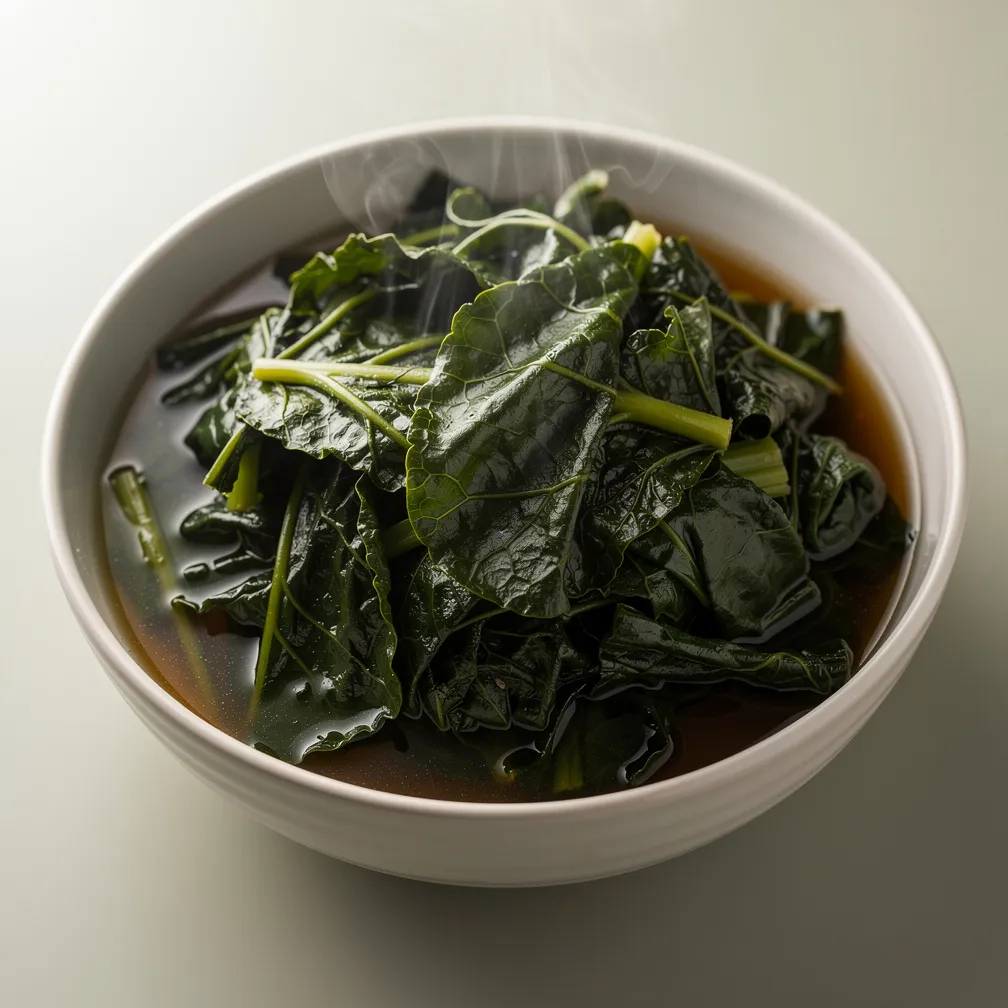

Collard greens and fried okra both occupy the "Southern vegetable side" slot on a plate, but treating them as nutritional equivalents is a category error. Per 100 g, collard greens deliver 75 kcal, 3 g fiber, 5.5 g protein, 145 mg of calcium, and 22 mg of vitamin C. Fried okra hits 295 kcal — four times the calorie count — with 16 g of fat, 33 g of carbs (from the cornmeal coating), and a far smaller micronutrient payload despite okra's own respectable profile.
The dish-level difference is the fryer. Raw okra has 33 kcal per 100 g, similar to most leafy vegetables. The fried version's calorie count is 95 % coating and oil, 5 % okra. Once you strip the cornmeal-and-buttermilk dredge and the deep-fry step, okra and collards are sister vegetables. Once you fry one and slow-braise the other, they're not.
Quick comparison
| Per 100 g | Collard greens | Fried okra |
|---|---|---|
| Calories | 75 kcal | 295 kcal |
| Protein | 5.5 g | 5.0 g |
| Fat | 3.5 g | 16.0 g |
| Saturated fat | 1.0 g | 2.5 g |
| Carbohydrate | 6.0 g | 33.0 g |
| Sugars | 1.5 g | 3.5 g |
| Fiber | 3.0 g | 3.5 g |
| Sodium | 420 mg | 380 mg |
| Potassium | 310 mg | 220 mg |
| Calcium | 145 mg | 80 mg |
| Iron | 1.8 mg | 1.2 mg |
| Vitamin C | 22.0 mg | 12.0 mg |
Macros and calories
A typical 200 g portion of collard greens delivers 150 kcal. A 100 g handful of fried okra also delivers around 295 kcal. The collard portion is twice the vegetable mass at half the calories — and it's almost all fiber, water, and minerals.
The fat split is the gap. Collards' 3.5 g per 100 g comes mostly from added pork fat or olive oil during the braise (raw collards have under 1 g fat per 100 g). Fried okra's 16 g per 100 g is the cornmeal-soaked oil absorbed during the fry. A heat-stable seed oil like peanut or canola contributes mostly mono- and polyunsaturated fats — which is at least better than the saturated fat of bacon-laced collards.
Carbohydrate is where the dishes really separate. Six grams of carbs per 100 g of collards is essentially leafy-vegetable territory. Thirty-three grams of carbs in fried okra is bread-level density — that's the cornmeal coating, not the okra pods.
Vitamins and minerals
Collards is one of the highest-calcium vegetables available — 145 mg per 100 g, in a usable, vitamin-K-supported form. A 200 g portion delivers ~290 mg calcium, close to a glass of milk. For lactose-intolerant or dairy-avoiding eaters, collard greens carry meaningful daily calcium contribution.
Vitamin C is also strong (22 mg per 100 g), and vitamin A from beta-carotene is high enough to qualify collards as a daily-value contributor. Iron sits at 1.8 mg per 100 g — plant-based, so absorbed less efficiently than meat iron, but enough to support a varied diet.
Fried okra retains some fiber (3.5 g per 100 g) and modest vitamin C (12 mg), but the deep-fry destroys some heat-sensitive vitamins and the coating dilutes the rest. Per calorie, fried okra is one of the most micronutrient-poor "vegetables" on a Southern plate.
Fiber and satiety
Both dishes carry similar fiber per 100 g (3–3.5 g), which is excellent for vegetables. But fiber-per-calorie tells the real satiety story: collards at 3 g per 75 kcal = 4 g fiber per 100 kcal; fried okra at 3.5 g per 295 kcal = 1.2 g fiber per 100 kcal. For appetite control, collards win by a factor of three.
This is why nutritionists treat fried okra as a treat side, not a vegetable serving. The fiber math doesn't earn it the "eat your vegetables" badge.
Diet compatibility
| Diet | Collard greens | Fried okra |
|---|---|---|
| Vegan | Yes (skip pork) | Yes (most recipes) |
| Vegetarian | Yes | Yes |
| Gluten-free | Yes | Usually yes (cornmeal) |
| Dairy-free | Yes | Borderline (buttermilk) |
| Paleo | Yes | No (coating) |
| Mediterranean | Yes | No (deep-fried) |
| Keto | Yes (6 g carbs) | No (33 g carbs) |
| Low-FODMAP | Yes | Borderline |
Collards is one of the most diet-flexible vegetables in Southern cuisine — fits keto, Paleo, Mediterranean, vegan (without ham hock), and low-FODMAP simultaneously. Fried okra fits almost nothing strict; the coating and frying remove it from low-carb and clean-fat frameworks.
When to choose collard greens
- A quarter of the calories per 100 g — fits any weight management plan.
- Highest calcium of any Southern vegetable side — 145 mg per 100 g.
- Dense in vitamin C, A, and iron — actual micronutrient density.
- Filling: 3 g fiber per 75 kcal beats almost every other side dish for satiety.
- Compatible with every major diet pattern when prepared without bacon fat.
When to choose fried okra
- Crunch and texture leafy greens cannot deliver — useful at a plate level.
- Slightly more fiber per 100 g (3.5 vs 3) — though fiber-per-calorie favors collards.
- Lower sodium than long-braised collards (380 vs 420 mg) when both are restaurant-style.
- Gateway side for people who otherwise won't eat vegetables — okra after frying is a stealth nutritional win.
- Pairs uniquely well with fried fish or seafood platters.
Practical pairings
Collards belong with anything fatty: BBQ, pork chops, fried chicken. Their bitterness and high fiber cut through the richness and aid digestion. Add a splash of cider vinegar at the table and the dish brightens further.
Fried okra is a textural side — pair with grilled or roasted protein, not other fried foods. Fried chicken + fried okra is a sodium and fat doubleheader that pushes a single meal past 1,800 mg sodium fast.
For everyday eating, treat collards as a daily-cycle vegetable like spinach or kale. Treat fried okra as a weekend or once-a-month dish — its calorie density and oil absorption put it closer to a fried potato side than to a "vegetable serving."