Brown Rice vs White Rice: Calories, Fiber, Glycemic Index Compared
Brown rice vs white rice: per-100g calories, protein, fiber, vitamins, minerals and glycemic index side by side. When the swap actually matters.
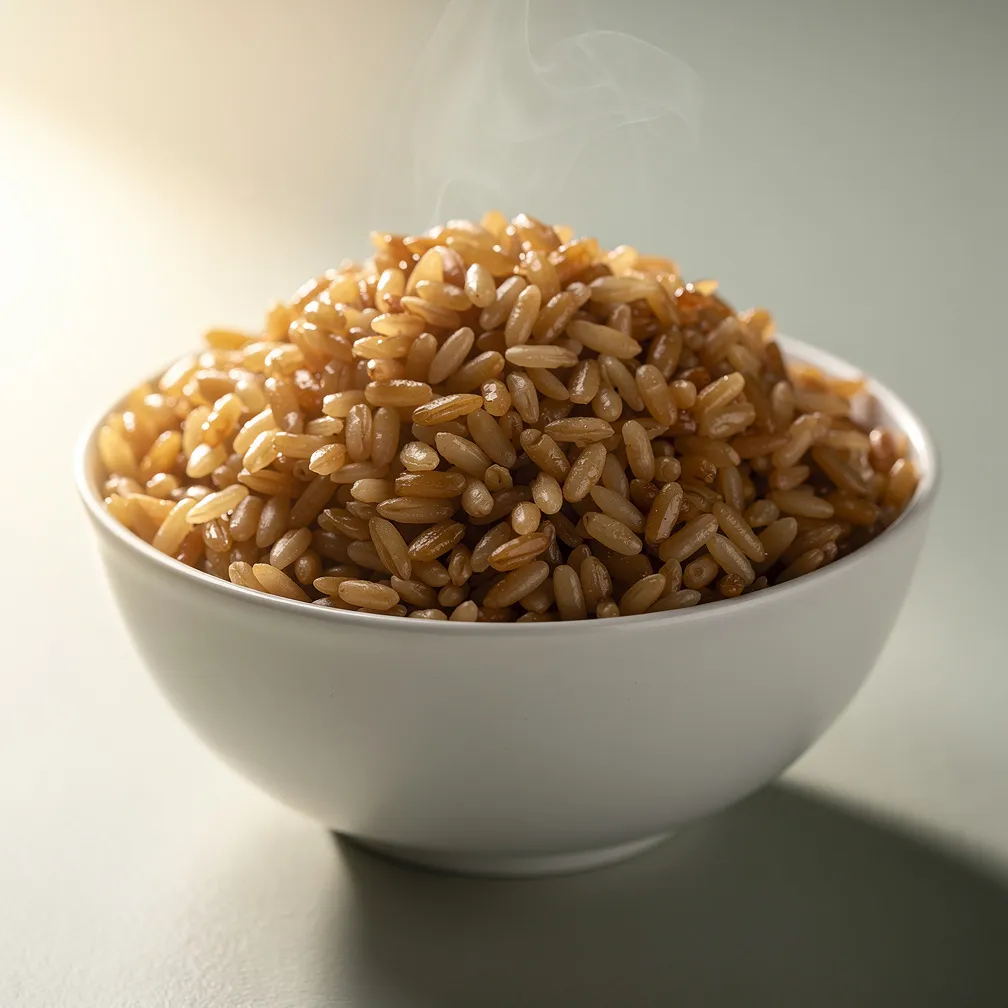
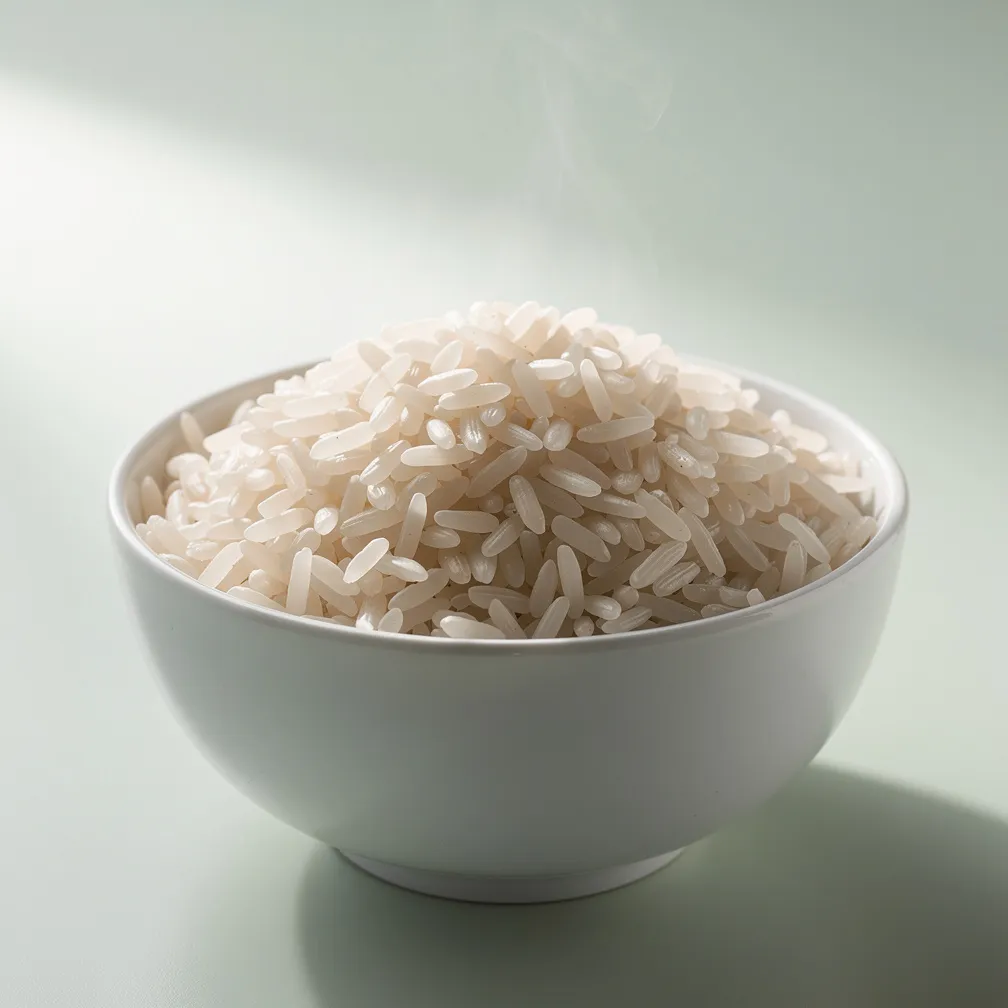
Brown rice and white rice come from the same grain. The only difference is whether the bran and germ stayed on (brown) or got polished off (white). Calorie-wise they're nearly identical — 132 vs 130 kcal per 100 g cooked. The gap shows up in fiber, micronutrients, and glycemic index, and that's where the swap pays off.
This article puts the two side by side on macros, micronutrients, blood-sugar response, and diet compatibility, and explains when brown is clearly the better pick and when white is still the right call.
Quick comparison
| Per 100 g (cooked) | Brown rice | White rice |
|---|---|---|
| Calories | 132 kcal | 130 kcal |
| Protein | 3.2 g | 2.7 g |
| Fat | 1.0 g | 0.3 g |
| Carbohydrate | 23.5 g | 28.2 g |
| Sugars | 0.2 g | 0.1 g |
| Fiber | 1.5 g | 0.4 g |
| Potassium | 79 mg | 35 mg |
| Iron | 0.5 mg | 0.2 mg |
| Magnesium | 44 mg | 12 mg |
| Glycemic index | 68 (medium) | 72 (high) |
| Glycemic load (per 100 g) | 16 | 20 |
Numbers come from the Vnutri food catalog.
Macros and calories
The two are almost identical on energy — 132 kcal for brown, 130 kcal for white per 100 g cooked. Protein nudges higher in brown (3.2 vs 2.7 g) because the bran layer carries some, and brown has roughly three times the fat (1.0 vs 0.3 g) from intact germ oil. The real macro split is in carbohydrate quality, not quantity: brown delivers 1.5 g of fiber per 100 g against white's 0.4 g — almost a fourfold gap on the only macro that meaningfully slows digestion.
That makes brown a slower-acting carbohydrate. Same calories, same approximate carb count, but the fiber drags out gastric emptying and the glycemic curve.
Fiber and digestion
Fiber is where brown rice earns its reputation. Polishing strips the bran, which is where almost all of the grain's fiber lives — that's why white rice is a stripped 0.4 g per 100 g while brown holds 1.5 g. Over a typical 150 g cooked portion you're looking at ~2.3 g of fiber from brown vs ~0.6 g from white. Not a huge number in absolute terms, but stacked across daily rice eaters it's meaningful — fiber-related daily targets sit at 25–38 g.
Brown rice also keeps the resistant starch and phytochemicals that intact whole grains tend to carry. The combination promotes longer satiety and a flatter blood-sugar curve — most randomised trials swapping refined for whole grains in metabolically healthy people show a 4–6 mg/dL drop in fasting glucose over weeks. Read more in our fiber complete guide.
The trade-off: brown rice contains slightly more phytic acid, which binds minerals during digestion. For most people on a varied diet this doesn't matter; for plant-based eaters relying on whole grains for iron and zinc, soaking or sprouting reduces phytate by 30–50 %.
Vitamins and minerals
Brown rice clearly wins on minerals. Magnesium sits at 44 mg per 100 g vs white's 12 mg — almost 4×. Iron is roughly 2× (0.5 vs 0.2 mg), and potassium is 2× (79 vs 35 mg). The bran layer concentrates these — polishing removes them.
White rice in many markets is fortified after milling (the US, Canada, Australia, parts of Europe), restoring some thiamin, niacin, folate, and iron. If the package says "enriched," white rice closes the gap on those specific B-vitamins. It doesn't restore magnesium or fiber.
Neither rice is a meaningful source of vitamin C, vitamin D, or B12. Treat them as a carbohydrate base, not a micronutrient source.
Glycemic index and blood sugar
The catalog GI values: brown 68, white 72. Both medium-to-high, but brown sits at the upper end of medium and white at the lower end of high — a real but moderate gap. Glycemic load per 100 g of cooked rice: 16 (medium) for brown, 20 (high) for white. Over a 150 g serving — typical side portion — those become GL ~24 vs ~30.
In practice that translates to a flatter post-meal glucose curve from brown, especially when paired with protein and vegetables. The size of the difference is enough to matter for people managing type 2 diabetes or prediabetes; it's a tiebreaker for most other eaters. Cooling cooked rice and reheating creates resistant starch and drops both GIs by 10–15 % — works on either variety. More context in glycemic index explained.
Diet compatibility
| Diet | Brown rice | White rice |
|---|---|---|
| Vegan | Yes | Yes |
| Vegetarian | Yes | Yes |
| Pescatarian | Yes | Yes |
| Gluten-free | Yes | Yes |
| Dairy-free | Yes | Yes |
| Keto | No (carb-heavy) | No (carb-heavy) |
| Paleo | No (grain) | No (grain) |
| Mediterranean | Yes | Yes |
| Low-FODMAP | Yes | Yes |
Both fit most general patterns. Neither is keto- or paleo-friendly — they're whole-grain and refined-grain rice. Both are naturally gluten-free, which makes rice a staple for coeliacs and gluten-sensitive eaters.
When to choose brown rice
- More fiber per 100 g (1.5 vs 0.4 g) — better satiety, slower digestion, supports daily fiber targets.
- Higher magnesium, iron, and potassium — useful for plant-based eaters and people who don't otherwise hit mineral targets.
- Lower glycemic index (68 vs 72) — meaningful for people managing blood sugar.
- Holds up better in grain bowls and salads — the chewier texture stays distinct.
When to choose white rice
- Faster cooking time — 15–20 min vs 35–45 min for brown.
- Gentler on digestion — lower fiber and no phytic acid make it the rice of choice for IBS flares, gastrointestinal recovery, and many elderly diets.
- Better as fast fuel around training — high-GI carbs replenish glycogen quickly, which endurance and strength athletes use intentionally.
- Required for some classical preparations — sushi, risotto, paella, congee. Substituting brown changes texture and ratios.
How to use them in practice
Treat the rice as the carbohydrate base and build the meal around protein, vegetables, and a fat source — that combination flattens the glycemic curve for either variety. A cup of brown rice with grilled chicken and steamed broccoli lands at a moderate GL even with the rice's bulk; a cup of plain white rice with no protein is the worst-case spike.
Cook brown rice in plenty of water (1:2.5 ratio), drain like pasta if convenient, and let it rest covered for 10 minutes — gives a less gummy texture. Cool either rice fully and reheat to lift resistant starch and drop effective GI by 10–15 %. Mix brown and white 50/50 as a gradual transition if the texture of pure brown is unfamiliar.
How Vnutri shows both
The brown rice page shows the full per-100g profile across 38 nutrients, GI value, and diet tags. The white rice page does the same. Both appear in the grains category; brown rice also shows up in the high-fiber filter. Photos, cooking-state variants, and locale-specific names ship in the catalog so you can pull the comparison up on any device.
Frequently asked questions
Is brown rice actually healthier than white rice?
For most everyday eaters, yes — modestly so. Brown delivers ~4× the fiber, more magnesium, iron, and potassium, and a lower glycemic index. The differences are clear but not dramatic; total diet quality matters far more than the rice choice alone.
Which has fewer calories, brown or white rice?
They're effectively the same — 132 vs 130 kcal per 100 g cooked. The calorie difference is statistical noise; pick on fiber, GI, and texture instead.
Does brown rice spike blood sugar less than white?
Yes, but the gap is modest. Brown sits at GI 68 (medium-high), white at 72 (high). Both are still rice and still meaningful glycemic loads at typical portions. Pairing either with protein, fat, and fibre flattens the curve far more than the rice choice alone.
Is white rice bad for you?
No. White rice is a clean carbohydrate — naturally gluten-free, low in residue, easy to digest. It's the world's most common staple for good reason. The concern is using it as the bulk of a low-fiber, low-protein diet — not the rice itself.
Should I switch to brown rice if I have diabetes?
It's a reasonable swap. Meta-analyses link whole-grain substitution to small improvements in fasting glucose and HbA1c in type 2 diabetes. Portion size, protein pairing, and total carbohydrate matter more than rice colour alone — work with your doctor or dietitian on the full picture.
Why does brown rice take longer to cook?
The bran layer slows water penetration. Soaking brown rice for 30–60 minutes before cooking cuts time to roughly that of white. Pressure cookers also close the gap — about 18–22 minutes of high pressure for brown.
References
- USDA FoodData Central — Rice, brown, long-grain, cooked (FDC ID: 169704); Rice, white, long-grain, regular, cooked (FDC ID: 169757).
- Atkinson FS, Brand-Miller JC, Foster-Powell K, et al. International tables of glycemic index and glycemic load values 2021. Am J Clin Nutr. 2021;114(5):1625–1632.
- Aune D, Keum N, Giovannucci E, et al. Whole grain consumption and risk of cardiovascular disease, cancer, and all cause and cause specific mortality. BMJ. 2016;353:i2716.
- Sun Q, Spiegelman D, van Dam RM, et al. White rice, brown rice, and risk of type 2 diabetes in US men and women. Arch Intern Med. 2010;170(11):961–969.