Bangers and Mash vs Toad in the Hole: Calories, Fat, Protein
Bangers and mash vs toad in the hole per 100 g: 185 vs 215 kcal, 8.5 vs 9.5 g protein. Sausage on potato mash vs sausage in Yorkshire pudding.
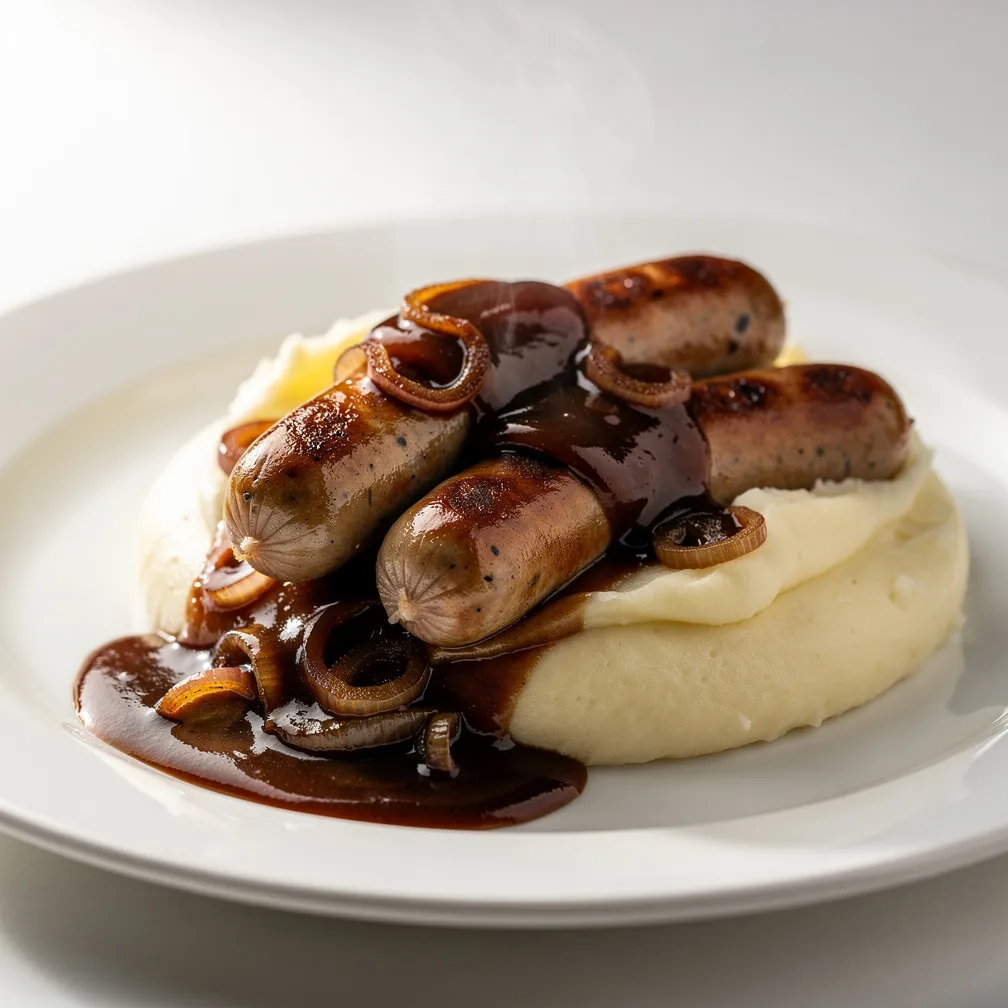
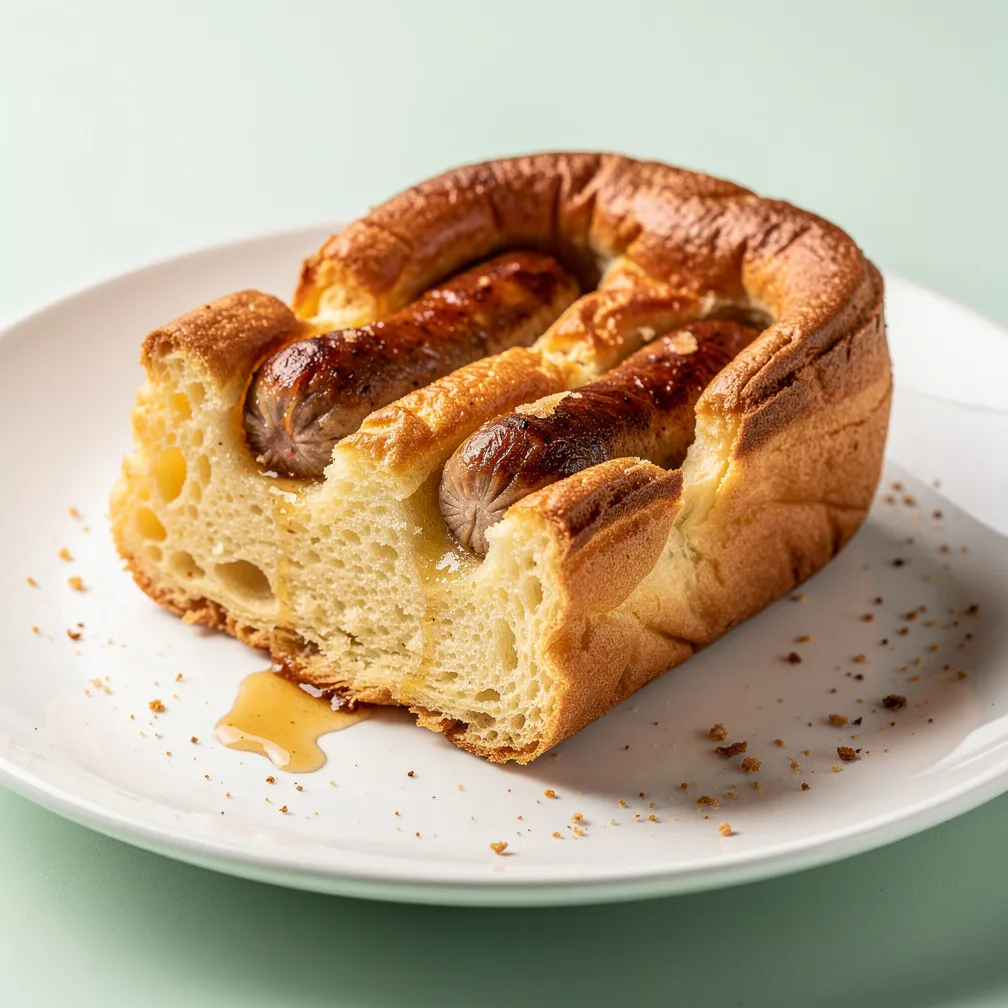
Bangers and mash and toad in the hole are the two great British sausage-and-starch combinations. Bangers and mash is sausages on a mound of buttery mashed potato; toad in the hole is sausages baked into a Yorkshire pudding batter that puffs around them. Same sausages, completely different carb chassis.
Per 100 g, toad in the hole runs slightly heavier (215 kcal vs 185 kcal) because Yorkshire pudding batter — flour, eggs, milk — is denser than mashed potato per gram. The protein difference (9.5 vs 8.5 g per 100 g) reflects the eggs in the batter. Across an actual serving size (250–300 g), the calorie totals run 463–555 kcal for bangers and 538–645 kcal for toad in the hole.
Quick comparison
| Per 100 g | Bangers and mash | Toad in the hole |
|---|---|---|
| Calories | 185 kcal | 215 kcal |
| Protein | 8.5 g | 9.5 g |
| Fat | 11.2 g | 12.5 g |
| Saturated fat | 4.2 g | 4.5 g |
| Carbohydrate | 14.0 g | 17.0 g |
| Sugars | 2.6 g | 2.5 g |
| Fiber | 1.4 g | 0.7 g |
| Sodium | 520 mg | 520 mg |
| Potassium | 290 mg | 210 mg |
| Calcium | 28 mg | 60 mg |
| Iron | 1.0 mg | 1.2 mg |
| Vitamin C | 6.0 mg | 1.0 mg |
Macros and calories
Toad in the hole's 30 kcal-per-100 g premium is structural. Yorkshire pudding batter is essentially crepe batter — flour, eggs, milk — baked in hot fat. The fat (typically duck fat or beef dripping) gets absorbed during the bake, and the result is denser per gram than mashed potato. Mashed potato is roughly 75 % water; Yorkshire pudding is roughly 40 % water.
Protein and fat tilt slightly toad-in-the-hole's way because of the eggs and milk in the batter. The sausages contribute the same amount in both dishes — typically two to three pork sausages per portion, each ~12 g protein.
The fiber gap (1.4 vs 0.7 g per 100 g) favors bangers and mash, because potato (especially skin-on mash) carries more fiber than refined wheat flour. For digestive health, the mashed-potato base is the better choice.
Vitamins and minerals
Bangers and mash wins on vitamin C (6 mg vs 1 mg per 100 g) — fresh-cooked potato retains some C, while Yorkshire pudding batter has none. Potassium also favors mash (290 vs 210 mg), again from the potato.
Toad in the hole takes calcium (60 vs 28 mg per 100 g) from the milk and eggs in the batter. Iron lands close (1.0 vs 1.2 mg) — the eggs contribute a touch more iron than the dairy in the mash does.
Sodium is identical (520 mg per 100 g) because both dishes are sausage-dominated, and pork sausages carry the salt. Onion gravy, the traditional accompaniment, adds another 100–200 mg sodium per serving.
Carb structure and glycemic load
Both dishes deliver moderate carbohydrate density (14–17 g per 100 g). Mashed potato is GI 75–85 depending on preparation — the cell walls break down during the mash, making the starch fast-absorbing. Yorkshire pudding's wheat-flour batter sits at GI 65–75 — slightly lower because the eggs and milk slow absorption.
For someone managing post-meal glucose, neither dish is friendly. Both push glucose hard. The fat content (11–12.5 g per 100 g) provides some moderation, but the carb hit is real.
A low-carb adaptation for either dish: cauliflower mash for bangers and mash, almond-flour Yorkshire pudding for toad in the hole. Both work nutritionally but compromise traditional texture.
Diet compatibility
| Diet | Bangers and mash | Toad in the hole |
|---|---|---|
| Vegan | No (sausage) | No (egg, milk) |
| Vegetarian | No | No |
| Gluten-free | Borderline (sausage) | No (wheat batter) |
| Dairy-free | No (butter mash) | No (milk, butter) |
| Paleo | No | No |
| Mediterranean | No | No |
| Keto | No (14 g carbs) | No (17 g carbs) |
| Low-FODMAP | Borderline (onion) | Borderline |
Many British sausages contain rusk (a wheat-based breadcrumb filler), so gluten-free pub bangers and mash requires confirming the sausage source. Toad in the hole is locked into wheat by the batter — no way around it without a complete recipe rebuild.
When to choose bangers and mash
- 14 % fewer calories per 100 g — lighter weeknight dinner.
- 2× the fiber from the potato base.
- 6× more vitamin C — actual residual nutrition from cooked potato.
- 38 % more potassium per 100 g.
- Faster to make from prepared mash — 15-minute pub-style meal.
- Adaptable: cauliflower mash, sweet potato mash, parsnip mash all work.
When to choose toad in the hole
- 2× the calcium per 100 g — meaningful dairy contribution.
- 20 % more protein from the eggs in the batter.
- Theatrical kitchen moment — Yorkshire pudding puffing in the oven is a show.
- Lower-water-content base — feels more substantial bite-for-bite.
- Holds heat longer — better for a long-table family meal.
Practical pairings
Both dishes traditionally come with onion gravy and a green vegetable. Mushy peas, garden peas, or buttered savoy cabbage close the vitamin and fiber gap. A 100 g serving of peas adds 80 kcal, 5 g protein, 4 g fiber.
For bangers and mash, English mustard (essentially calorie-free) and a small spoonful of branston pickle add flavor without significant calories. For toad in the hole, the dish is already complex enough — a simple green vegetable and onion gravy is enough.
Avoid pairing either with chips on the side — the carb load is already complete. For a leaner version of either, use lower-fat sausages (chicken or turkey-based) and serve a smaller portion (~200 g) with a generous vegetable side.