Scone with Clotted Cream and Jam vs Crumpet: Calories, Fat, Sugar
Scone with clotted cream and jam vs crumpet per 100 g: 370 vs 198 kcal, 18 vs 5.8 g fat. Tea-time classics — and why one is a treat, the other a breakfast.
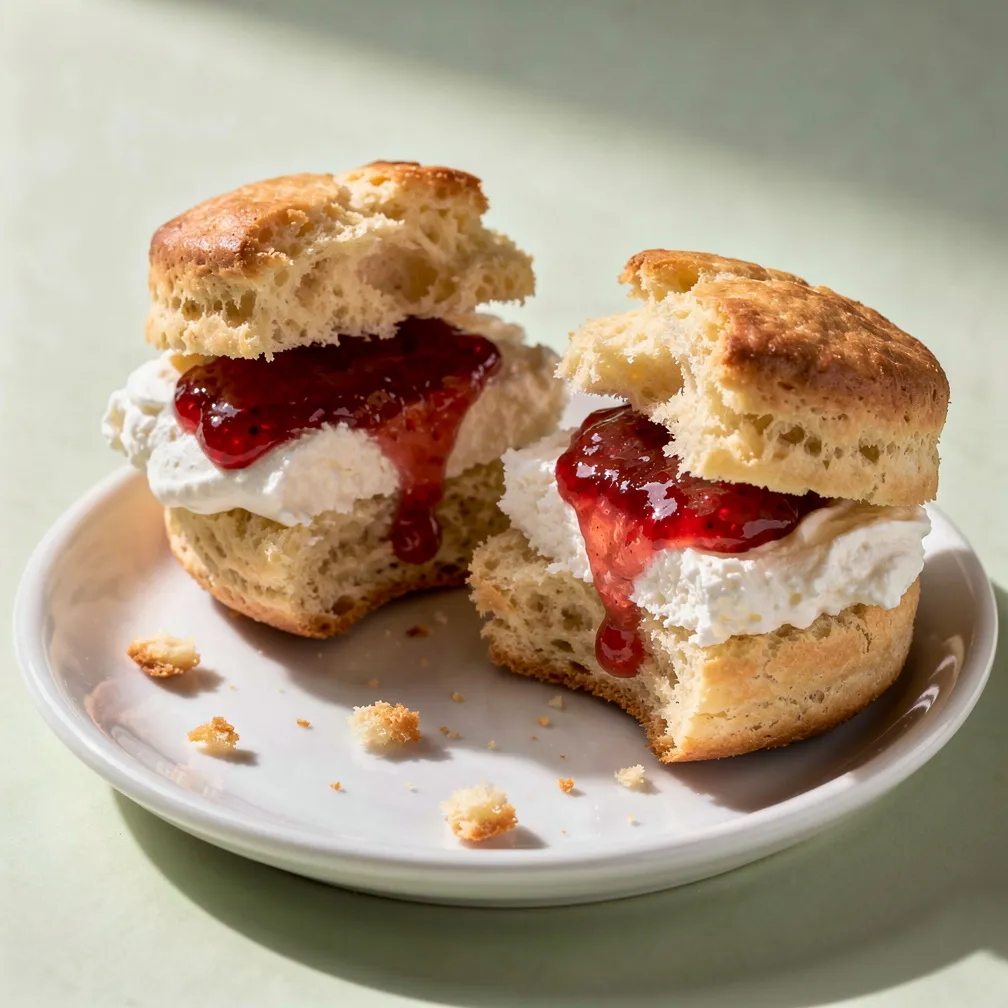
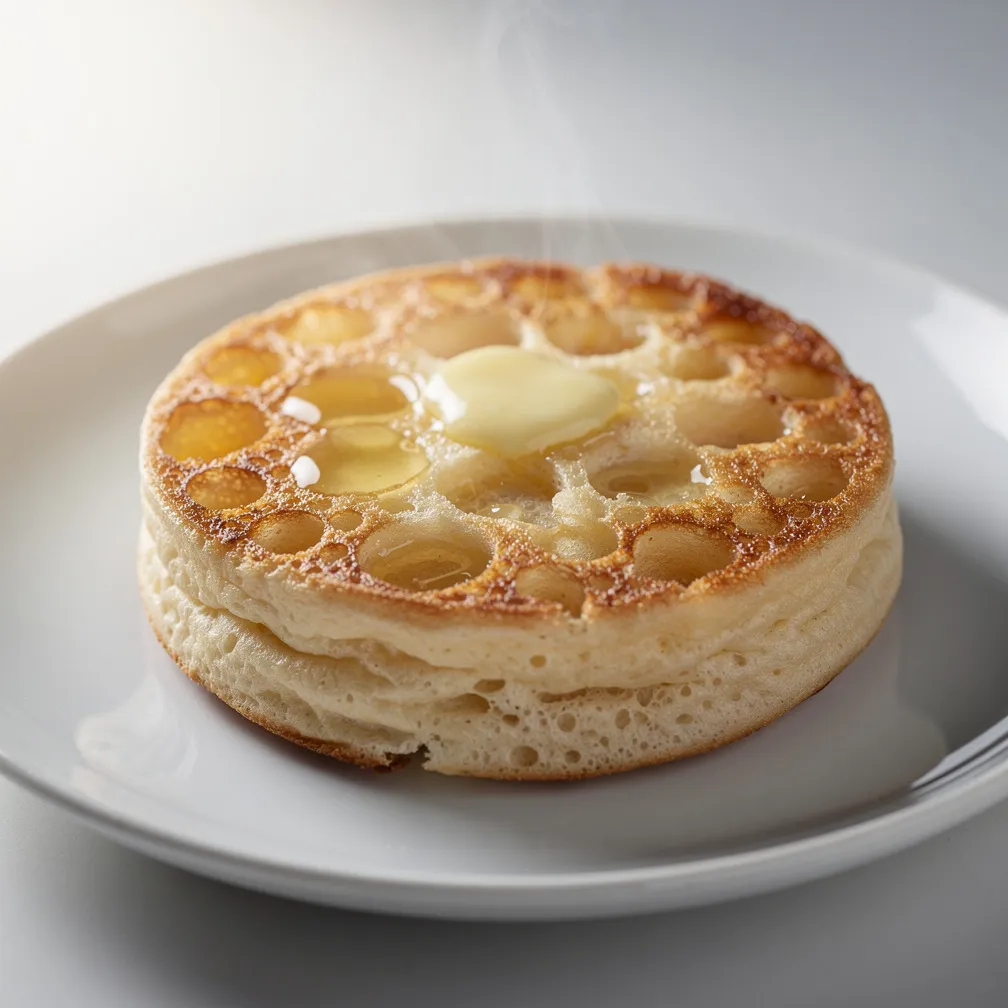
A scone with clotted cream and jam and a crumpet both appear at a British tea, but they're not in the same calorie league. Per 100 g, the scone (with full Devonshire-cream-and-jam topping) lands at 370 kcal vs the crumpet's 198 kcal — almost double. The 172 kcal-per-100 g gap is the clotted cream and jam, not the bread component.
A plain scone alone runs around 290 kcal per 100 g; the clotted cream adds 60 kcal, the jam another 20 kcal per typical topping load. A crumpet eaten with butter (the standard preparation) sits at the 198 kcal value shown — add jam or honey and it climbs to 230 kcal per 100 g, still well below the scone version.
Quick comparison
| Per 100 g | Scone w/ clotted cream and jam | Crumpet |
|---|---|---|
| Calories | 370 kcal | 198 kcal |
| Protein | 5.5 g | 6.5 g |
| Fat | 18.0 g | 5.8 g |
| Saturated fat | 11.0 g | 3.2 g |
| Carbohydrate | 47.0 g | 32.0 g |
| Sugars | 22.0 g | 1.5 g |
| Fiber | 1.2 g | 1.4 g |
| Sodium | 280 mg | 420 mg |
| Potassium | 130 mg | 95 mg |
| Calcium | 90 mg | 55 mg |
| Iron | 1.0 mg | 1.2 mg |
| Vitamin C | 3.0 mg | 0.0 mg |
Macros and calories
A typical 90 g scone with the full cream-and-jam topping = 333 kcal. A typical 50 g crumpet with butter = 99 kcal. The crumpet is a third of the calorie load of the scone.
Saturated fat is the most lopsided number on this page. The scone version delivers 11 g of saturated fat per 100 g — half the daily WHO allowance in a single serving. Clotted cream is 60 % fat by weight, almost entirely saturated dairy. The crumpet's 3.2 g saturated fat per 100 g is moderate; the difference is the cream topping, not the scone base.
Carbohydrate also splits sharply (47 vs 32 g per 100 g). The scone's carbs are split between the wheat-flour scone (~32 g) and the jam (~15 g of added sugar). The crumpet's 32 g carbs are all refined wheat — no added sugar in the base recipe.
Vitamins and minerals
Calcium favors the scone version (90 vs 55 mg per 100 g) — clotted cream is dairy in its most concentrated form, and the cream-jam combination doubles the dairy contribution of a plain scone.
The crumpet wins iron (1.2 vs 1.0 mg per 100 g) by a small margin — the higher sodium and lower fat content means more mineral concentration per gram. Sodium runs higher in the crumpet (420 vs 280 mg per 100 g) because the dough is salt-leavened and the cooking surface is salted.
Vitamin C appears only in the scone version (3 mg per 100 g), and that's from the jam — typically strawberry or raspberry. The crumpet has zero C.
Sugar load: the cream tea reality
The 22 g of sugar per 100 g of scone-with-toppings is the metric that should change a habit. A 90 g scone with full jam-and-cream delivers ~20 g of added sugar — 80 % of the WHO daily limit for a 2,000 kcal diet, in a single tea-time treat.
The crumpet at 1.5 g sugar per 100 g (and most of that is residual starch sugars, not added) is essentially a sugar-neutral food. Adding honey or jam at the table adds sugar, but the base is clean.
For someone managing blood sugar or trying to stay under a daily added-sugar target, the crumpet is a different category of food — it can be a daily breakfast. The full cream tea is a Sunday afternoon ritual, not a habit.
Diet compatibility
| Diet | Scone w/ cream and jam | Crumpet |
|---|---|---|
| Vegan | No | Borderline (no egg) |
| Vegetarian | Yes | Yes |
| Gluten-free | No (wheat) | No (wheat) |
| Dairy-free | No (cream) | Borderline (butter) |
| Paleo | No | No |
| Mediterranean | No | Borderline |
| Keto | No (47 g carbs) | No (32 g carbs) |
| Low-FODMAP | Borderline | Borderline |
The crumpet is more diet-flexible than it looks. Many crumpet recipes are essentially flour + water + yeast + salt — no egg, no dairy. Eaten plain (or with olive oil instead of butter), the crumpet fits a Mediterranean pattern. The scone-with-cream version fits almost nothing strict.
When to choose scone with clotted cream and jam
- 64 % more calcium per 100 g — meaningful daily contribution from clotted cream.
- Vitamin C from the jam (3 mg per 100 g) — small but real.
- Theatrical tea-time presentation that a crumpet cannot match.
- More potassium per 100 g.
- Distinctive cream-and-jam flavor combination is a once-a-trip British experience.
When to choose crumpet
- Less than half the calories per 100 g (198 vs 370 kcal).
- One-third the fat and one-third the saturated fat per 100 g.
- 1.5 g of sugar vs 22 g — almost no added sugar.
- Slightly higher protein (6.5 vs 5.5 g per 100 g).
- Fits daily breakfast slot — the scone-with-cream is occasion food.
- 20 % more iron per 100 g.
Practical pairings
The cream tea — scone, clotted cream, jam — is traditionally paired with black tea (Earl Grey, Assam, or Darjeeling). The tea cuts the cream's richness and resets the palate between bites. Skip coffee — the dairy fat doesn't reset against coffee tannins the same way. Order one scone, not two; the calorie load is already complete.
The crumpet pairs with butter, honey, jam, marmite, or peanut butter — far more flexible. As a breakfast item, a single crumpet with butter and a small amount of jam runs around 200 kcal, leaving room for an egg or piece of fruit. Two crumpets without toppings = ~200 kcal, a sensible breakfast bracket.
For weekly British eating: crumpet several times a week, cream tea once a month. The crumpet's daily compatibility is what makes it the unsung British tea-time hero.