Pulled Pork BBQ vs Baby Back Ribs: Calories, Fat, Protein
Pulled pork BBQ vs baby back ribs per 100 g: 220 vs 280 kcal, 11 vs 18 g fat. Which BBQ pork cut is leaner and how the sauce profiles differ.
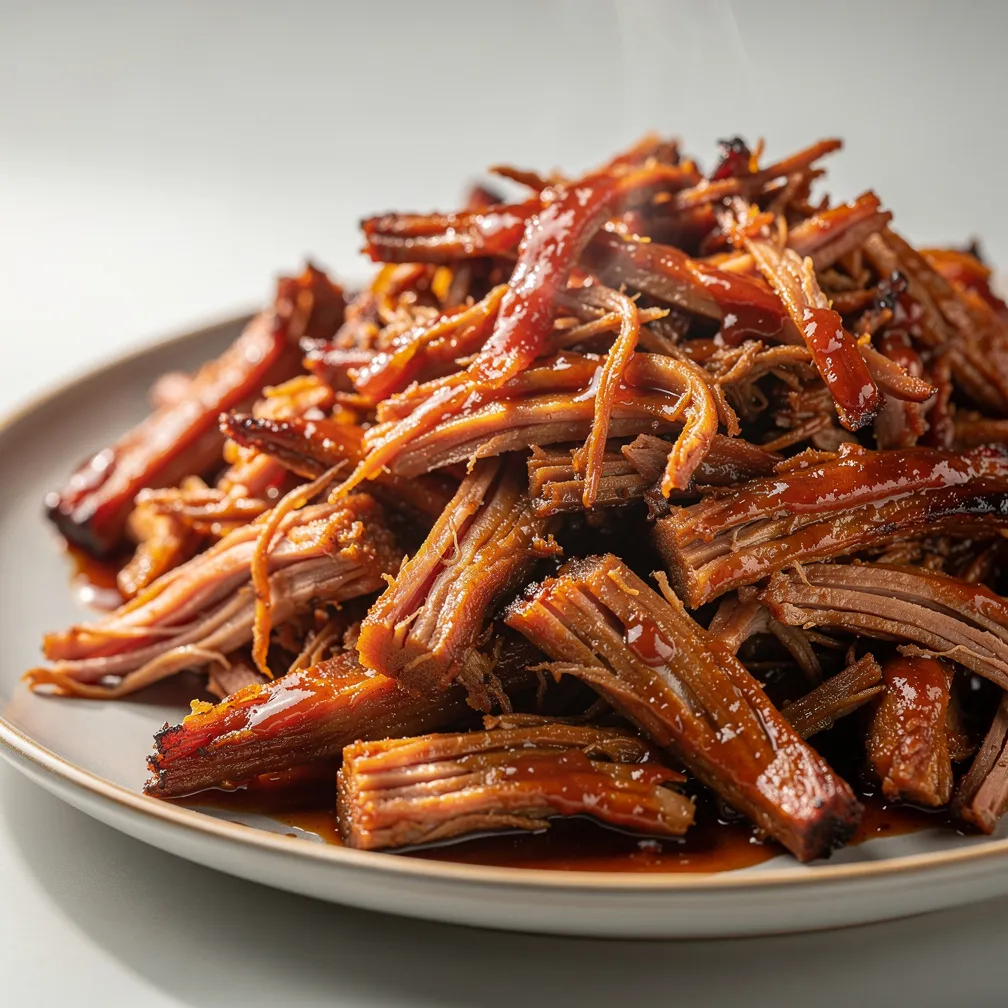
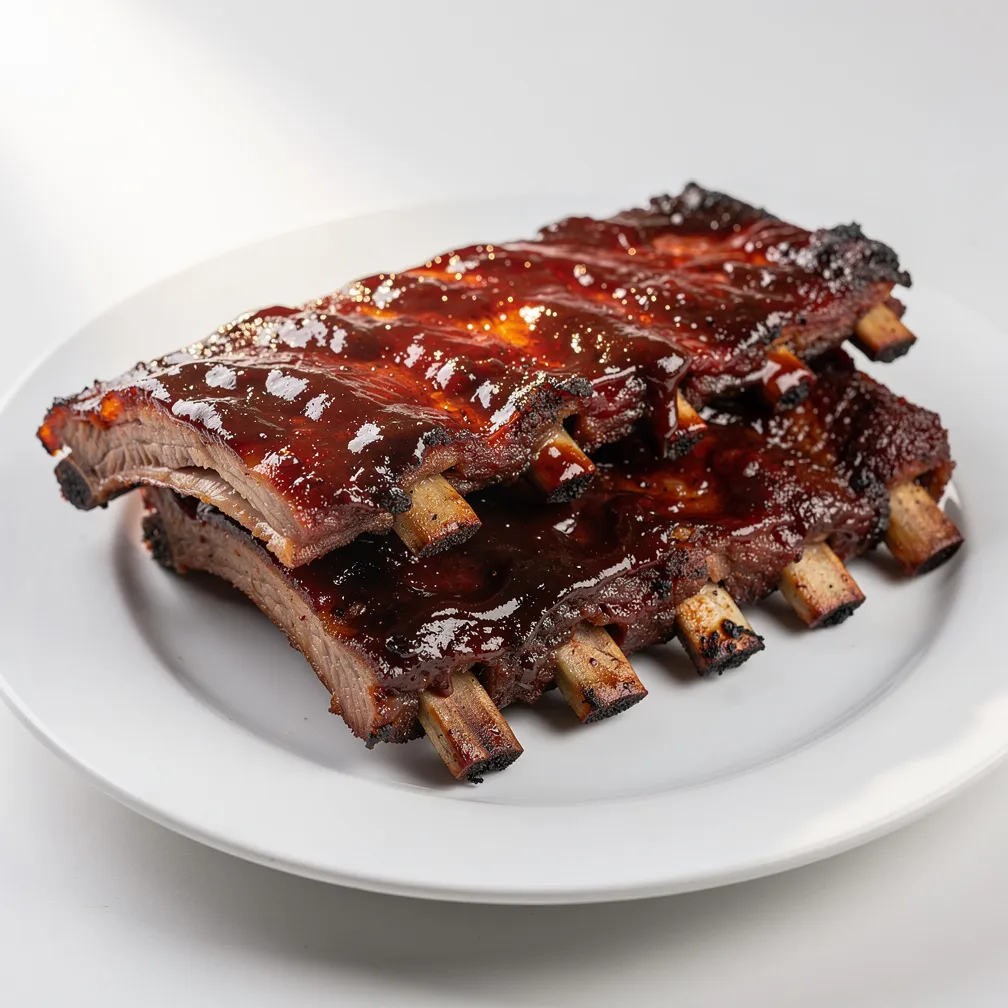
Both dishes start with a pig, end on a grill, and come slathered in sauce — but pulled pork and baby back ribs are not the same nutritional animal. Per 100 g, ribs land at 280 kcal with 18 g of fat, while pulled pork sits at 220 kcal and 11 g of fat. That's a 27 % calorie premium for the ribs, driven entirely by the higher fat content of the loin-rib cut and the visible cap of meat surrounding each bone.
Protein lands close (20 g for ribs vs 19 g for pulled pork), so the ribs aren't paying their calorie premium with extra muscle — they're paying it with rendered fat and a heavier glaze. The honest framing: ribs are the indulgence; pulled pork is the workhorse.
Quick comparison
| Per 100 g | Pulled pork BBQ | Baby back ribs |
|---|---|---|
| Calories | 220 kcal | 280 kcal |
| Protein | 19.0 g | 20.0 g |
| Fat | 11.0 g | 18.0 g |
| Saturated fat | 3.8 g | 6.5 g |
| Carbohydrate | 10.0 g | 8.5 g |
| Sugars | 8.0 g | 7.0 g |
| Fiber | 0.3 g | 0.2 g |
| Sodium | 520 mg | 490 mg |
| Potassium | 310 mg | 280 mg |
| Calcium | 25 mg | 30 mg |
| Iron | 1.2 mg | 1.3 mg |
Macros and calories
The 60 kcal-per-100 g gap is mostly fat. Ribs come from the loin section just under the spine, where the meat carries an external fat cap, intramuscular marbling, and connective tissue that renders down through the cook. Pulled pork from Boston butt loses more fat to drippings during a 12–14 hour smoke; the final shred is denser muscle fiber soaked in pan juices.
Saturated fat is the bigger gap: ribs deliver 6.5 g vs pulled pork's 3.8 g per 100 g. A 300 g rack of ribs serves up roughly 20 g of saturated fat — the full daily allowance for a 2,000 kcal diet in one sitting. Pulled pork at the same weight stays under 12 g.
Carbs and sugar are close because both rely on sauce. Pulled pork's 10 g carbs are slightly higher because sandwich preparation often involves more sauce per gram of meat than a rib glaze, which sticks to surface area only.
Vitamins and minerals
The mineral profile is nearly identical because both cuts come from the same animal. Iron sits at 1.2–1.3 mg per 100 g — modest. Potassium runs higher in pulled pork (310 vs 280 mg), reflecting the leaner cut and the inclusion of more juice-soaked muscle in the shred. Calcium and zinc are minor contributors.
Sodium is the real metric to watch. Pulled pork at 520 mg per 100 g and ribs at 490 mg both rely on heavy salt rubs. A 250 g rib portion delivers 1,225 mg of sodium before any sauce hits the table.
Bones, yield, and real portion size
This is the comparison most calorie-counters get wrong. The 280 kcal per 100 g for ribs is meat only — but the bone makes up roughly 35 % of the weight of a raw rack. A 500 g cooked rack delivers about 325 g of edible meat = 910 kcal. The bones are the hidden math: ribs look like a big portion but the calorie load tracks per actual flesh, not per plate weight.
Pulled pork has no such adjustment — what you see is what you eat. 300 g of pulled pork on a sandwich = 300 g of edible meat = 660 kcal.
Diet compatibility
| Diet | Pulled pork BBQ | Baby back ribs |
|---|---|---|
| Vegan | No | No |
| Vegetarian | No | No |
| Gluten-free | Depends on sauce | Depends on sauce |
| Dairy-free | Yes | Yes |
| Paleo | No (sauce sugar) | No (sauce sugar) |
| Mediterranean | No | No (high sat fat) |
| Keto | No (10 g carbs) | Borderline (8.5 g) |
| Low-FODMAP | Check sauce | Check sauce |
Neither dish fits a low-fat or Mediterranean plan. Both are gluten-free if the sauce is — most commercial sweet barbecue sauces use modified food starch or contain wheat-derived ingredients. Dry-rubbed ribs without sauce are the cleanest keto option on the menu.
When to choose pulled pork BBQ
- 27 % fewer calories per 100 g — easier to fit into a daily target without rationing.
- Nearly half the saturated fat (3.8 g vs 6.5 g) — friendlier on cardiovascular metrics.
- Higher potassium (310 vs 280 mg) supports recovery after a long shift or workout.
- Sandwich, taco, bowl, salad — pulled pork is portable; ribs are a sit-down event.
- Per-pound cost of Boston butt is roughly half of trimmed loin ribs.
When to choose baby back ribs
- Eating ritual — the bone-and-sauce experience cannot be replicated with shred.
- Slightly higher protein per 100 g (20 vs 19 g) on the meat itself.
- Calcium edges out (30 vs 25 mg) — minor but real, from bone-adjacent collagen.
- Better entertaining centerpiece — a rack on a board reads as celebration food.
- Cleaner fat profile per bite when the rib is trimmed of its outer cap before serving.
Practical pairings
For pulled pork, the right side is something acidic: vinegar slaw, pickled red onion, or a quick cucumber pickle. Acidity cuts the sweetness of the sauce and resets the palate between bites.
For ribs, a starch side (cornbread, baked beans, mac and cheese) is the cultural default but doubles down on the calorie load. A green salad or grilled vegetable mix is the underrated pairing — fiber and bitter notes balance the rich glaze. Half a rack (~200 g meat) plus a vegetable side keeps the meal under 700 kcal.
For weeknight protein efficiency, pulled pork wins. For a Saturday cookout, ribs win on theatre and texture. Both freeze for 90 days vacuum-sealed.