New England Clam Chowder vs Gumbo: Seafood Stew Showdown
New England clam chowder vs gumbo per 100 g: 142 vs 83 kcal, 4.2 vs 0.8 g sat fat. Cream-based vs roux-based seafood stew — north vs south.
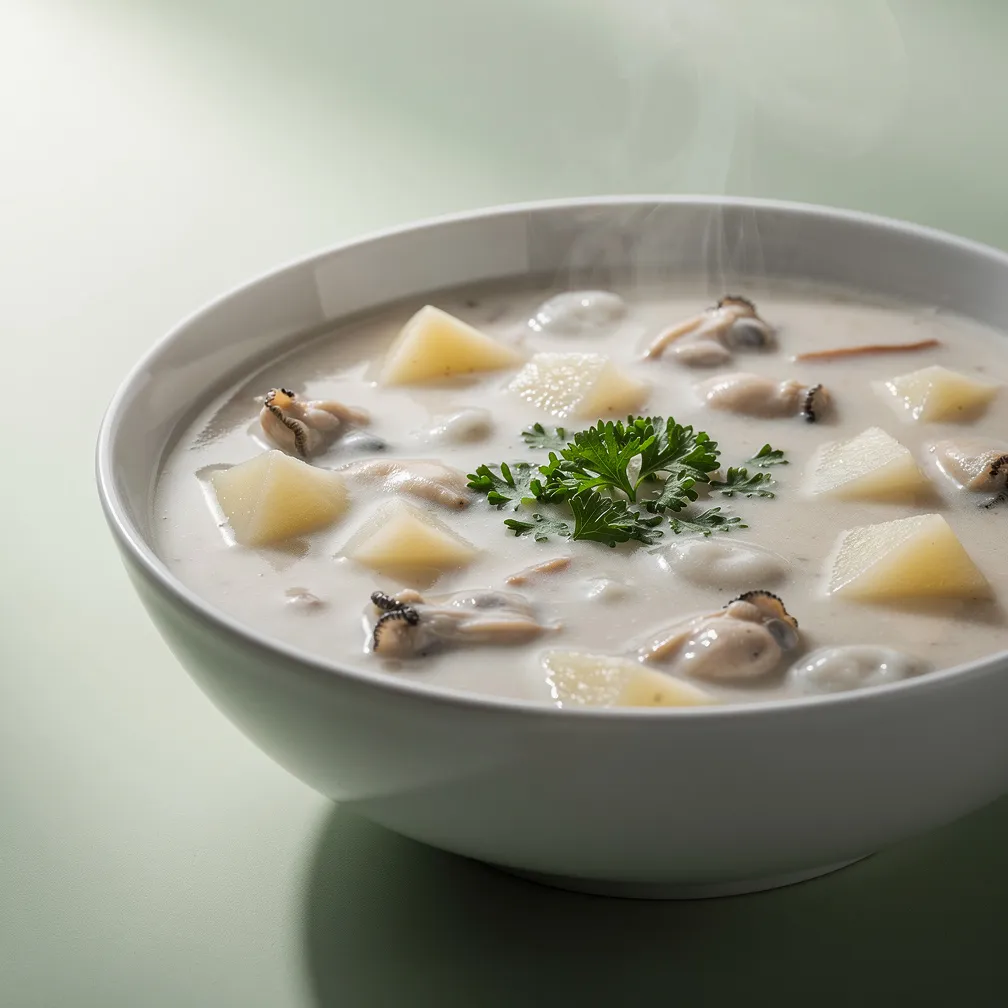
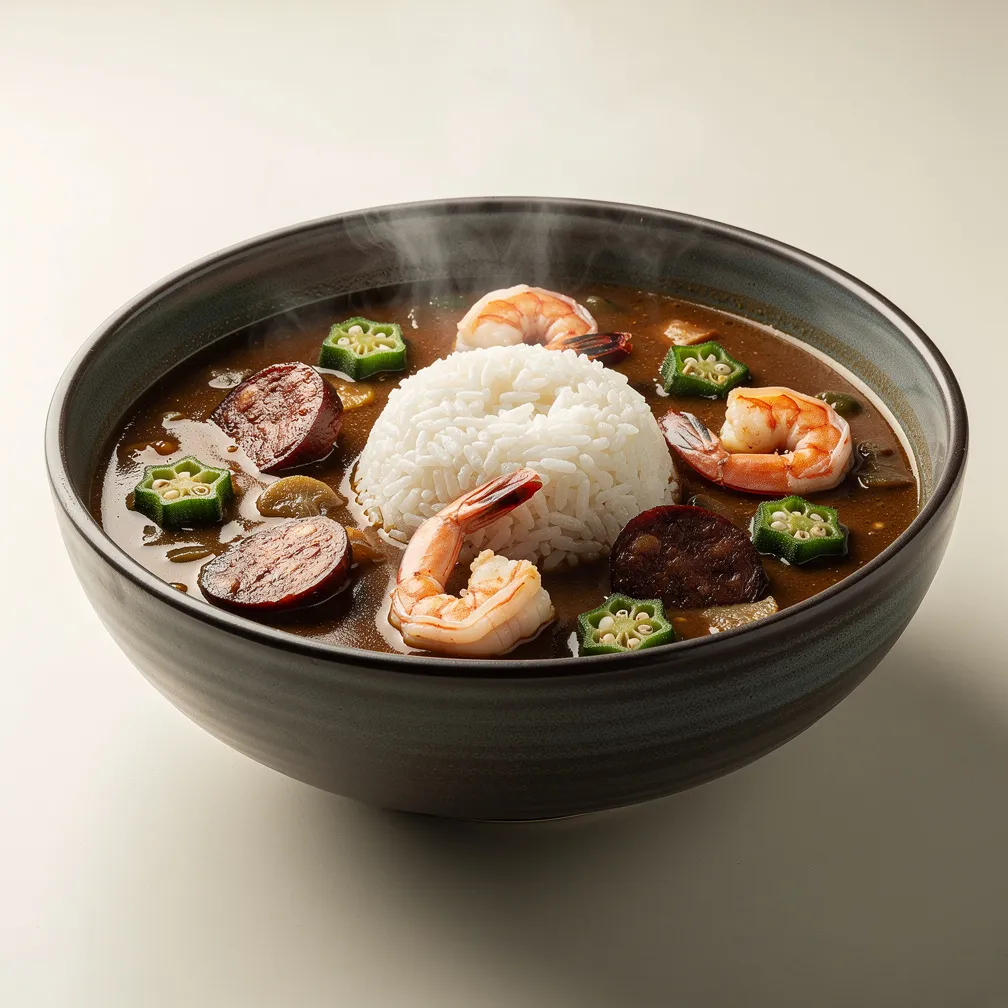
New England clam chowder and Louisiana gumbo are the two great American seafood stews — one cream-thickened, one roux-thickened, both built around shellfish, both regional cultural icons. Per 100 g, chowder runs 142 kcal vs gumbo's 83. The 60 kcal-per-100 g gap is entirely from cream and butter in the chowder vs the broth-and-roux foundation of gumbo.
The fat profile is where the dishes really diverge. Chowder carries 7.8 g fat per 100 g, 4.2 g of it saturated (dairy). Gumbo carries 3.7 g fat per 100 g, only 0.8 g saturated (vegetable-oil roux). For anyone tracking saturated fat for cardiovascular reasons, that fivefold gap is the single most important data point on this page.
Quick comparison
| Per 100 g | New England clam chowder | Gumbo |
|---|---|---|
| Calories | 142 kcal | 83 kcal |
| Protein | 7.2 g | 8.5 g |
| Fat | 7.8 g | 3.7 g |
| Saturated fat | 4.2 g | 0.8 g |
| Carbohydrate | 11.5 g | 4.0 g |
| Sugars | 2.8 g | 1.8 g |
| Fiber | 0.9 g | 0.9 g |
| Sodium | 480 mg | 433 mg |
| Potassium | 310 mg | 186 mg |
| Calcium | 72 mg | 28 mg |
| Iron | 1.8 mg | 0.6 mg |
| Vitamin C | 5.0 mg | 4.9 mg |
Macros and calories
A 350 g cup of clam chowder = ~500 kcal. The same volume of gumbo = ~290 kcal — 40 % lighter. The gap explains why Louisiana cuisine can pair gumbo with a rice base and still produce a meal under 600 kcal, while a Boston bowl of chowder is already at meal-cap intensity before a side.
Protein favors gumbo slightly (8.5 vs 7.2 g per 100 g) — its broth dilution is offset by more meat density per gram. Both deliver around 25 g protein per 350 g portion.
Carbohydrate splits chowder-higher (11.5 vs 4 g per 100 g) because chowder includes potato pieces and a milk-flour thickening. Gumbo's broth is nearly carb-free; the dish picks up its carbohydrate when served over rice, which doubles the carb load on the plate.
Vitamins and minerals
Clam chowder is the mineral-denser bowl per 100 g across the board. Iron at 1.8 mg vs 0.6 mg — three times as much — comes from clams, which are one of the highest-iron foods in the food system. Potassium 310 vs 186 mg, calcium 72 vs 28 mg — the dairy and clam combination wins almost every micronutrient.
The exception is sodium: gumbo at 433 mg is lower than chowder's 480 mg per 100 g. Both are moderate-to-high; both can be reduced at home by skipping commercial seafood stock.
For someone choosing for nutritional density, chowder is the iron-and-calcium dish. For someone choosing for calorie restraint, gumbo is the lighter option.
Saturated fat: the headline number
The 4.2 g vs 0.8 g per 100 g saturated fat gap is the most lopsided number in this comparison. Saturated fat is the lipid most consistently linked to LDL cholesterol elevation. A 350 g cup of clam chowder delivers ~15 g of saturated fat — about 75 % of a 2,000 kcal daily allowance.
Gumbo's 0.8 g per 100 g translates to ~2.8 g per 350 g serving. The Cajun roux is built on oil (not butter) and the typical proteins — chicken, shrimp, andouille — contribute less saturated fat per gram than cream and butter. From a cardiometabolic standpoint, gumbo is the cleaner choice.
This isn't a reason to avoid chowder; it's a reason to treat it as a once-or-twice-a-month dish rather than a weekly habit.
Diet compatibility
| Diet | NE clam chowder | Gumbo |
|---|---|---|
| Vegan | No | No |
| Vegetarian | No | No |
| Gluten-free | Borderline (roux) | Borderline (roux) |
| Dairy-free | No (cream) | Yes |
| Pescatarian | Yes | Yes (shrimp version) |
| Paleo | No | Borderline |
| Mediterranean | No (cream-based) | Borderline |
| Keto | Borderline (11.5 g) | Yes (4 g) |
| Low-FODMAP | Borderline (onion) | Borderline (onion) |
Gumbo is the more diet-flexible dish. Dairy-free, lower-carb, often gluten-free if cooked with a corn-or-rice-flour roux. Chowder is locked into cream and milk; "non-dairy chowder" exists but is fundamentally a different dish.
When to choose New England clam chowder
- Three times the iron per 100 g — meaningful for anemia prevention.
- Higher calcium (72 vs 28 mg) supports daily mineral targets.
- Cream-based richness satisfies appetite faster — a small bowl is filling.
- Pairs with sourdough or oyster crackers as a classic shore meal.
- Tradition: a coastal New England food memory many travelers chase.
When to choose gumbo
- 40 % lighter per 100 g — fits everyday meal planning.
- One-fifth the saturated fat — the clear cardiovascular win.
- Dairy-free without modification — broader dietary fit.
- Holds more protein per gram (8.5 vs 7.2 g).
- Lower-sodium baseline (433 vs 480 mg) before salt-aware seasoning.
Practical pairings
Clam chowder is a complete bowl — needs only a small green salad on the side. Skip the buttered bread; the dish is already running on dairy fat. A side of vinegar-dressed greens cuts through the richness.
Gumbo asks for a rice decision. Plain long-grain white rice is the traditional pairing, doubling carbs per plate. For a lower-carb meal, swap to cauliflower rice or skip the rice entirely; the gumbo holds its own as a standalone soup. A piece of crusty bread for sopping is the third option, adding ~150 kcal.
For a cardiologist-approved seafood-stew day, gumbo wins on every metric except calcium. For a nostalgic Boston harbor experience, the chowder is the order. Both freeze well (90 days) and reheat better the next day than fresh.