Jambalaya vs Gumbo: Calories, Protein, Sodium, GI
Jambalaya vs gumbo per 100 g: 161 vs 83 kcal, 13.8 vs 8.5 g protein. Why one is rice-cooked-in and the other is a broth stew, and which fits when.
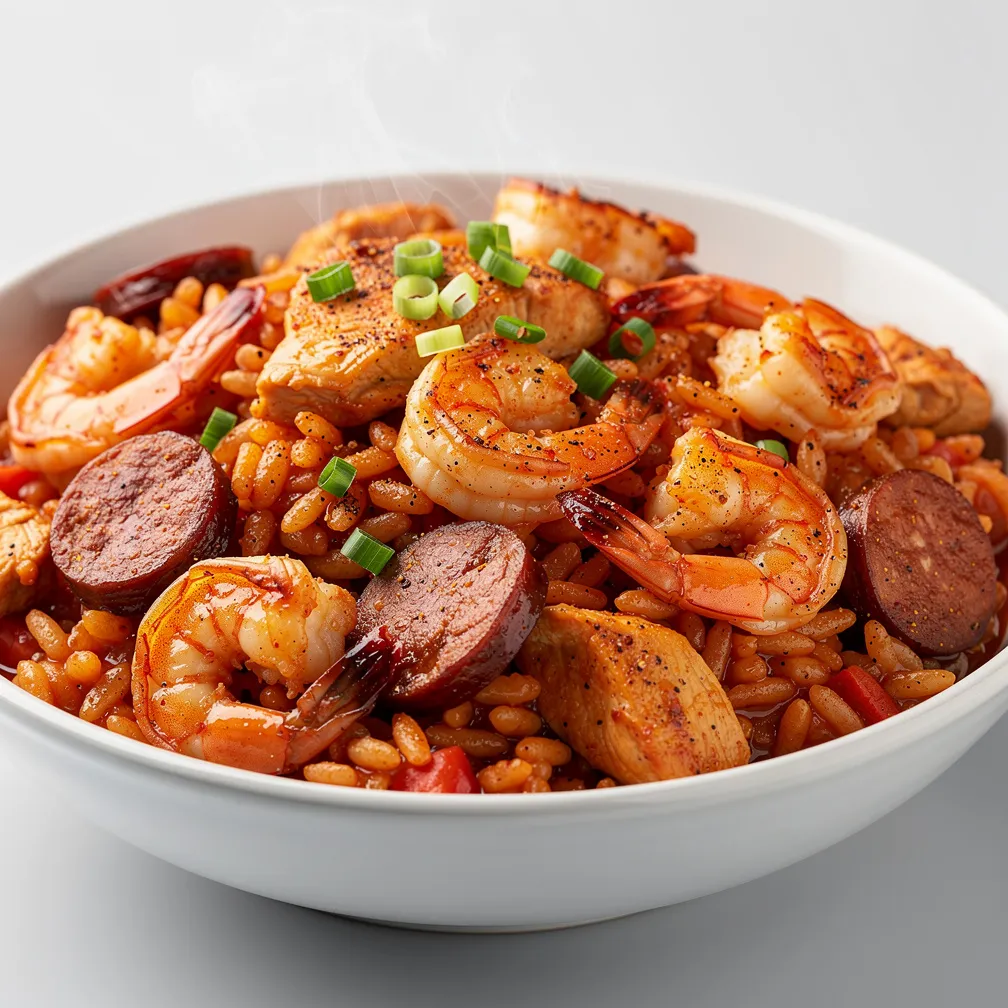
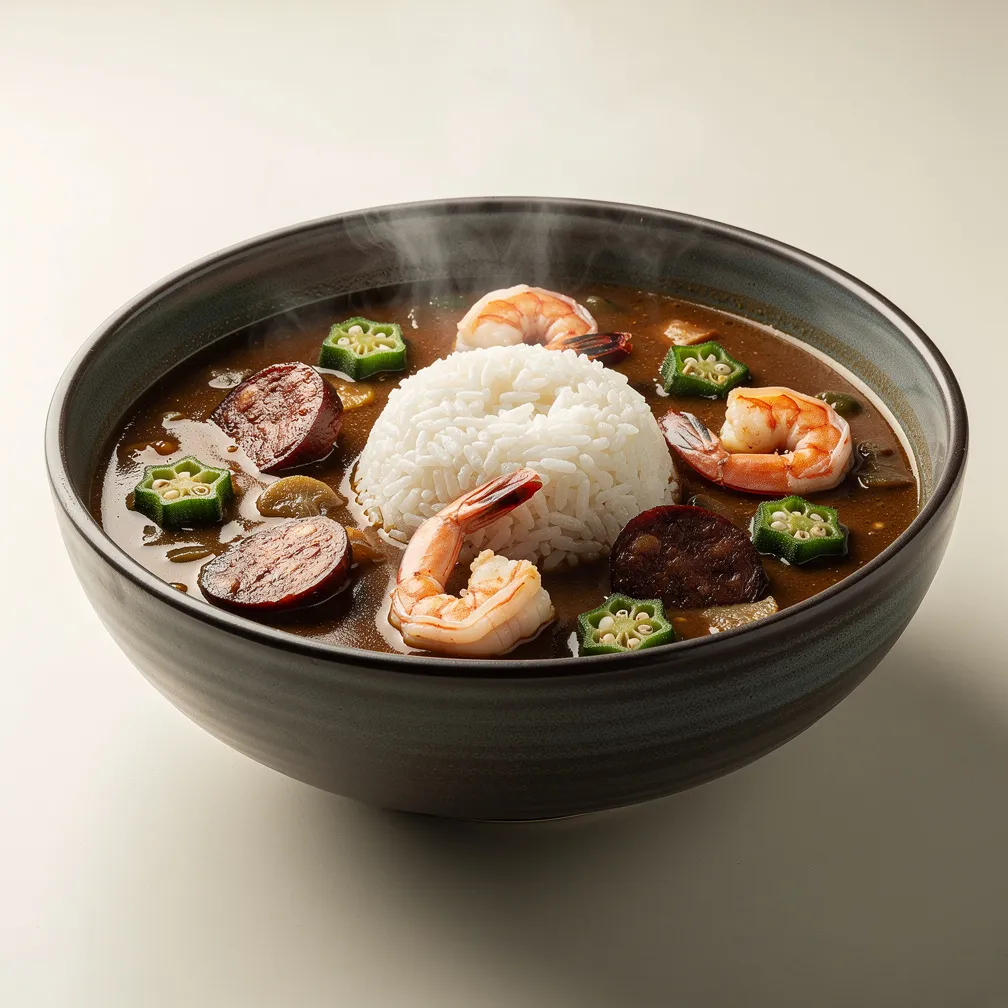
Outsiders treat jambalaya and gumbo as variants of the same Louisiana stew. They're built on different chassis. Jambalaya is a rice dish — the rice cooks inside the pot with the meat, seafood, and tomato, soaking up everything. Gumbo is a stew thickened by roux and okra, served over rice or with rice on the side. That structural difference shows up cleanly in the numbers: jambalaya holds 161 kcal per 100 g, gumbo 83 — almost half.
Per 100 g, jambalaya carries 13.8 g protein and 8.7 g carbs, while gumbo runs leaner at 8.5 g protein and 4 g carbs but heavier on sodium (433 vs 379 mg). Two adjacent culinary traditions, two completely different macros.
Quick comparison
| Per 100 g | Jambalaya | Gumbo |
|---|---|---|
| Calories | 161 kcal | 83 kcal |
| Protein | 13.8 g | 8.5 g |
| Fat | 8.0 g | 3.7 g |
| Saturated fat | 2.2 g | 0.8 g |
| Carbohydrate | 8.7 g | 4.0 g |
| Sugars | 0.9 g | 1.8 g |
| Fiber | 0.7 g | 0.9 g |
| Sodium | 379 mg | 433 mg |
| Potassium | 240 mg | 186 mg |
| Vitamin C | 7.2 mg | 4.9 mg |
| Iron | 1.1 mg | 0.6 mg |
| Glycemic index | 55 | — |
Macros and calories
Jambalaya's higher calorie density comes from the rice cooked into the dish. Each gram of cooked rice carries ~1.3 kcal; a one-pot jambalaya has rice absorbing fat from the andouille and chicken, which adds another lift. Gumbo is broth-based — most of its mass is liquid, with the protein floating in.
A typical entrée serving of jambalaya is 250–300 g = 400–480 kcal. The same serving of gumbo (without the underlying rice) runs 210–250 kcal. Add a 150 g bed of plain white rice to gumbo and the totals converge around 400 kcal. Per spoonful, gumbo eats lighter; per plate, the totals depend on how much rice goes underneath.
Protein density tilts jambalaya's way (13.8 vs 8.5 g per 100 g). The rice doesn't add protein but it doesn't dilute the meat either; the meat and rice cook together with consistent ratios. Gumbo is a broth — its 8.5 g protein per 100 g comes from chunks of chicken, sausage, shrimp, or crab that take up perhaps 20–25 % of the dish's mass.
Vitamins and minerals
Jambalaya wins on vitamin C (7.2 mg vs 4.9 mg) thanks to the tomato base, which gumbo typically skips in favor of dark roux color. Potassium (240 vs 186 mg) also goes to jambalaya, helped by the tomato. Iron is 1.1 vs 0.6 mg — meaningful for anyone tracking blood-iron support.
Sodium is the metric that requires attention. Both dishes lean on andouille sausage and salt-heavy seasoning. Gumbo's 433 mg per 100 g multiplied by a 300 g portion equals 1,300 mg — well over half the daily target. Jambalaya's 379 mg per 100 g lands close.
Glycemic index and blood sugar
Jambalaya sits at GI 55, the medium band — the rice is white, but the fat, protein, and tomato slow absorption. A typical portion delivers a moderate glucose curve that flattens around 90 minutes.
Gumbo doesn't have a single GI value in the catalog because the dish is bimodal: the stew itself is near-zero carb, while the underlying rice raises the glycemic load. Serving gumbo with brown rice or cauliflower rice keeps the load low; with white long-grain rice it jumps into jambalaya territory.
Diet compatibility
| Diet | Jambalaya | Gumbo |
|---|---|---|
| Vegan | No (meat/seafood) | No (meat/seafood) |
| Vegetarian | No | No |
| Gluten-free | Yes | Borderline (roux) |
| Dairy-free | Yes | Yes |
| Paleo | No (rice) | Borderline (roux) |
| Mediterranean | Borderline | Borderline |
| Keto | No (rice) | Yes (broth only) |
| Low-FODMAP | Borderline (garlic) | Borderline (garlic) |
Gumbo's flour-based roux can disqualify it from a strict gluten-free plan; many home cooks now use gluten-free flour, but restaurant versions usually don't. Jambalaya is gluten-free by default but contains rice, which knocks it out of keto and Paleo brackets.
When to choose jambalaya
- Higher protein per 100 g (13.8 g) — closer to a complete meal in one bowl.
- Vitamin C from the tomato base — almost 50 % more than gumbo.
- More iron (1.1 vs 0.6 mg) supports recovery and blood-building diets.
- One-pot meal without a separate rice cook — quicker on a weeknight.
- Holds up to refrigeration; flavors deepen on day two.
When to choose gumbo
- Roughly half the calories per 100 g — a much lighter starter or first course.
- Lower fat and saturated fat make it the diet-friendly option of the two.
- Broth format means more hydration per spoonful — useful in hot weather.
- Pair with brown rice or none at all for a low-carb seafood meal.
- Andouille-free seafood gumbo is one of the cleanest high-protein Cajun options.
Practical pairings
Jambalaya is a complete plate; the only thing it really needs is a green vegetable or a sharp pickled side. Add 100 g of collard greens and you close the fiber gap (0.7 g jumps to ~3.7 g).
Gumbo asks the diner to decide on the carb base. Long-grain white rice is traditional but pushes the glycemic load up. Brown rice or cauliflower rice keeps the meal under 350 kcal per bowl with the lowest glucose impact. Hot French bread is a classic accompaniment but adds 150–200 kcal per piece.
For Mardi Gras-scale feeding, gumbo scales: a single pot serves 12 with a rice cooker on the side. Jambalaya scales less easily because the rice can over- or under-cook in batch volumes.