Colcannon vs Irish Soda Bread: Calories, Fiber, Carbs
Colcannon vs Irish soda bread per 100 g: 118 vs 258 kcal, 15.5 vs 49 g carbs. Mashed potato with cabbage vs Irish quick bread — accompaniments compared.
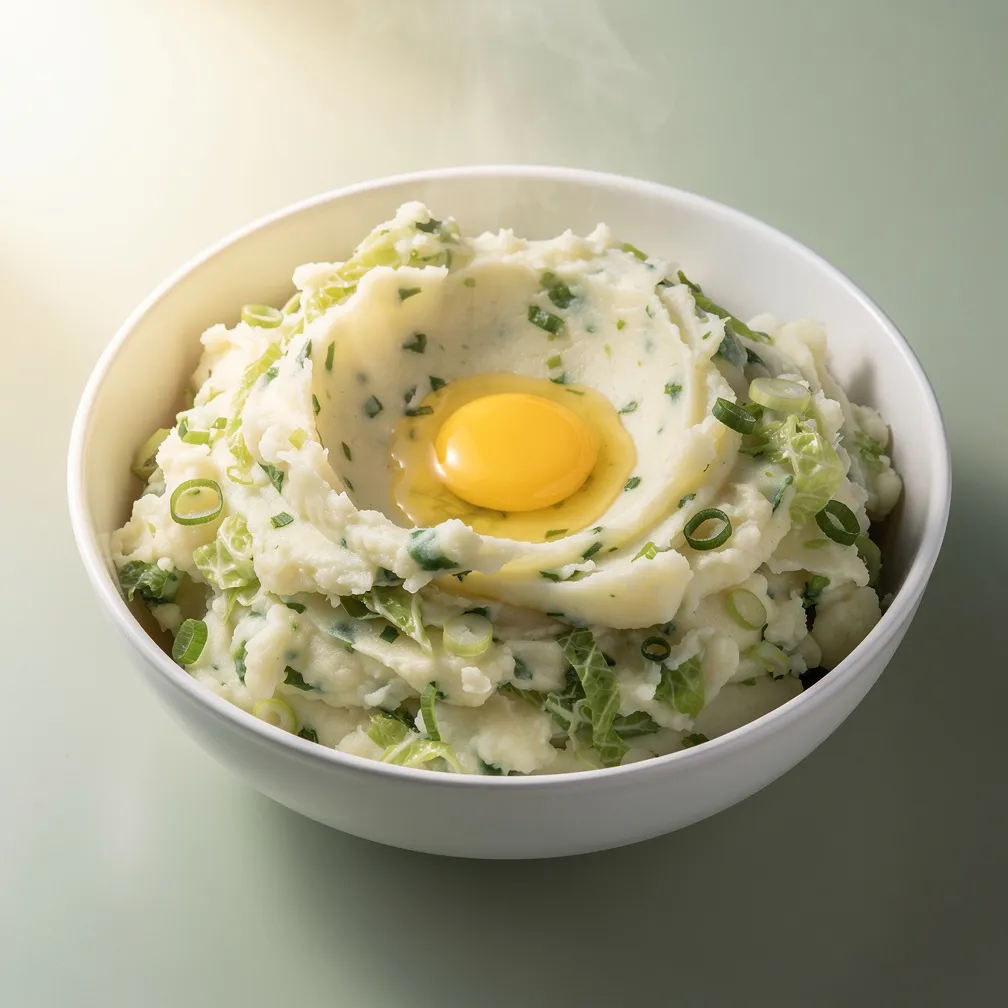
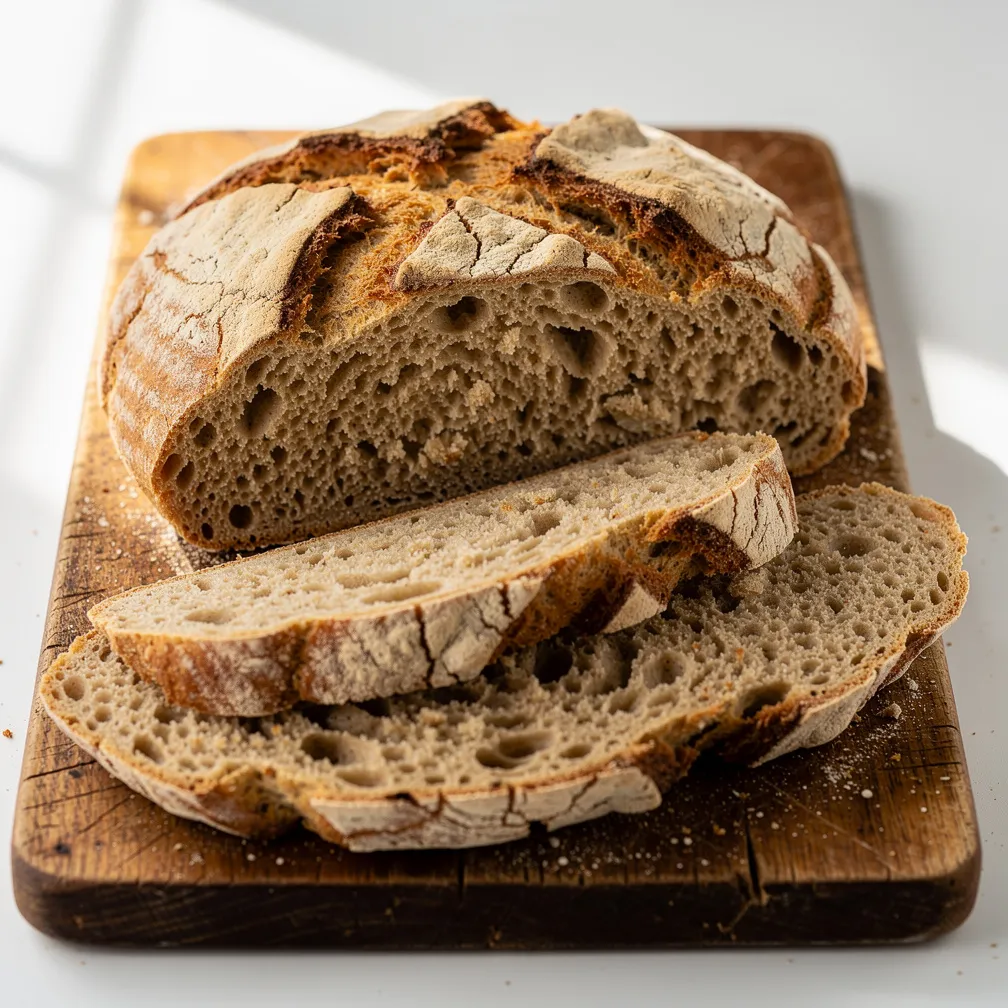
Colcannon and Irish soda bread are both Irish side dishes that appear on the same dinner plate but serve completely different nutritional roles. Colcannon is mashed potato folded with sautéed kale or cabbage, butter, and scallions — a vegetable-heavy starch side. Soda bread is a wheat-flour quick bread leavened with baking soda and buttermilk — a denser carb vehicle for sopping stew or carrying butter.
Per 100 g, soda bread is more than twice the calorie density of colcannon (258 vs 118 kcal). The reason is water content. Colcannon is 75 % water; soda bread is 35 % water. By weight, soda bread is a much denser carbohydrate package.
Quick comparison
| Per 100 g | Colcannon | Irish soda bread |
|---|---|---|
| Calories | 118 kcal | 258 kcal |
| Protein | 2.5 g | 7.5 g |
| Fat | 5.5 g | 3.5 g |
| Saturated fat | 3.4 g | 1.5 g |
| Carbohydrate | 15.5 g | 49.0 g |
| Sugars | 1.8 g | 4.5 g |
| Fiber | 2.2 g | 3.0 g |
| Sodium | 280 mg | 480 mg |
| Potassium | 380 mg | 200 mg |
| Calcium | 45 mg | 90 mg |
| Iron | 0.8 mg | 2.2 mg |
| Vitamin C | 18.0 mg | 0.0 mg |
Macros and calories
A 200 g portion of colcannon = 236 kcal. A 60 g slice of soda bread = 155 kcal. The colcannon portion looks bigger but is meaningfully lighter on calories. At equivalent serving weights, soda bread is the heavier dietary commitment.
Protein favors soda bread (7.5 vs 2.5 g per 100 g). Wheat flour is a protein source; potato is not. A 60 g slice of soda bread delivers ~4.5 g protein, modest but meaningful in a meal context.
Fat reverses the relationship. Colcannon's 5.5 g fat per 100 g comes from the butter and bacon (in some versions) folded into the mash. Soda bread's 3.5 g is mostly residual butter and buttermilk. Saturated fat reflects the same pattern (3.4 vs 1.5 g) — colcannon's butter dominates.
Vitamins and minerals
This is where the comparison really splits. Colcannon delivers 18 mg of vitamin C per 100 g — entirely from the cabbage or kale folded into the mash. A 200 g portion supplies ~36 mg, a third of an adult's daily target. Soda bread has zero vitamin C.
Potassium also strongly favors colcannon (380 vs 200 mg per 100 g) — the potato and cabbage combination is a strong potassium delivery.
Soda bread wins iron (2.2 vs 0.8 mg per 100 g) because enriched wheat flour is a major iron contributor. A 60 g slice delivers 1.3 mg iron. Calcium is double (90 vs 45 mg) because of the buttermilk in the dough.
For someone choosing on micronutrient density per calorie, colcannon is the more vitamin-rich side. Soda bread is the better iron and calcium source per slice.
Fiber and starch quality
Both dishes carry meaningful fiber (2.2 vs 3.0 g per 100 g), but the source differs. Colcannon's fiber is from the leafy greens and potato skin (when included); soda bread's is from wheat flour and any oats or wholemeal flour in the recipe.
The glycemic profile differs too. Colcannon's mashed potato has a moderate-to-high GI (60–75), softened by the fat in butter and the fiber in cabbage. Irish soda bread has a moderate GI (55–65) due to the dense, less-aerated structure.
Diet compatibility
| Diet | Colcannon | Irish soda bread |
|---|---|---|
| Vegan | No (butter) | Borderline |
| Vegetarian | Yes | Yes |
| Gluten-free | Yes | No (wheat) |
| Dairy-free | No (butter) | No (buttermilk) |
| Paleo | No (potato) | No (wheat) |
| Mediterranean | Borderline | Borderline |
| Keto | No (15.5 g carbs) | No (49 g carbs) |
| Low-FODMAP | Borderline | Borderline |
Colcannon is gluten-free naturally, which makes it more flexible than soda bread for restricted eaters. Vegan versions of both exist with plant butter and oat milk substitutes; both adapt without losing identity.
When to choose colcannon
- Less than half the calories per 100 g.
- Vitamin C presence (18 mg per 100 g) — soda bread has zero.
- 90 % more potassium per 100 g from the potato and cabbage.
- Gluten-free without modification.
- A vegetable side and a starch side rolled into one dish.
- One-third less sodium per 100 g.
When to choose Irish soda bread
- 3× the protein per 100 g (7.5 vs 2.5 g).
- 2.75× the iron per 100 g.
- 2× the calcium from buttermilk.
- More fiber per 100 g (3 vs 2.2 g).
- Portable, holds for 2–3 days at room temperature.
- Pairs with butter, jam, or savory accompaniments — flexible across meals.
Practical pairings
Colcannon traditionally serves alongside boiled bacon (Irish-style bacon and cabbage), sausages, or roast meat. A 200 g portion of colcannon + 100 g grilled lamb or pork = ~500 kcal balanced meal with vegetable matter and protein.
Irish soda bread pairs with stew (Irish stew, Guinness beef stew, fish chowder) as a sopping accompaniment. A slice or two adds ~150–250 kcal to a stew bowl. With butter and jam at breakfast, soda bread runs ~300 kcal per slice — a reasonable breakfast slot.
For weekly Irish-style eating: colcannon as a daily side or starch-base, soda bread as a stew companion or breakfast item. Both work as leftovers — colcannon reheats well in a skillet (the leftover potato gets a crust), soda bread toasts beautifully on day two and three.