Butter vs Olive Oil: Saturated Fat, Monounsaturated Fat, and What to Cook With
Butter vs olive oil per 100 g: saturated and monounsaturated fat, smoke point, vitamin E, cardiovascular evidence — and when each belongs in the pan.
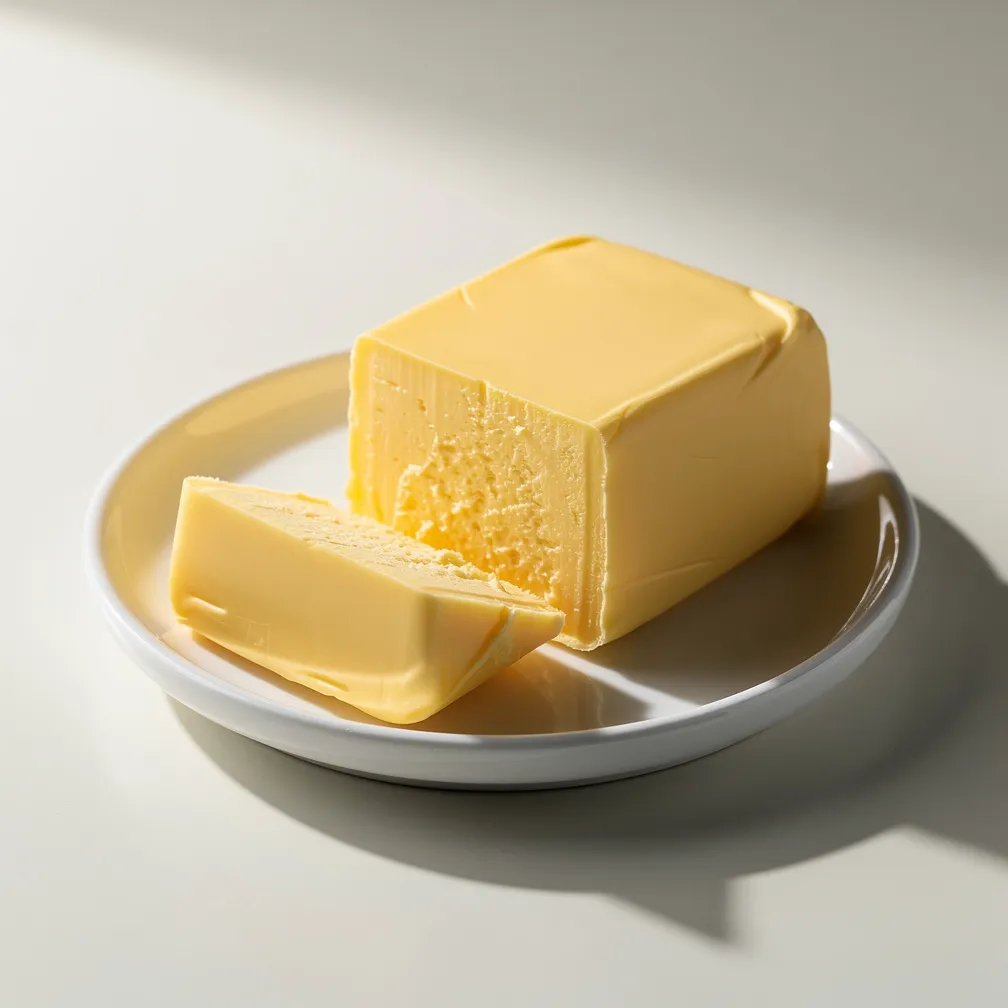
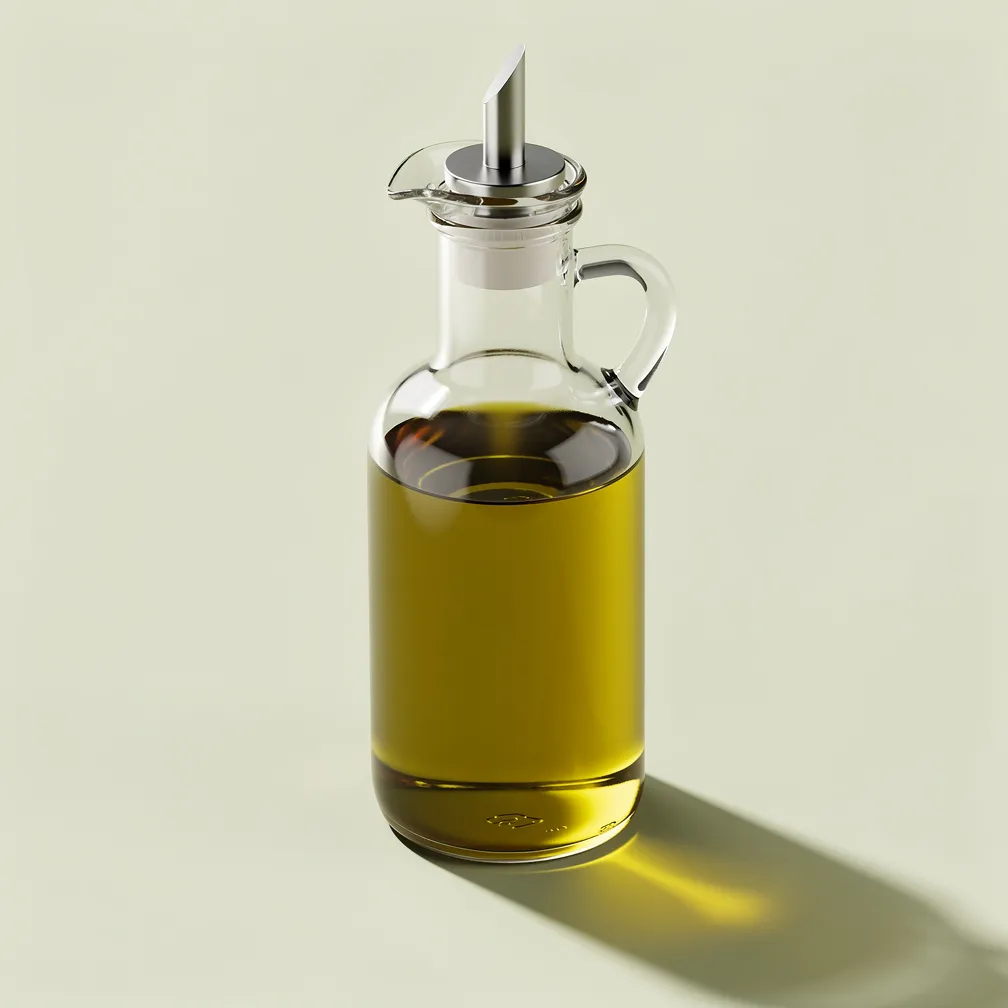
Butter and olive oil sit on opposite sides of the cooking-fat debate — animal vs plant, saturated vs monounsaturated, traditional vs Mediterranean. Per 100 g, butter carries 56 g of fat (34 g of it saturated); olive oil carries 100 g of fat (73 g of it monounsaturated). The cardiovascular evidence consistently favors olive oil. The kitchen evidence is more nuanced: each has a job the other can't do as well.
This guide compares them on fatty-acid profile, vitamins, smoke point, cooking behavior, and diet fit — and shows when each earns its slot in the pan.
Quick comparison
| Per 100 g | Butter | Olive oil |
|---|---|---|
| Calories | 650 kcal | 884 kcal |
| Total fat | 56.4 g | 100.0 g |
| Saturated fat | 34.3 g | 13.8 g |
| Monounsaturated fat | 21.0 g | 73.0 g |
| Polyunsaturated fat | 3.0 g | 10.5 g |
| Omega-3 | 0.3 g | ~0.8 g |
| Trans fat (natural) | 3.3 g | 0 g |
| Cholesterol | 215 mg | 0 mg |
| Vitamin E | 2.1 mg | 14.4 mg |
| Vitamin K | 7 µg | 60 µg |
| Vitamin A | 684 µg | 0 µg |
| Smoke point | ~150 °C (clarified higher) | 190–210 °C (extra virgin) |
Butter is 80 % fat, 17 % water, 3 % milk solids. Olive oil is essentially pure fat. The calorie gap (650 vs 884 per 100 g) is entirely from butter's water content.
Fat profile — the headline difference
Butter is mostly saturated fat: 34.3 g per 100 g, dominated by palmitic, myristic, and stearic acids. Olive oil is mostly monounsaturated: 73 g per 100 g, almost entirely oleic acid. Per tablespoon (~14 g), that's about 5 g of saturated fat in butter vs 1.9 g in olive oil — and 3 g of monounsaturated in butter vs 10 g in olive oil.
That gap drives the cardiovascular evidence. Randomized trials substituting olive oil for butter (or butter equivalents) consistently show drops in LDL cholesterol of 5–15 mg/dL within weeks. Observational cohorts at the population level show olive oil intake associated with lower cardiovascular event rates; butter intake is roughly neutral in recent meta-analyses, but does not show the same protective signal.
Olive oil also carries 10.5 g of polyunsaturated fat per 100 g (including some omega-3 and omega-6) and a small amount of plant sterols — both contribute to LDL reduction. Butter has minimal PUFA and no plant sterols.
Cholesterol and trans fat
Butter contains 215 mg of cholesterol per 100 g; olive oil has none. Dietary cholesterol affects blood cholesterol modestly in most people, more in "hyper-responders" (about 25 % of the population). For someone with normal lipid panels, the dietary cholesterol from butter is less critical than the saturated fat content.
Butter also contains a small amount of naturally occurring trans fat (3.3 g per 100 g, mostly vaccenic acid and conjugated linoleic acid — CLA). These ruminant trans fats are not the same as industrially produced trans fats; observational data treats them as roughly neutral or mildly beneficial, in contrast to industrial trans fats which are clearly harmful. Olive oil has zero trans fat.
Vitamins and antioxidants
Butter is one of the few dietary sources of preformed vitamin A (retinol): 684 µg per 100 g, about 75 % of the daily target. Grass-fed butter also carries small amounts of vitamin K2 (menaquinone) — useful but variable.
Olive oil counters with vitamin E (14.4 mg vs butter's 2.1 mg) and vitamin K1 (60 µg vs 7 µg). Extra-virgin olive oil also delivers polyphenols (oleocanthal, hydroxytyrosol, oleuropein) at 100–500 mg/L depending on origin and freshness. These compounds drive much of olive oil's anti-inflammatory signal in human trials, including improvements in endothelial function and reductions in inflammatory markers.
Smoke point and cooking behavior
This is where butter pulls back some ground. Butter's smoke point is about 150 °C — fine for low-medium pan-frying, gentle sauces, and finishing dishes. Above 150 °C the milk solids brown (deliberately, in brown-butter recipes) then burn. Clarified butter (ghee) raises the smoke point to about 230 °C by removing those solids.
Extra-virgin olive oil sits at 190–210 °C — comfortable for searing, roasting, and most pan-frying. Refined olive oil ("light" or "pure") pushes the smoke point to 240 °C, useful for high-heat applications but with the polyphenols stripped out. The old internet rule "don't cook with extra-virgin olive oil" is overstated — modern trials show EVOO holds up well at typical home-cooking temperatures, with the polyphenols partly preserved.
Use butter for flavor (Maillard browning, dairy-rich sauces, baking laminations). Use olive oil for everything else — sautéing, salads, roasting, raw drizzling. Mixing both in the pan combines butter's flavor with olive oil's higher smoke point.
Diet compatibility
| Diet | Butter | Olive oil |
|---|---|---|
| Vegan | No | Yes |
| Vegetarian | Yes | Yes |
| Pescatarian | Yes | Yes |
| Gluten-free | Yes | Yes |
| Dairy-free | No | Yes |
| Keto | Yes | Yes |
| Paleo | Mixed (grass-fed often accepted) | Yes |
| Mediterranean | Limited (saturated fat capped) | Yes (centerpiece fat) |
| Low-FODMAP | Yes (lactose ≈ 0) | Yes |
Olive oil is the rare food that fits every major dietary pattern without caveat. Butter is excluded from vegan and dairy-free; mediterranean limits it to small amounts, paleo accepts grass-fed versions inconsistently across sources.
When to choose butter
- You're cooking for flavor, not for fat profile — pan-fried eggs, browned butter for vegetables or seafood, lamination in croissants and pastry.
- Baking recipes calling for cold solid fat — pie crusts, biscuits, scones. Olive oil can't replicate the texture.
- High-fat ketogenic eating where saturated fat isn't the primary concern.
- Finishing dishes — a knob of butter melted into a sauce at the end adds richness olive oil can't match.
- You want preformed vitamin A from food rather than from beta-carotene conversion.
When to choose olive oil
- General-purpose cooking, where evidence-based cardiovascular protection matters — sautéing, roasting, dressings, mayonnaise, raw drizzling.
- LDL cholesterol management or family-history cardiovascular risk. Replacing butter with olive oil at one to two cooking applications per day shows up in lipid panels within weeks.
- Mediterranean-style eating where olive oil is the centerpiece fat (1–4 tablespoons daily).
- Vegan, dairy-free, or lactose-intolerant cooking.
- Raw applications — salads, marinades, bread-dipping. Extra-virgin olive oil's polyphenols and aromatics are wasted at high heat.
How to use them in practice
Butter does its best work between 80 and 150 °C — bloomed in a warm pan to coat aromatics, melted into hot pasta for cacio e pepe, browned past golden for nutty notes on roasted vegetables. Don't push it past smoking; the burnt milk solids taste acrid and lose the vitamin A.
Olive oil rewards quality at the raw end and tolerates surprising heat at the cooked end. For salads, marinades, and finishing, use extra-virgin from a single origin with a recent harvest date — that's where polyphenols and aroma matter. For sautéing vegetables at 180 °C or roasting at 200 °C, a mid-quality extra-virgin holds up fine. Save the expensive bottle for raw use.
A useful kitchen pattern: olive oil for daily savory cooking (every meal that doesn't call for butter specifically); butter for baking, eggs, and finishing; mixed in the pan when you want flavor at higher heat. Per-week intake of olive oil can run 4–8 tablespoons without concern; butter typically 1–3 tablespoons unless you're on a ketogenic protocol.
How Vnutri shows both
The butter food page and olive oil food page list the full nutrient profile, diet tags, and fatty-acid breakdowns. The fats category groups all cooking fats side by side. The low-saturated-fat filter surfaces olive oil and excludes butter.
Frequently asked questions
Is olive oil healthier than butter?
For cardiovascular outcomes, yes — the evidence consistently favors olive oil for LDL cholesterol, blood pressure, and event rates in randomized trials. Olive oil also delivers vitamin E and polyphenols that butter lacks. Butter contributes vitamin A and flavor that olive oil can't match, but the cardiovascular trade-off goes in olive oil's direction.
Can you cook with olive oil at high heat?
Yes. Extra-virgin olive oil has a smoke point of 190–210 °C, comfortable for sautéing, roasting, and most pan-frying. Refined olive oil pushes higher (~240 °C) if you need deep-frying temperatures. The "don't cook with EVOO" rule is outdated.
Is butter bad for cholesterol?
Butter's 34 g of saturated fat per 100 g raises LDL cholesterol in most people, particularly hyper-responders. Substituting olive oil for butter typically drops LDL by 5–15 mg/dL within a few weeks. For someone with normal lipid panels, moderate butter use is unlikely to cause harm; for someone managing high LDL, the swap matters.
Butter or olive oil for keto?
Both work. Butter has the higher saturated-fat content (preferred by some keto frameworks); olive oil has the higher monounsaturated content (preferred by Mediterranean-keto variants). Mixing both through the day gives the best fat profile.
Is grass-fed butter actually healthier?
Grass-fed butter has slightly higher vitamin K2, beta-carotene, and CLA than conventional butter — small differences, not transformative. Most cardiovascular evidence treats grass-fed and conventional butter the same. If grass-fed is available and affordable, fine; if not, conventional butter is not meaningfully different for health outcomes.
What about ghee vs olive oil?
Ghee (clarified butter) has nearly all the milk solids removed, raising its smoke point to ~230 °C and eliminating most lactose. Fat profile is similar to butter (62 g saturated fat per 100 g vs butter's 34 g — because ghee is more concentrated). Olive oil still wins on cardiovascular markers; ghee wins on smoke point and lactose tolerance.
References
- USDA FoodData Central — Butter, salted (FDC ID: 173410).
- USDA FoodData Central — Olive oil, salad or cooking (FDC ID: 171413).
- Estruch R, Ros E, Salas-Salvadó J, et al. Primary Prevention of Cardiovascular Disease with a Mediterranean Diet Supplemented with Extra-Virgin Olive Oil or Nuts (PREDIMED). N Engl J Med. 2018;378(25):e34.
- Guasch-Ferré M, Liu G, Li Y, et al. Olive Oil Consumption and Cardiovascular Risk in U.S. Adults. J Am Coll Cardiol. 2020;75(15):1729-1739.
- Sacks FM, Lichtenstein AH, Wu JHY, et al. Dietary Fats and Cardiovascular Disease: A Presidential Advisory From the American Heart Association. Circulation. 2017;136(3):e1-e23.