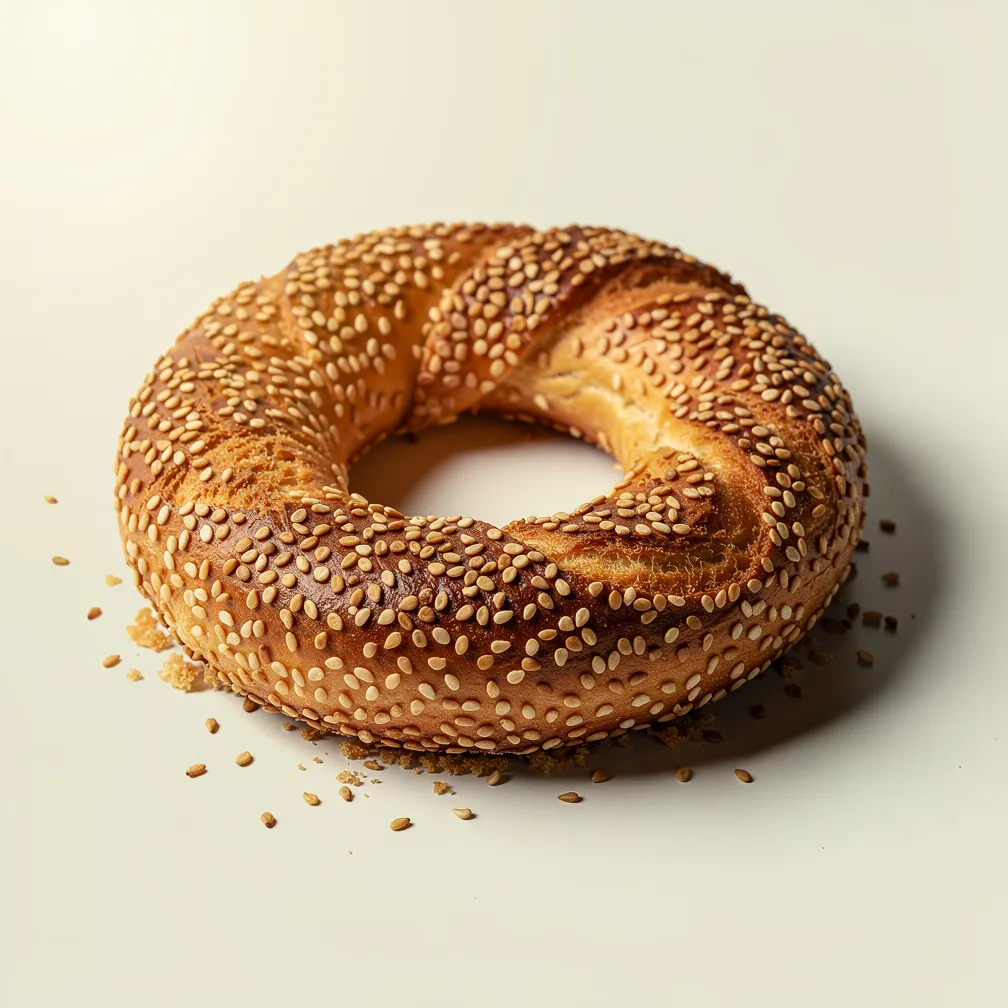
Turkish simit
| Macros | per 100 g |
|---|---|
| Calories | 310 kcal |
| Protein | 9.5 g |
| Fat | 5.5 g |
| Carbs | 57.0 g |
Turkish simit is a circular sesame-crusted bread ring, a staple street food and breakfast item throughout Turkey and much of the broader region. It is typically eaten on its own or alongside cheese, olives and tea, and is sold fresh from street carts or bakeries. Per 100 g, simit provides 310 kcal, 9.5 g of protein, 5.5 g of fat, 57 g of carbohydrates and 2.5 g of dietary fibre, with 6 g coming from sugars. On the mineral side, it contains 420 mg of sodium, 130 mg of potassium and 40 mg of calcium per 100 g. No glycemic index value is available for this food. Simit fits vegan, vegetarian, pescatarian, dairy-free and Mediterranean dietary patterns.
How many calories in a Turkish simit?
Turkish simit contains 310 kcal per 100 g. A typical whole simit weighs around 150–180 g, putting a single ring at roughly 465–560 kcal.
How much sodium is in Turkish simit?
Turkish simit contains 420 mg of sodium per 100 g, which is relatively high for a bread product. This is worth keeping in mind if you are eating a full ring or pairing it with other salty foods like cheese or olives.
Is Turkish simit vegan?
Yes, Turkish simit is vegan. The traditional recipe is made from flour, water, yeast, salt and sesame seeds, with no dairy or eggs involved, making it suitable for vegan and dairy-free diets.
Diets
Get Vnutri
Log meals, track daily totals, save favorites. Free on iOS and Android.
Glycemic Index
approximateMacros · per 100 g
| Macros | Amount |
|---|---|
| Calories | 310 kcal |
| Protein | 9.5 g |
| Fat | 5.5 g |
| Carbs | 57.0 g |
| Sugars | 6.0 g |
| Fiber | 2.5 g |
| Fats breakdown | Amount |
|---|---|
| Saturated | 0.80 g |
| Monounsaturated | 2.5 g |
| Polyunsaturated | 1.5 g |
| Cholesterol | 0 mg |
| Minerals | Amount |
|---|---|
| Calcium | 40.0 mg |
| Iron | 2.5 mg |
| Potassium | 130 mg |
| Sodium | 420 mg |
| Vitamins | Amount |
|---|---|
| Vitamin A | 0 mcg |
| Vitamin C | 0 mg |
| Vitamin B12 | 0 mcg |