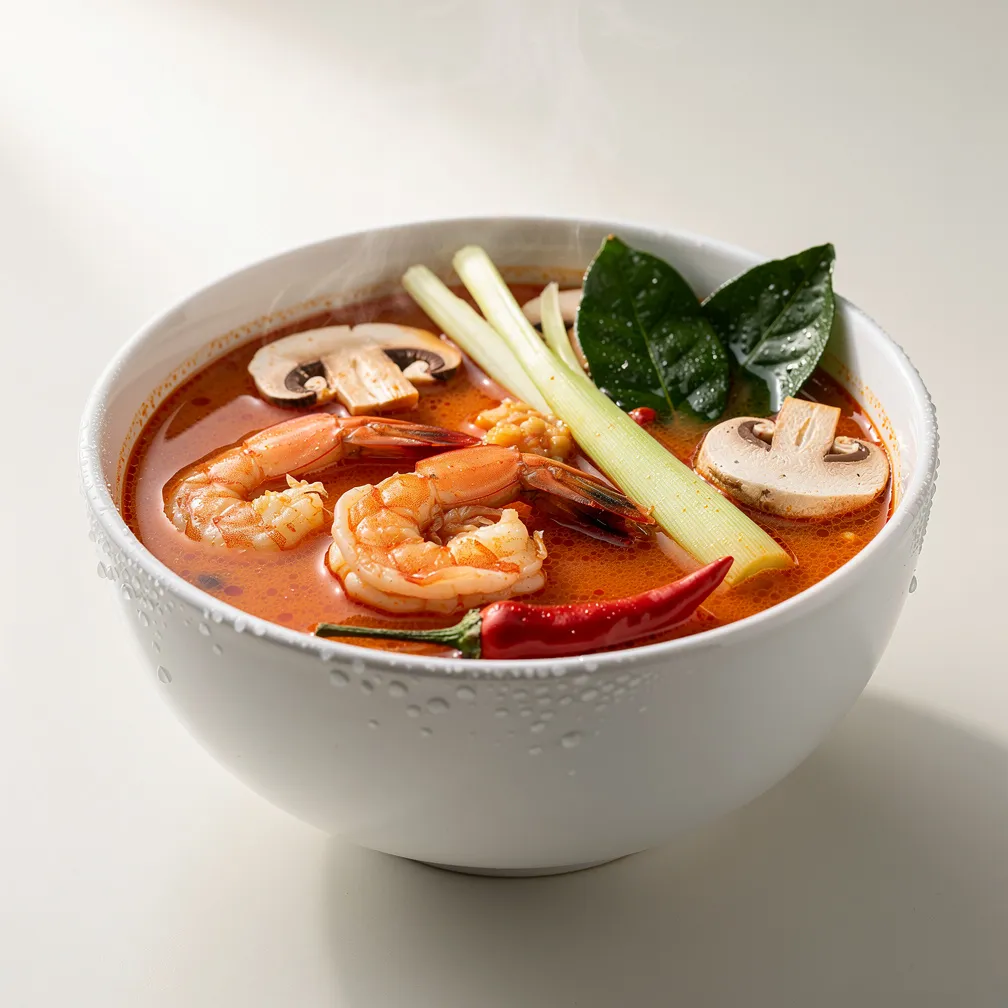
Tom yum
| Macros | per 100 g |
|---|---|
| Calories | 52 kcal |
| Protein | 4.8 g |
| Fat | 2.2 g |
| Carbs | 4.2 g |
Tom yum is a Thai hot-and-sour soup typically made with shrimp or other seafood, lemongrass, kaffir lime leaves, galangal, chillies and fish sauce. It is a staple of Thai cuisine, served as a starter or light main course, and is widely available both in restaurants and as an instant product. Per 100 g, tom yum provides 52 kcal, 4.8 g of protein, 2.2 g of fat and 4.2 g of carbohydrates, with 0.8 g of dietary fibre and 2.4 g of sugars — a relatively lean profile for a broth-based dish. Notable minerals include sodium at 580 mg per 100 g, reflecting the seasoned broth, along with 210 mg of potassium and 28 mg of calcium. Tom yum is compatible with pescatarian, gluten-free, dairy-free, keto, paleo and low-FODMAP dietary patterns.
How many calories in tom yum soup?
Tom yum contains 52 kcal per 100 g. A typical restaurant bowl of around 300 g would provide roughly 155 kcal, making it one of the lower-calorie options among Asian soups.
How much sodium is in tom yum?
Tom yum contains 580 mg of sodium per 100 g, which is relatively high due to the fish sauce and seasoned broth. A standard 300 g serving would contribute around 1,740 mg of sodium.
Is tom yum keto-friendly?
Yes, tom yum is considered keto-friendly. At 4.2 g of carbohydrates per 100 g and with a protein-forward profile of 4.8 g per 100 g, it fits comfortably within typical low-carbohydrate dietary targets.
Diets
Get Vnutri
Log meals, track daily totals, save favorites. Free on iOS and Android.
Macros · per 100 g
| Macros | Amount |
|---|---|
| Calories | 52.0 kcal |
| Protein | 4.8 g |
| Fat | 2.2 g |
| Carbs | 4.2 g |
| Sugars | 2.4 g |
| Fiber | 0.80 g |
| Fats breakdown | Amount |
|---|---|
| Saturated | 0.60 g |
| Monounsaturated | 0.90 g |
| Polyunsaturated | 0.50 g |
| Cholesterol | 38.0 mg |
| Minerals | Amount |
|---|---|
| Calcium | 28.0 mg |
| Iron | 0.80 mg |
| Potassium | 210 mg |
| Sodium | 580 mg |