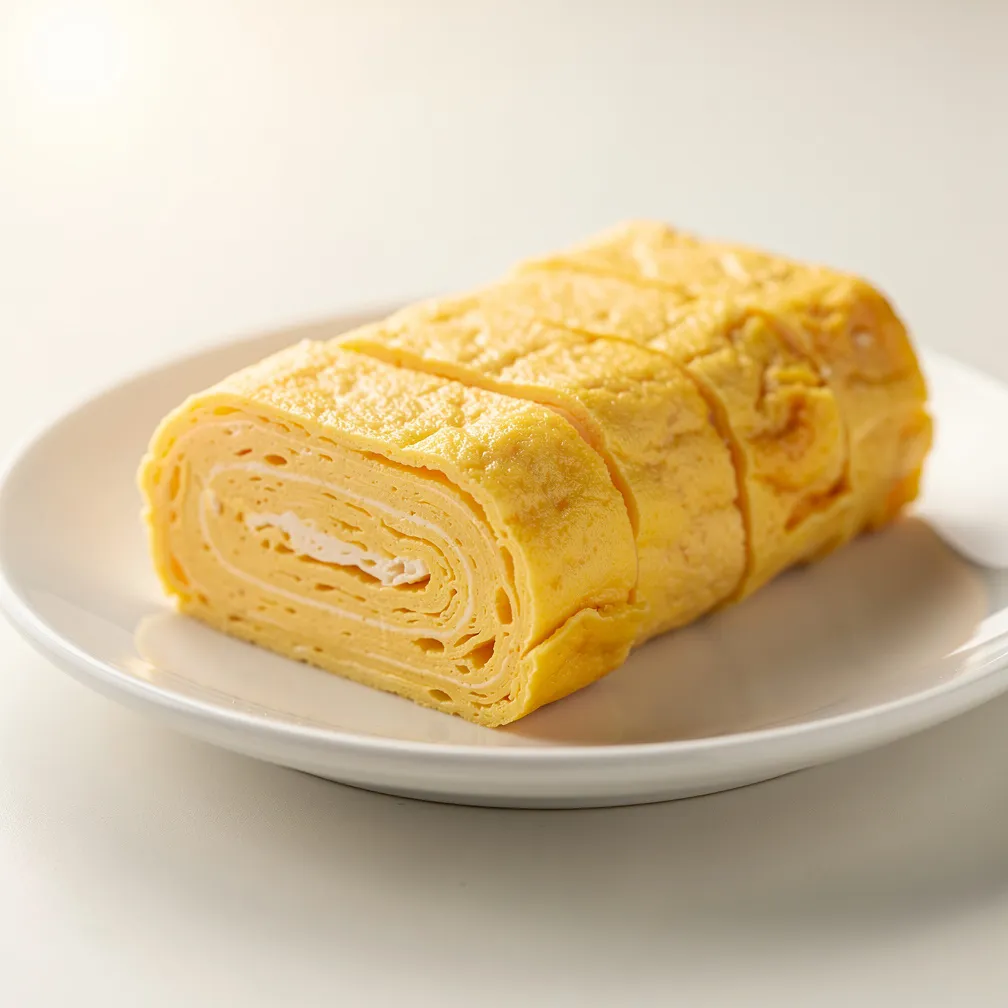
Tamagoyaki
| Macros | per 100 g |
|---|---|
| Calories | 145 kcal |
| Protein | 9.5 g |
| Fat | 9.0 g |
| Carbs | 5.5 g |
Tamagoyaki is a Japanese rolled omelette made by folding thin layers of seasoned egg together in a rectangular pan, typically flavoured with soy sauce, mirin and a little sugar. It appears regularly in bento boxes, as a sushi topping, and as a breakfast side dish across Japan. Per 100 g, tamagoyaki provides 145 kcal, 9.5 g of protein, 9 g of fat and 5.5 g of carbohydrates, with 4 g coming from sugars and no dietary fibre. It contains 320 mg of sodium and 110 mg of potassium per 100 g, along with 40 mg of calcium. Notable vitamins include 120 mcg of vitamin A and 0.8 mcg of vitamin B12 per 100 g. Tamagoyaki is suitable for vegetarian, gluten-free, dairy-free and low-FODMAP dietary patterns.
How many calories in tamagoyaki?
Tamagoyaki contains 145 kcal per 100 g. A typical single serving in a bento box is around 50–60 g, which works out to roughly 70–85 kcal.
How much vitamin A is in tamagoyaki?
Tamagoyaki provides 120 mcg of vitamin A per 100 g, derived from the egg yolks used in the recipe. This makes it a reasonable dietary source of this fat-soluble vitamin.
Is tamagoyaki gluten-free?
Tamagoyaki can be gluten-free, and this data reflects a gluten-free preparation. However, traditional recipes often include soy sauce, which typically contains wheat, so checking the specific soy sauce used is important if gluten is a concern.
Diets
Get Vnutri
Log meals, track daily totals, save favorites. Free on iOS and Android.
Glycemic Index
approximateMacros · per 100 g
| Macros | Amount |
|---|---|
| Calories | 145 kcal |
| Protein | 9.5 g |
| Fat | 9.0 g |
| Carbs | 5.5 g |
| Sugars | 4.0 g |
| Fiber | 0 g |
| Fats breakdown | Amount |
|---|---|
| Saturated | 2.5 g |
| Monounsaturated | 3.5 g |
| Polyunsaturated | 1.5 g |
| Cholesterol | 280 mg |
| Minerals | Amount |
|---|---|
| Calcium | 40.0 mg |
| Iron | 1.2 mg |
| Potassium | 110 mg |
| Sodium | 320 mg |
| Vitamins | Amount |
|---|---|
| Vitamin A | 120 mcg |
| Vitamin C | 0 mg |
| Vitamin B12 | 0.80 mcg |