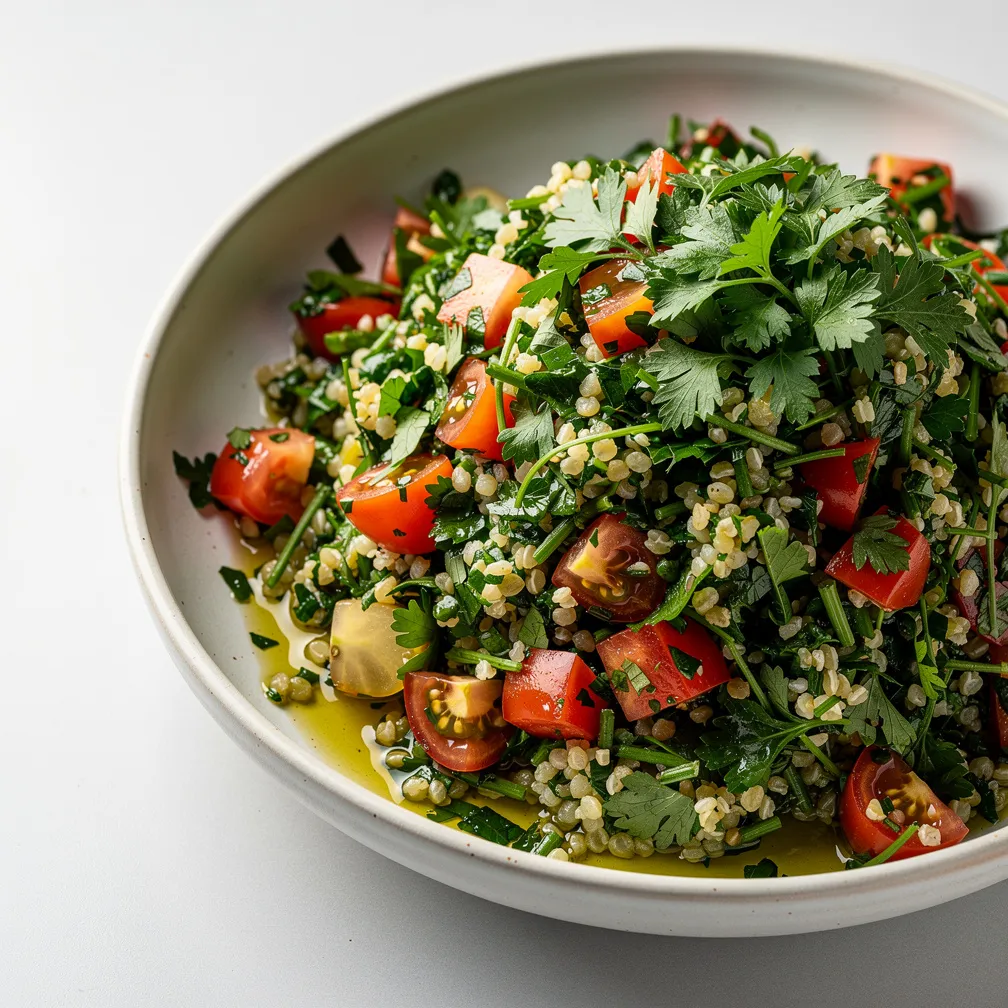
Tabbouleh
| Macros | per 100 g |
|---|---|
| Calories | 98 kcal |
| Protein | 2.6 g |
| Fat | 5.8 g |
| Carbs | 10.4 g |
Tabbouleh is a Levantine herb salad made primarily from finely chopped fresh parsley, bulgur wheat, tomatoes, onion, olive oil and lemon juice, served raw as a side dish or mezze. It is a staple across Lebanese, Syrian and broader Middle Eastern cuisines, typically eaten at room temperature alongside flatbread or grilled dishes. Per 100 g, tabbouleh provides 98 kcal, 2.6 g of protein, 5.8 g of fat, 10.4 g of carbohydrates and 2.6 g of dietary fibre, with relatively modest sugars at 1.8 g. Notable minerals include 230 mg of potassium, 180 mg of sodium and 48 mg of calcium per 100 g. No glycemic index value is available for this dish. Tabbouleh is suitable for vegan, vegetarian, pescatarian, dairy-free and Mediterranean dietary patterns.
How many calories in tabbouleh?
Tabbouleh contains 98 kcal per 100 g. A typical mezze serving of around 150 g would provide roughly 147 kcal.
How much potassium is in tabbouleh?
Tabbouleh provides 230 mg of potassium per 100 g, largely contributed by the generous amount of fresh parsley and tomatoes in the dish.
Is tabbouleh vegan-friendly?
Yes, traditional tabbouleh is entirely plant-based, containing no animal products. It is suitable for vegan, vegetarian and dairy-free diets.
Diets
Get Vnutri
Log meals, track daily totals, save favorites. Free on iOS and Android.
Glycemic Index
approximateMacros · per 100 g
| Macros | Amount |
|---|---|
| Calories | 98.0 kcal |
| Protein | 2.6 g |
| Fat | 5.8 g |
| Carbs | 10.4 g |
| Sugars | 1.8 g |
| Fiber | 2.6 g |
| Fats breakdown | Amount |
|---|---|
| Saturated | 0.80 g |
| Monounsaturated | 4.1 g |
| Polyunsaturated | 0.70 g |
| Cholesterol | 0 mg |
| Minerals | Amount |
|---|---|
| Calcium | 48.0 mg |
| Iron | 1.6 mg |
| Potassium | 230 mg |
| Sodium | 180 mg |