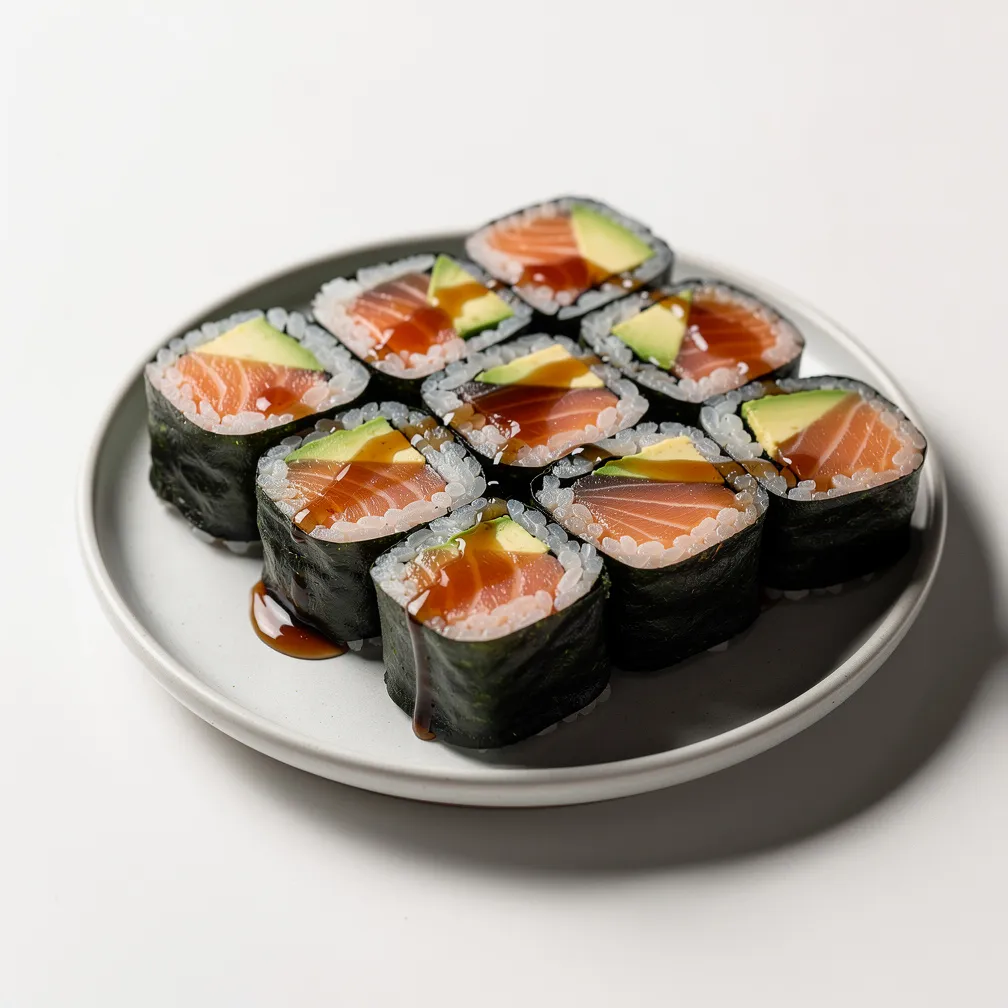
Sushi roll
| Macros | per 100 g |
|---|---|
| Calories | 143 kcal |
| Protein | 5.8 g |
| Fat | 2.4 g |
| Carbs | 25.6 g |
Sushi roll is a Japanese dish made from vinegared rice wrapped in nori seaweed and filled with ingredients such as raw fish, seafood, vegetables or egg. It is typically served in sliced rounds, accompanied by soy sauce, pickled ginger and wasabi, and is a staple of Japanese cuisine now widely eaten worldwide. Per 100 g, a sushi roll provides 143 kcal, 5.8 g of protein, 2.4 g of fat, 25.6 g of carbohydrates and 0.9 g of dietary fibre. The most notable mineral is sodium at 390 mg per 100 g, reflecting the seasoned rice and soy-based accompaniments, alongside 110 mg of potassium and 18 mg of calcium. No glycemic index data is available for this item. Sushi rolls are compatible with pescatarian, dairy-free and Mediterranean dietary patterns.
How many calories in a sushi roll?
A sushi roll contains 143 kcal per 100 g. A standard 8-piece maki roll typically weighs around 200–220 g, putting a full roll at roughly 285–315 kcal depending on the filling.
How much sodium is in a sushi roll?
Sushi rolls contain approximately 390 mg of sodium per 100 g, largely from the seasoned vinegared rice. That figure rises considerably when soy sauce is added as a dipping condiment.
Is sushi roll pescatarian-friendly?
Yes, most sushi rolls are pescatarian-friendly, as the primary protein sources are fish and seafood rather than meat. Vegetable-only rolls are also widely available for those who avoid fish entirely.
Diets
Get Vnutri
Log meals, track daily totals, save favorites. Free on iOS and Android.
Glycemic Index
approximateMacros · per 100 g
| Macros | Amount |
|---|---|
| Calories | 143 kcal |
| Protein | 5.8 g |
| Fat | 2.4 g |
| Carbs | 25.6 g |
| Sugars | 3.8 g |
| Fiber | 0.90 g |
| Fats breakdown | Amount |
|---|---|
| Saturated | 0.50 g |
| Monounsaturated | 0.90 g |
| Polyunsaturated | 0.70 g |
| Cholesterol | 18.0 mg |
| Minerals | Amount |
|---|---|
| Calcium | 18.0 mg |
| Iron | 0.70 mg |
| Potassium | 110 mg |
| Sodium | 390 mg |