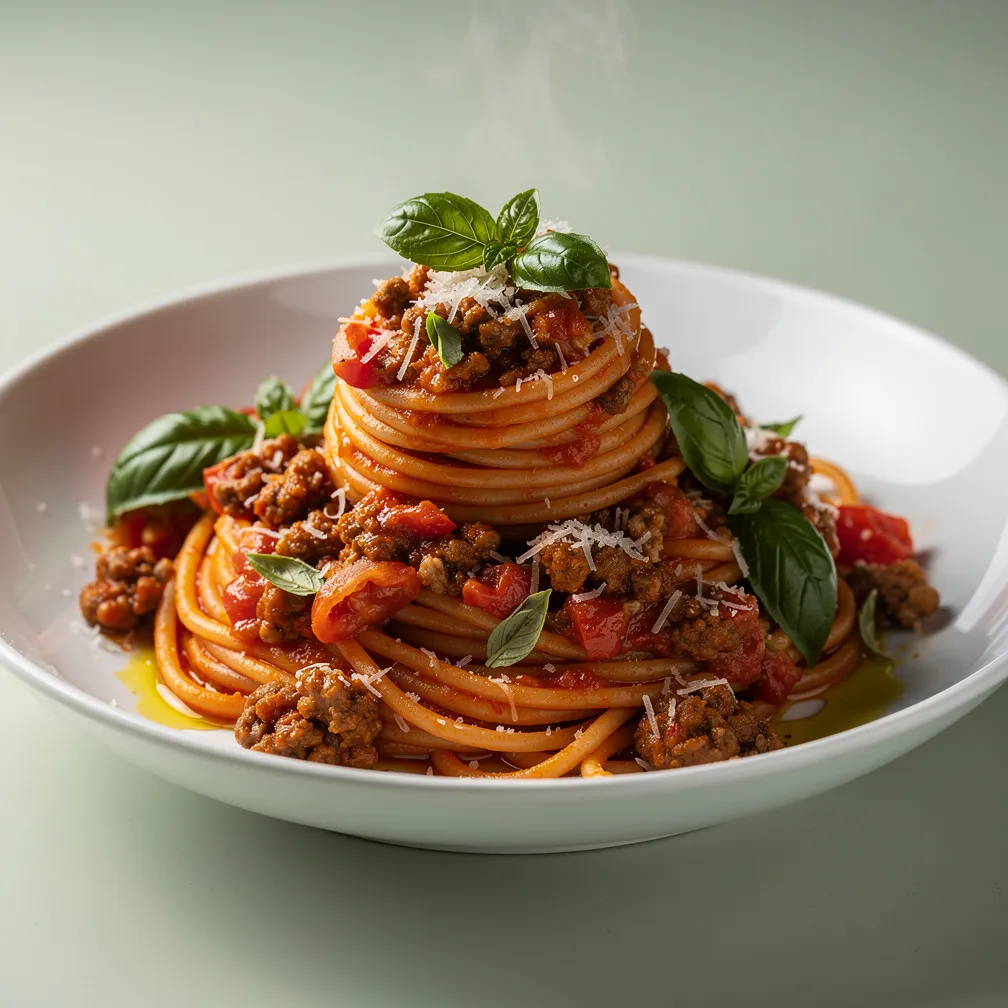
Spaghetti bolognese
| Macros | per 100 g |
|---|---|
| Calories | 162 kcal |
| Protein | 9.4 g |
| Fat | 5.8 g |
| Carbs | 18.6 g |
Spaghetti bolognese is a pasta dish combining cooked spaghetti with a meat-based tomato sauce, originating from the Bologna region of Italy and now a staple across many households worldwide. It is typically served as a main course, with portion sizes commonly ranging from 250 to 350 g. Per 100 g, spaghetti bolognese provides 162 kcal, 9.4 g of protein, 5.8 g of fat, 18.6 g of carbohydrates and 1.8 g of dietary fibre, with 3.4 g of sugars. Notable minerals include sodium at 340 mg per 100 g, potassium at 310 mg and calcium at 38 mg. No glycemic index value is available for this dish. It is compatible with dairy-free and Mediterranean dietary patterns.
How many calories in spaghetti bolognese?
Spaghetti bolognese contains 162 kcal per 100 g. A typical restaurant-sized serving of around 300 g would come to approximately 486 kcal.
How much sodium is in spaghetti bolognese?
Spaghetti bolognese contains 340 mg of sodium per 100 g, which is relatively notable compared to many home-cooked pasta dishes. The exact amount can vary depending on added salt, stock or canned tomatoes used in the recipe.
Is spaghetti bolognese healthy?
Per 100 g, spaghetti bolognese offers a moderate calorie count of 162 kcal with a reasonable protein content of 9.4 g and 18.6 g of carbohydrates. It also carries 340 mg of sodium per 100 g, so sodium intake is worth keeping in mind across a full serving.
Diets
Get Vnutri
Log meals, track daily totals, save favorites. Free on iOS and Android.
Glycemic Index
approximateMacros · per 100 g
| Macros | Amount |
|---|---|
| Calories | 162 kcal |
| Protein | 9.4 g |
| Fat | 5.8 g |
| Carbs | 18.6 g |
| Sugars | 3.4 g |
| Fiber | 1.8 g |
| Fats breakdown | Amount |
|---|---|
| Saturated | 2.1 g |
| Monounsaturated | 2.4 g |
| Polyunsaturated | 0.70 g |
| Cholesterol | 28.0 mg |
| Minerals | Amount |
|---|---|
| Calcium | 38.0 mg |
| Iron | 1.9 mg |
| Potassium | 310 mg |
| Sodium | 340 mg |