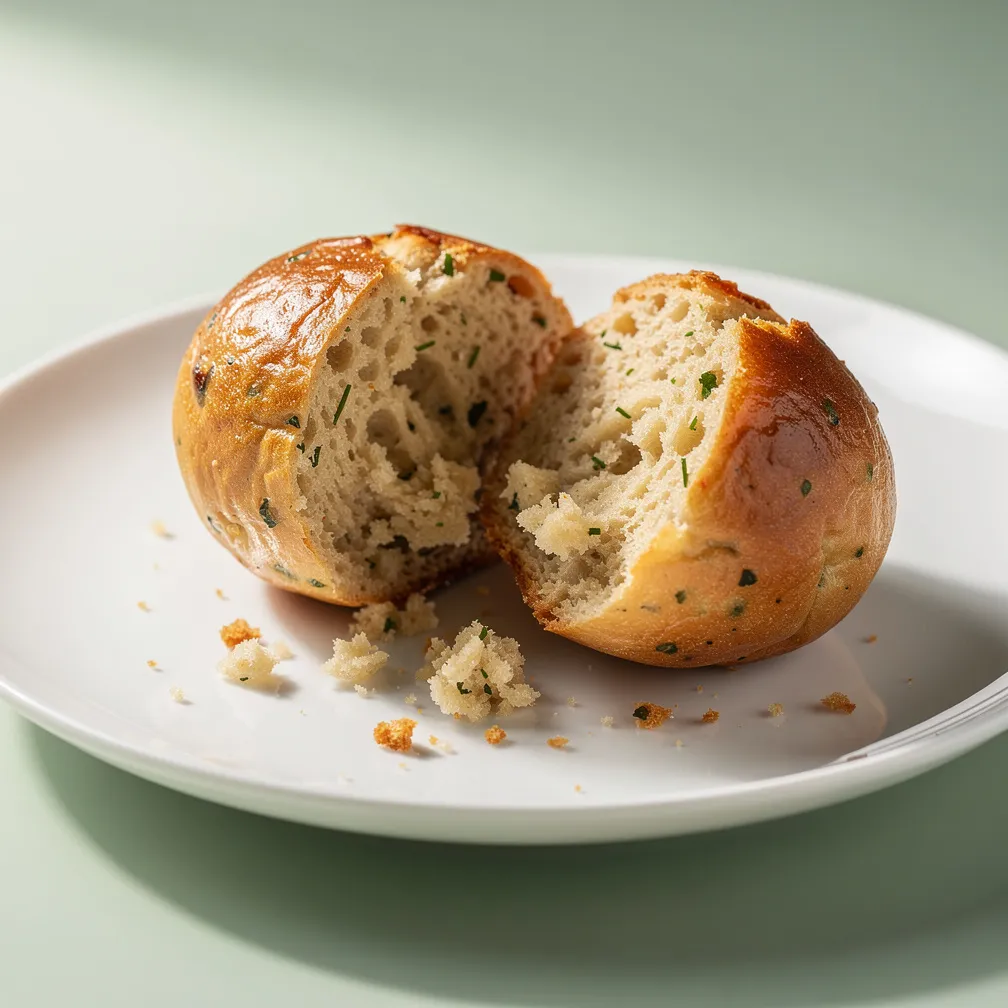
Semmelknödel
| Macros | per 100 g |
|---|---|
| Calories | 200 kcal |
| Protein | 7.0 g |
| Fat | 4.5 g |
| Carbs | 32.0 g |
Semmelknödel is a traditional Central European bread dumpling, most closely associated with German and Austrian cuisine, typically served alongside roasts, gravies or mushroom sauces. The dumplings are made from stale bread rolls (Semmeln) mixed with eggs, milk and herbs, then shaped and simmered in water. Per 100 g, the raw mixture provides 200 kcal, 7 g of protein, 4.5 g of fat, 32 g of carbohydrates and 1.5 g of dietary fibre. Notable minerals include sodium at 420 mg and calcium at 75 mg per 100 g, alongside 130 mg of potassium. The recipe also contributes 55 mcg of vitamin A and 0.3 mcg of vitamin B12 per 100 g. No glycemic index data is available for this food. Semmelknödel is suitable for vegetarian dietary patterns.
How many calories in Semmelknödel?
Semmelknödel contains 200 kcal per 100 g of raw mixture. A single finished dumpling typically weighs around 100–130 g, so one serving comes to roughly 200–260 kcal depending on size.
How much sodium is in Semmelknödel?
Semmelknödel contains 420 mg of sodium per 100 g, which is relatively high compared to many side dishes and reflects the salt content of the bread rolls and seasoning used in the recipe.
Is Semmelknödel vegetarian-friendly?
Yes, Semmelknödel is suitable for a vegetarian diet. The standard recipe is based on bread, eggs and milk, with no meat ingredients, though it is not vegan due to those dairy and egg components.
Diets
Get Vnutri
Log meals, track daily totals, save favorites. Free on iOS and Android.
Macros · per 100 g
| Macros | Amount |
|---|---|
| Calories | 200 kcal |
| Protein | 7.0 g |
| Fat | 4.5 g |
| Carbs | 32.0 g |
| Sugars | 2.5 g |
| Fiber | 1.5 g |
| Fats breakdown | Amount |
|---|---|
| Saturated | 1.5 g |
| Monounsaturated | 1.2 g |
| Polyunsaturated | 0.60 g |
| Cholesterol | 65.0 mg |
| Minerals | Amount |
|---|---|
| Calcium | 75.0 mg |
| Iron | 1.2 mg |
| Potassium | 130 mg |
| Sodium | 420 mg |
| Vitamins | Amount |
|---|---|
| Vitamin A | 55.0 mcg |
| Vitamin C | 2.0 mg |
| Vitamin B12 | 0.30 mcg |