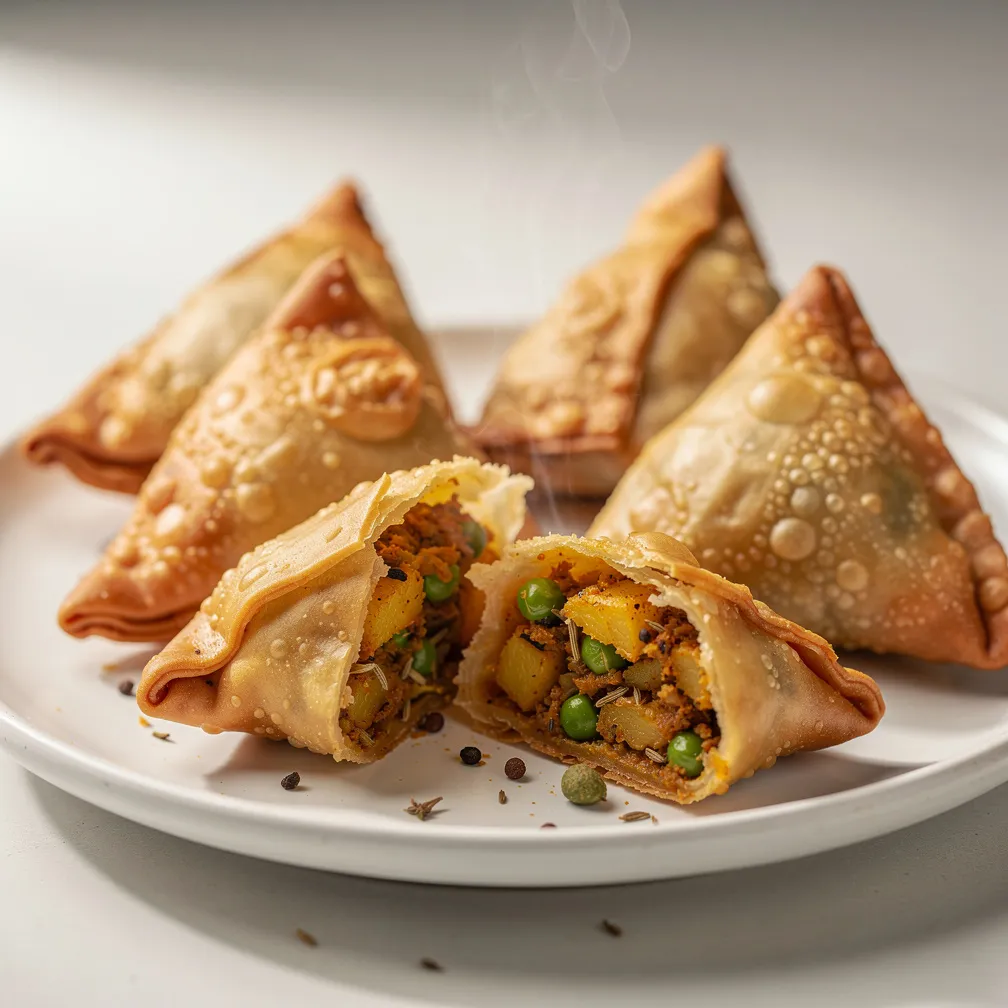
Samosa
| Macros | per 100 g |
|---|---|
| Calories | 262 kcal |
| Protein | 5.8 g |
| Fat | 13.6 g |
| Carbs | 30.4 g |
Samosa is a fried or baked pastry with a savory filling, most commonly spiced potatoes and peas, originating from South Asian cuisine and widely eaten as a street food or snack across the region and beyond. The values here reflect the raw, uncooked product; once fried, the fat content rises further. Per 100 g, samosa provides 262 kcal, 5.8 g of protein, 13.6 g of fat and 30.4 g of carbohydrates, with 2.8 g of dietary fibre and 2.4 g of sugars. Notable minerals include 380 mg of sodium, 280 mg of potassium and 24 mg of calcium per 100 g. No glycemic index value is available for this food. Samosa fits vegan, vegetarian, pescatarian and dairy-free dietary patterns.
How many calories in a samosa?
Samosa contains 262 kcal per 100 g in its raw state. A single medium samosa typically weighs around 60–80 g, placing it at roughly 157–210 kcal per piece before any additional cooking oil is accounted for.
How much sodium is in a samosa?
Samosa contains 380 mg of sodium per 100 g, making it a relatively high-sodium snack. A single medium samosa of around 70 g would contribute approximately 266 mg of sodium.
Is samosa vegan-friendly?
A classic potato-and-pea samosa is vegan-friendly, and the data confirms it is compatible with vegan and dairy-free dietary patterns. However, some recipes use ghee in the pastry, so it is worth checking the specific preparation method.
Diets
Get Vnutri
Log meals, track daily totals, save favorites. Free on iOS and Android.
Glycemic Index
approximateMacros · per 100 g
| Macros | Amount |
|---|---|
| Calories | 262 kcal |
| Protein | 5.8 g |
| Fat | 13.6 g |
| Carbs | 30.4 g |
| Sugars | 2.4 g |
| Fiber | 2.8 g |
| Fats breakdown | Amount |
|---|---|
| Saturated | 3.2 g |
| Monounsaturated | 6.4 g |
| Polyunsaturated | 3.4 g |
| Cholesterol | 0 mg |
| Minerals | Amount |
|---|---|
| Calcium | 24.0 mg |
| Iron | 1.8 mg |
| Potassium | 280 mg |
| Sodium | 380 mg |