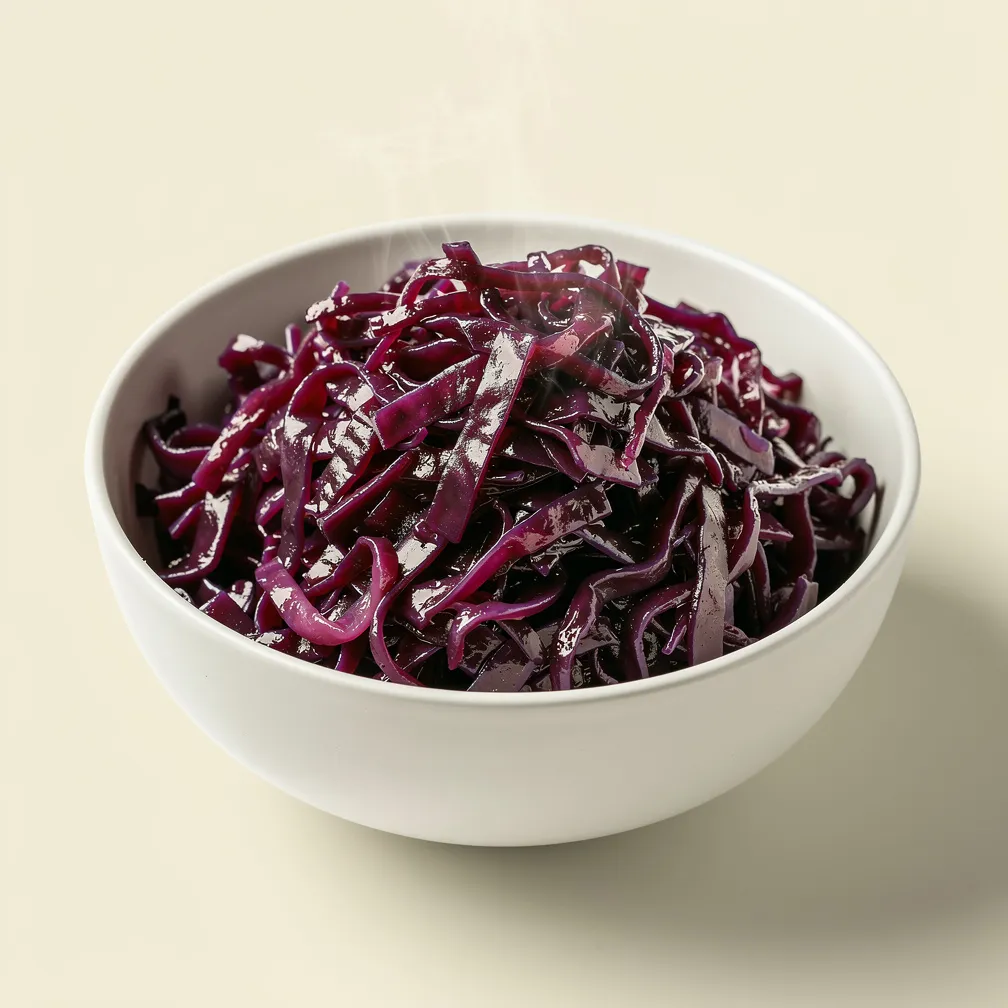
Rotkohl
| Macros | per 100 g |
|---|---|
| Calories | 50 kcal |
| Protein | 1.2 g |
| Fat | 0.8 g |
| Carbs | 9.5 g |
Rotkohl is raw red cabbage, a firm-leafed brassica vegetable commonly shredded and eaten as a salad, pickled, or slow-braised as a classic Central European side dish. Per 100 g, it provides 50 kcal, 1.2 g of protein, 0.8 g of fat, 9.5 g of carbohydrates, 2.5 g of dietary fibre, and 7 g of sugars. It contains 220 mg of sodium and 210 mg of potassium per 100 g, along with 45 mg of calcium. On the vitamin side, it delivers 25 mg of vitamin C and 20 mcg of vitamin A per 100 g. No glycemic index value is available for this food. Rotkohl is suitable for vegan, vegetarian, pescatarian, gluten-free, and dairy-free dietary patterns.
How many calories in Rotkohl?
Raw Rotkohl contains 50 kcal per 100 g. A typical side-dish serving of around 150 g would come to approximately 75 kcal.
How much vitamin C is in Rotkohl?
Rotkohl provides 25 mg of vitamin C per 100 g. That is a meaningful amount for a raw vegetable, though prolonged cooking can reduce this figure noticeably.
Is Rotkohl vegan-friendly?
Yes, Rotkohl is entirely plant-based and fits vegan, vegetarian, gluten-free, and dairy-free diets. The main thing to watch is preparation — braised versions sometimes include butter or meat-based stock.
Diets
Get Vnutri
Log meals, track daily totals, save favorites. Free on iOS and Android.
Macros · per 100 g
| Macros | Amount |
|---|---|
| Calories | 50.0 kcal |
| Protein | 1.2 g |
| Fat | 0.80 g |
| Carbs | 9.5 g |
| Sugars | 7.0 g |
| Fiber | 2.5 g |
| Fats breakdown | Amount |
|---|---|
| Saturated | 0.10 g |
| Monounsaturated | 0.40 g |
| Polyunsaturated | 0.20 g |
| Cholesterol | 0 mg |
| Minerals | Amount |
|---|---|
| Calcium | 45.0 mg |
| Iron | 0.80 mg |
| Potassium | 210 mg |
| Sodium | 220 mg |
| Vitamins | Amount |
|---|---|
| Vitamin A | 20.0 mcg |
| Vitamin C | 25.0 mg |
| Vitamin B12 | 0 mcg |