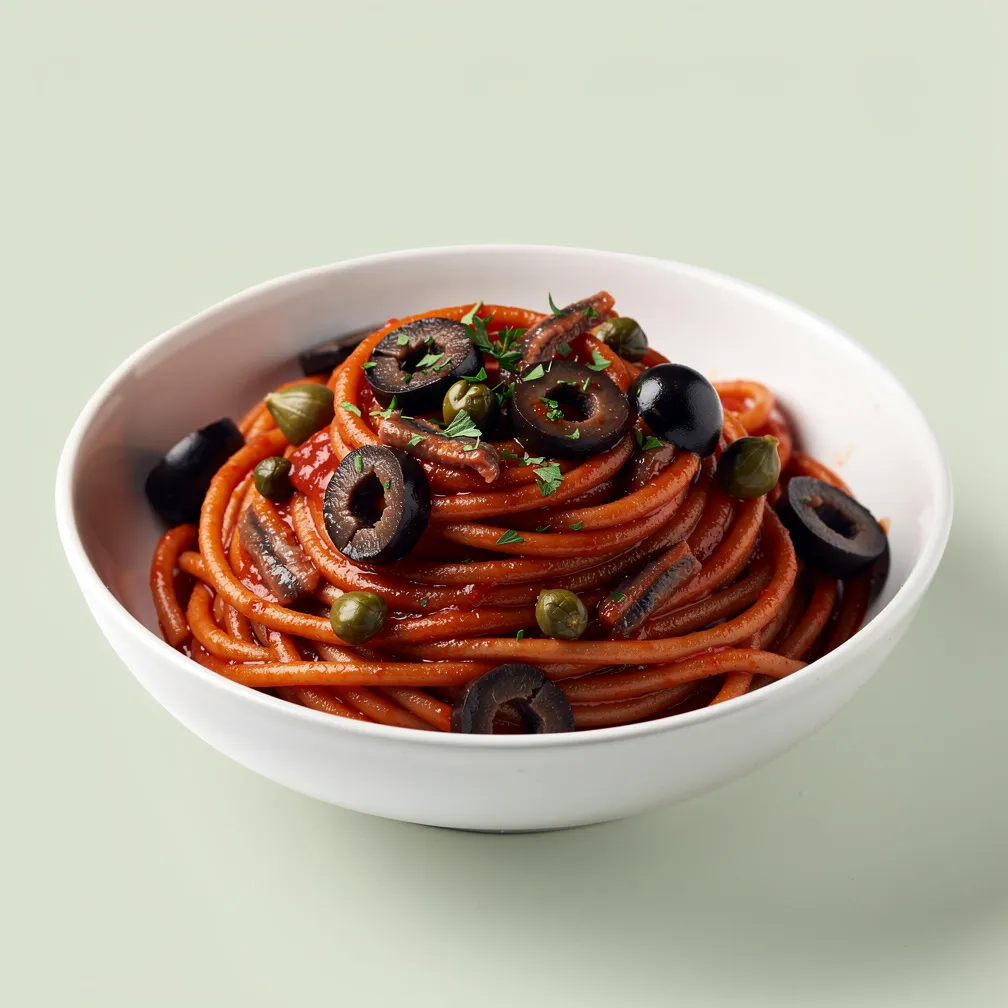
Pasta alla puttanesca
| Macros | per 100 g |
|---|---|
| Calories | 190 kcal |
| Protein | 7.0 g |
| Fat | 7.0 g |
| Carbs | 26.0 g |
Pasta alla puttanesca is an Italian pasta dish built around a bold, briny sauce of tomatoes, olives, capers, anchovies and garlic, typically served as a main course. The figures here reflect the raw, uncooked dish weight, though it is always eaten cooked. Per 100 g, it provides 190 kcal, 7 g of protein, 7 g of fat and 26 g of carbohydrates, with 2.5 g of dietary fibre and 4 g of sugars. The sodium content is notably high at 620 mg per 100 g, a direct result of the olives, capers and anchovies in the sauce. It also contributes 290 mg of potassium, 60 mcg of vitamin A, 8 mg of vitamin C and 0.4 mcg of vitamin B12 per 100 g. Pasta alla puttanesca fits pescatarian, dairy-free and Mediterranean dietary patterns.
How many calories in pasta alla puttanesca?
Pasta alla puttanesca contains 190 kcal per 100 g. A typical restaurant serving of around 300 g would come to approximately 570 kcal.
How much sodium is in pasta alla puttanesca?
Pasta alla puttanesca contains 620 mg of sodium per 100 g, making it a relatively high-sodium dish. This comes from the combination of anchovies, capers and olives that define the sauce.
Is pasta alla puttanesca suitable for a Mediterranean diet?
Yes, pasta alla puttanesca is well-suited to a Mediterranean dietary pattern. Its core ingredients — olive oil, tomatoes, olives, capers and fish — are staples of Mediterranean cooking.
Diets
Get Vnutri
Log meals, track daily totals, save favorites. Free on iOS and Android.
Macros · per 100 g
| Macros | Amount |
|---|---|
| Calories | 190 kcal |
| Protein | 7.0 g |
| Fat | 7.0 g |
| Carbs | 26.0 g |
| Sugars | 4.0 g |
| Fiber | 2.5 g |
| Fats breakdown | Amount |
|---|---|
| Saturated | 1.0 g |
| Monounsaturated | 4.5 g |
| Polyunsaturated | 0.90 g |
| Cholesterol | 8.0 mg |
| Minerals | Amount |
|---|---|
| Calcium | 40.0 mg |
| Iron | 1.5 mg |
| Potassium | 290 mg |
| Sodium | 620 mg |
| Vitamins | Amount |
|---|---|
| Vitamin A | 60.0 mcg |
| Vitamin C | 8.0 mg |
| Vitamin B12 | 0.40 mcg |