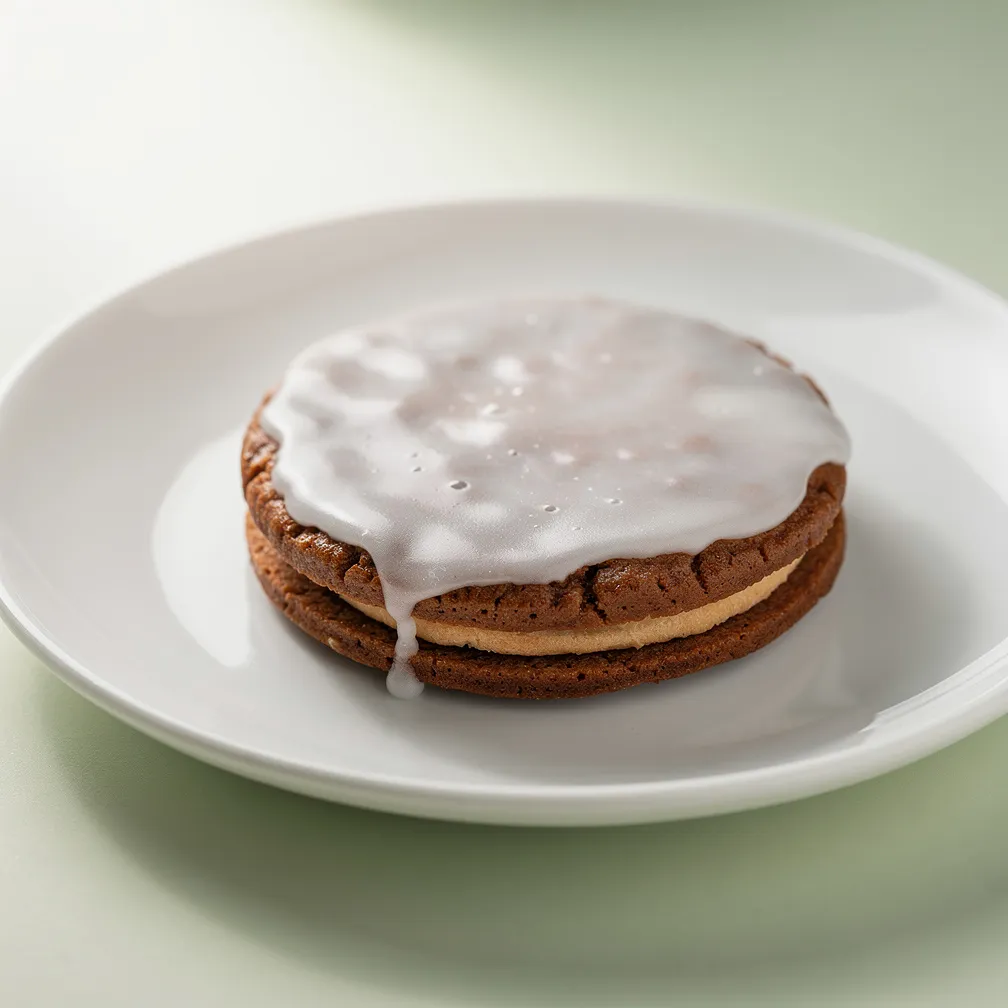
Nuremberg lebkuchen
| Macros | per 100 g |
|---|---|
| Calories | 380 kcal |
| Protein | 7.0 g |
| Fat | 10.0 g |
| Carbs | 65.0 g |
Nuremberg lebkuchen is a traditional German spiced gingerbread originating from Nuremberg, Bavaria, with a history stretching back to the Middle Ages. It is most commonly eaten during the Christmas season, sold at festive markets and packaged in decorative tins, and comes in glazed, chocolate-coated or uncoated varieties. Per 100 g, lebkuchen provides 380 kcal, 7 g of protein, 10 g of fat and 65 g of carbohydrates, of which 45 g are sugars, along with 3 g of dietary fibre. It contributes 280 mg of potassium and 70 mg of calcium per 100 g. Suitable for vegetarian and dairy-free dietary patterns.
How many calories in Nuremberg lebkuchen?
Nuremberg lebkuchen contains 380 kcal per 100 g. A single medium piece typically weighs around 30–40 g, putting it at roughly 115–150 kcal per biscuit.
Is Nuremberg lebkuchen dairy-free?
Yes, Nuremberg lebkuchen is listed as dairy-free, making it suitable for those avoiding milk and milk-derived ingredients. It is also suitable for vegetarians, though it is not vegan as traditional recipes often include eggs and honey.
Is Nuremberg lebkuchen high in sugar?
Nuremberg lebkuchen contains 45 g of sugars per 100 g, which is relatively high, accounting for the majority of its 65 g total carbohydrate content. This reflects the combination of honey, sugar and dried fruit typically used in the recipe.
Diets
Get Vnutri
Log meals, track daily totals, save favorites. Free on iOS and Android.
Macros · per 100 g
| Macros | Amount |
|---|---|
| Calories | 380 kcal |
| Protein | 7.0 g |
| Fat | 10.0 g |
| Carbs | 65.0 g |
| Sugars | 45.0 g |
| Fiber | 3.0 g |
| Fats breakdown | Amount |
|---|---|
| Saturated | 1.5 g |
| Monounsaturated | 5.0 g |
| Polyunsaturated | 2.5 g |
| Cholesterol | 35.0 mg |
| Minerals | Amount |
|---|---|
| Calcium | 70.0 mg |
| Iron | 2.2 mg |
| Potassium | 280 mg |
| Sodium | 130 mg |
| Vitamins | Amount |
|---|---|
| Vitamin A | 15.0 mcg |
| Vitamin C | 1.0 mg |
| Vitamin B12 | 0.10 mcg |