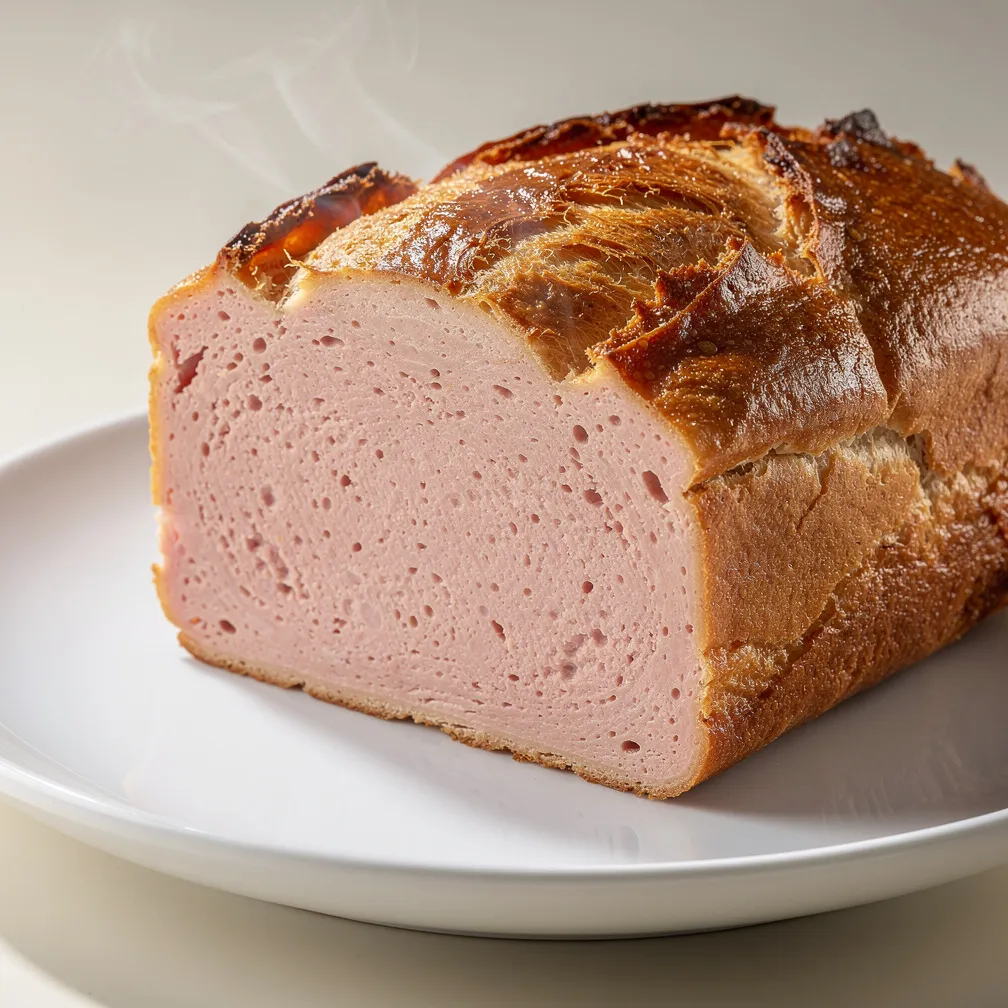
Leberkäse
| Macros | per 100 g |
|---|---|
| Calories | 285 kcal |
| Protein | 13.5 g |
| Fat | 24.0 g |
| Carbs | 2.5 g |
Leberkäse is a cooked meat loaf of Bavarian and Austrian origin, made from finely ground pork (and sometimes beef), baked until it develops a characteristic brown crust. Despite the name — which translates literally as 'liver cheese' — most modern versions contain neither liver nor cheese. It is typically served warm in thick slices, either in a bread roll as a street food staple or alongside fried eggs and potato salad. Per 100 g, cooked Leberkäse provides 285 kcal, 13.5 g of protein, 24 g of fat and 2.5 g of carbohydrates with negligible fibre. It is notably high in sodium at 1,000 mg per 100 g, and also supplies 230 mg of potassium and 1.8 mcg of vitamin B12 per 100 g. Leberkäse is listed as dairy-free and gluten-free.
How many calories in Leberkäse?
Cooked Leberkäse contains 285 kcal per 100 g. A typical thick slice served in a bread roll weighs around 150–200 g, putting the meat portion alone at roughly 430–570 kcal.
How much sodium is in Leberkäse?
Leberkäse contains 1,000 mg of sodium per 100 g, which is relatively high compared to many other cooked meats. This reflects the curing and seasoning process typical of this style of meat loaf.
Is Leberkäse gluten-free?
According to the data, Leberkäse is classified as gluten-free. However, recipes and brands vary, so it is worth checking the label if gluten avoidance is a strict requirement.
Diets
Get Vnutri
Log meals, track daily totals, save favorites. Free on iOS and Android.
Macros · per 100 g
| Macros | Amount |
|---|---|
| Calories | 285 kcal |
| Protein | 13.5 g |
| Fat | 24.0 g |
| Carbs | 2.5 g |
| Sugars | 0.50 g |
| Fiber | 0 g |
| Fats breakdown | Amount |
|---|---|
| Saturated | 9.0 g |
| Monounsaturated | 11.0 g |
| Polyunsaturated | 2.0 g |
| Cholesterol | 80.0 mg |
| Minerals | Amount |
|---|---|
| Calcium | 15.0 mg |
| Iron | 1.5 mg |
| Potassium | 230 mg |
| Sodium | 1000 mg |
| Vitamins | Amount |
|---|---|
| Vitamin A | 30.0 mcg |
| Vitamin C | 0 mg |
| Vitamin B12 | 1.8 mcg |