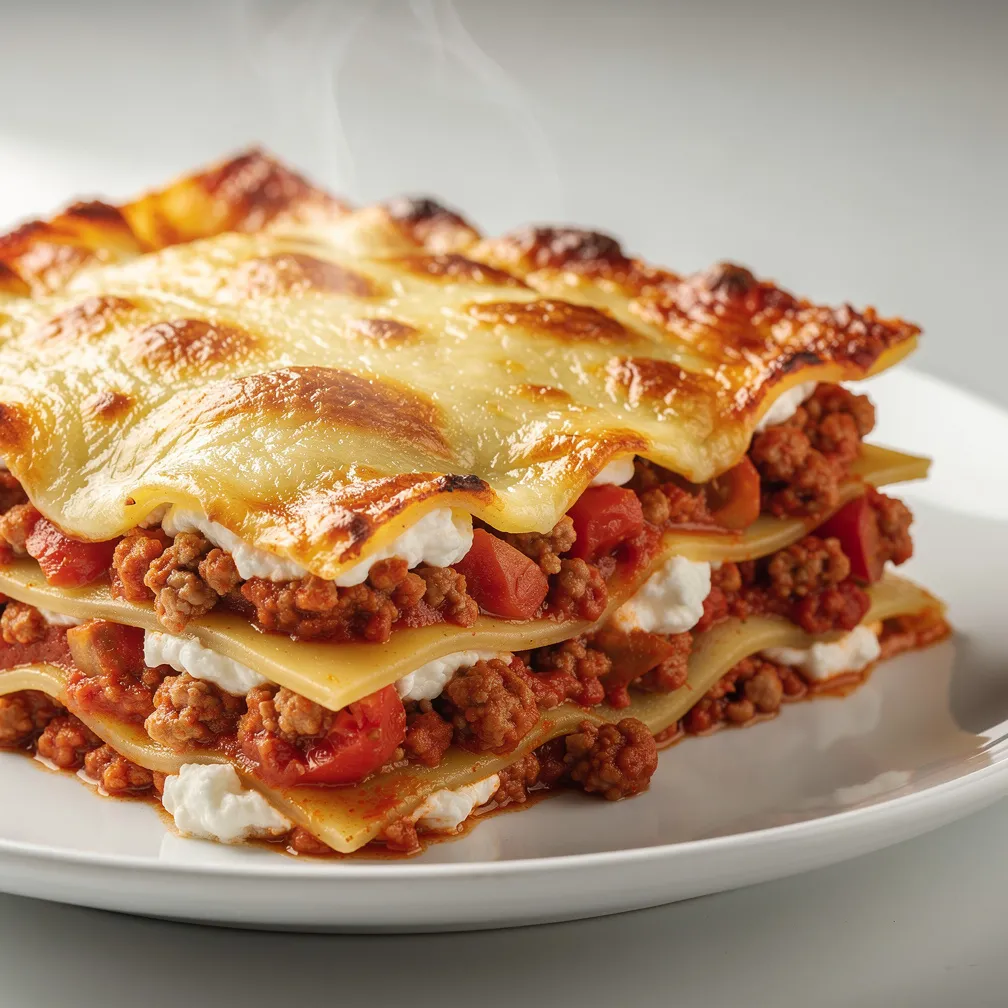
Lasagna
| Macros | per 100 g |
|---|---|
| Calories | 166 kcal |
| Protein | 10.2 g |
| Fat | 7.6 g |
| Carbs | 14.8 g |
Lasagna is a baked Italian pasta dish made from layered flat noodles, meat or vegetable filling, tomato sauce and cheese, typically served as a main course. Per 100 g in its raw assembled state, it provides 166 kcal, 10.2 g of protein, 7.6 g of fat and 14.8 g of carbohydrates, with 1.4 g of dietary fibre and 3.2 g of sugars. The protein content reflects the combined contribution of meat and cheese layers. Notable minerals include sodium at 430 mg per 100 g, potassium at 260 mg and calcium at 148 mg — the latter largely from the cheese and béchamel components. No glycemic index value is available for this dish. Lasagna fits a Mediterranean dietary pattern.
How many calories in lasagna?
Lasagna contains 166 kcal per 100 g in its raw assembled form. A typical restaurant or home serving of around 300 g would come to approximately 500 kcal, though this varies considerably with the specific recipe and portion size.
How much sodium is in lasagna?
Lasagna contains 430 mg of sodium per 100 g, making it a relatively high-sodium dish. This comes from a combination of cheese, cured or seasoned meat, and tomato sauce, all of which contribute meaningfully to the total.
How much calcium is in lasagna?
Lasagna provides 148 mg of calcium per 100 g, primarily from the cheese and any béchamel sauce used in the recipe. A standard 300 g serving would contribute around 444 mg of calcium.
Diets
Get Vnutri
Log meals, track daily totals, save favorites. Free on iOS and Android.
Glycemic Index
approximateMacros · per 100 g
| Macros | Amount |
|---|---|
| Calories | 166 kcal |
| Protein | 10.2 g |
| Fat | 7.6 g |
| Carbs | 14.8 g |
| Sugars | 3.2 g |
| Fiber | 1.4 g |
| Fats breakdown | Amount |
|---|---|
| Saturated | 3.6 g |
| Monounsaturated | 2.8 g |
| Polyunsaturated | 0.70 g |
| Cholesterol | 42.0 mg |
| Minerals | Amount |
|---|---|
| Calcium | 148 mg |
| Iron | 1.6 mg |
| Potassium | 260 mg |
| Sodium | 430 mg |