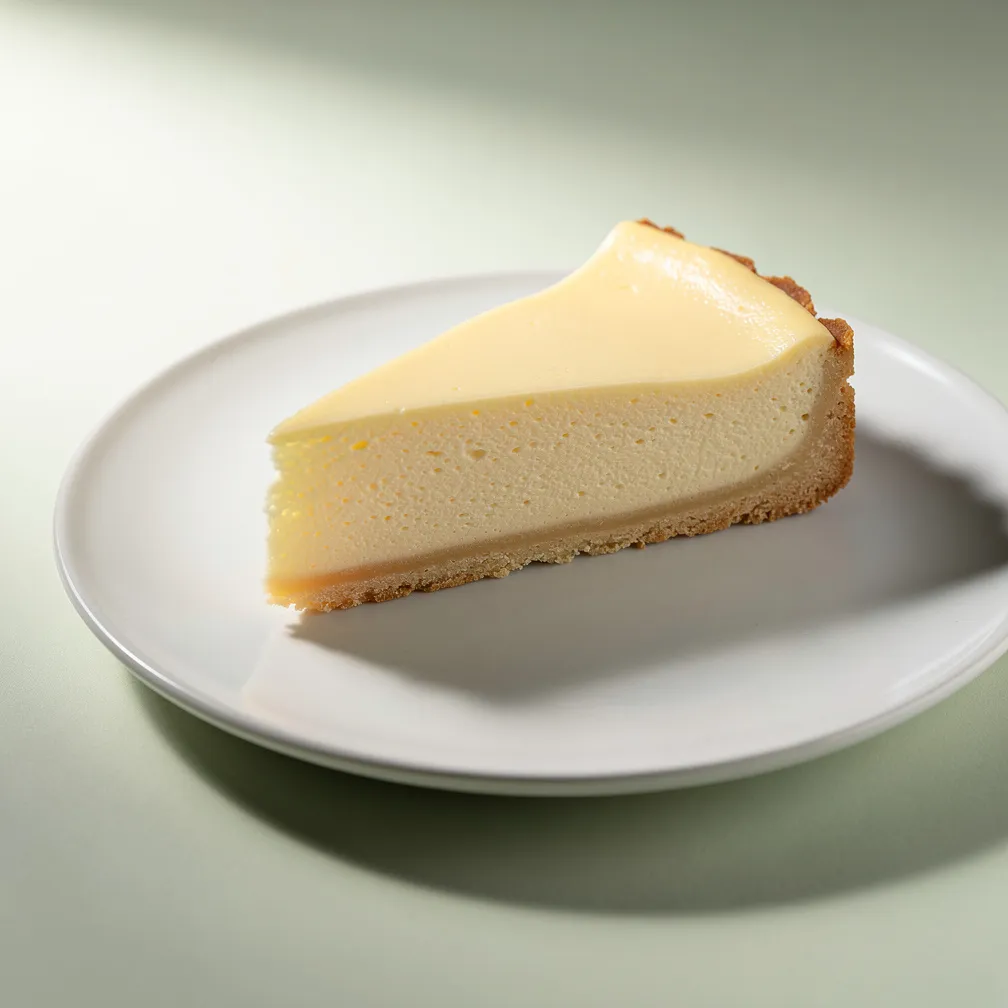
Käsekuchen
| Macros | per 100 g |
|---|---|
| Calories | 280 kcal |
| Protein | 9.5 g |
| Fat | 11.0 g |
| Carbs | 36.0 g |
Käsekuchen is a German-style cheesecake, typically made with quark rather than cream cheese, giving it a lighter, slightly tangier texture than its American counterpart. It is commonly served in slices as a dessert or café treat across German-speaking countries. Per 100 g, Käsekuchen provides 280 kcal, 9.5 g of protein, 11 g of fat, and 36 g of carbohydrates, of which 22 g are sugars, with only 0.5 g of dietary fibre. Notable micronutrients include 95 mg of calcium, 190 mg of sodium, and 85 mcg of vitamin A per 100 g, along with 0.5 mcg of vitamin B12. No glycemic index data is available for this food. Käsekuchen is suitable for vegetarian dietary patterns.
How many calories in Käsekuchen?
Käsekuchen contains 280 kcal per 100 g. A typical café slice weighs around 120–150 g, putting it at roughly 335–420 kcal per serving.
How much calcium is in Käsekuchen?
Käsekuchen provides 95 mg of calcium per 100 g, largely from the quark or fresh cheese used in the filling. A standard slice of around 130 g would contribute approximately 125 mg of calcium.
Is Käsekuchen vegetarian-friendly?
Yes, Käsekuchen is suitable for vegetarian diets. It is made from dairy-based ingredients such as quark, eggs, and butter, but contains no meat or fish.
Diets
Get Vnutri
Log meals, track daily totals, save favorites. Free on iOS and Android.
Macros · per 100 g
| Macros | Amount |
|---|---|
| Calories | 280 kcal |
| Protein | 9.5 g |
| Fat | 11.0 g |
| Carbs | 36.0 g |
| Sugars | 22.0 g |
| Fiber | 0.50 g |
| Fats breakdown | Amount |
|---|---|
| Saturated | 6.0 g |
| Monounsaturated | 3.5 g |
| Polyunsaturated | 0.80 g |
| Cholesterol | 110 mg |
| Minerals | Amount |
|---|---|
| Calcium | 95.0 mg |
| Iron | 0.80 mg |
| Potassium | 130 mg |
| Sodium | 190 mg |
| Vitamins | Amount |
|---|---|
| Vitamin A | 85.0 mcg |
| Vitamin C | 0.50 mg |
| Vitamin B12 | 0.50 mcg |