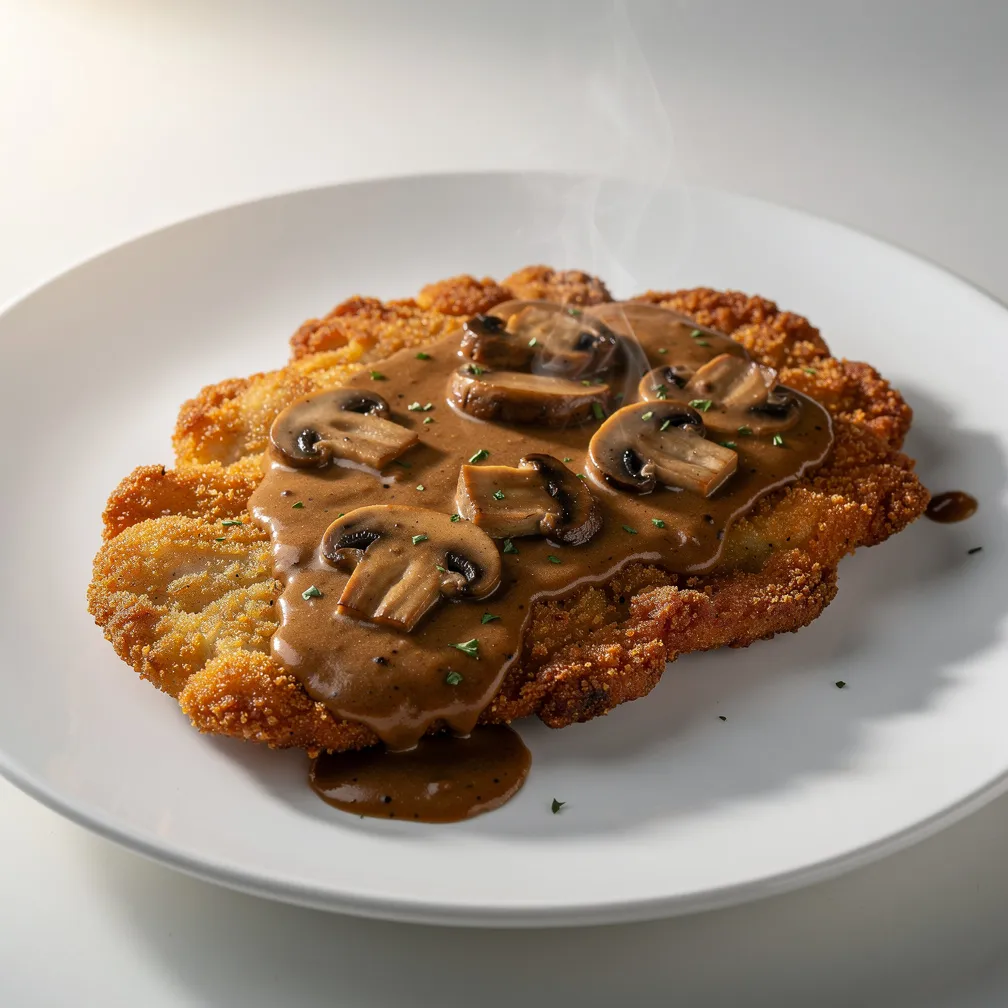
Jägerschnitzel
| Macros | per 100 g |
|---|---|
| Calories | 265 kcal |
| Protein | 20.0 g |
| Fat | 16.0 g |
| Carbs | 10.0 g |
Jägerschnitzel is a German dish consisting of a breaded or unbreaded meat cutlet — typically pork — served with a hunter-style mushroom and cream sauce. It is a staple of German home cooking and restaurant menus, usually accompanied by spätzle, noodles or potatoes. Per 100 g, it provides 265 kcal, 20 g of protein, 16 g of fat and 10 g of carbohydrates, with 1 g of dietary fibre and 2 g of sugars. Notable minerals include sodium at 480 mg and potassium at 420 mg per 100 g, along with 45 mg of calcium. It also contributes 70 mcg of vitamin A and 0.7 mcg of vitamin B12 per 100 g. No glycemic index data is available for this dish. No standard diet compatibility flags apply given its meat and dairy content.
How many calories in Jägerschnitzel?
Jägerschnitzel contains 265 kcal per 100 g. A typical restaurant portion of around 200 g of the cutlet with sauce would come to approximately 530 kcal before accounting for any side dishes.
How much sodium is in Jägerschnitzel?
Jägerschnitzel contains 480 mg of sodium per 100 g, which is relatively high compared to unprocessed cuts of meat. This reflects the seasoning and sauce components typical of the dish.
Is Jägerschnitzel high in protein?
Yes, Jägerschnitzel provides 20 g of protein per 100 g, making it a fairly protein-dense dish. It also contains 16 g of fat per 100 g, largely from the meat and cream-based mushroom sauce.
Get Vnutri
Log meals, track daily totals, save favorites. Free on iOS and Android.
Macros · per 100 g
| Macros | Amount |
|---|---|
| Calories | 265 kcal |
| Protein | 20.0 g |
| Fat | 16.0 g |
| Carbs | 10.0 g |
| Sugars | 2.0 g |
| Fiber | 1.0 g |
| Fats breakdown | Amount |
|---|---|
| Saturated | 7.0 g |
| Monounsaturated | 5.5 g |
| Polyunsaturated | 1.8 g |
| Cholesterol | 100 mg |
| Minerals | Amount |
|---|---|
| Calcium | 45.0 mg |
| Iron | 1.5 mg |
| Potassium | 420 mg |
| Sodium | 480 mg |
| Vitamins | Amount |
|---|---|
| Vitamin A | 70.0 mcg |
| Vitamin C | 2.0 mg |
| Vitamin B12 | 0.70 mcg |