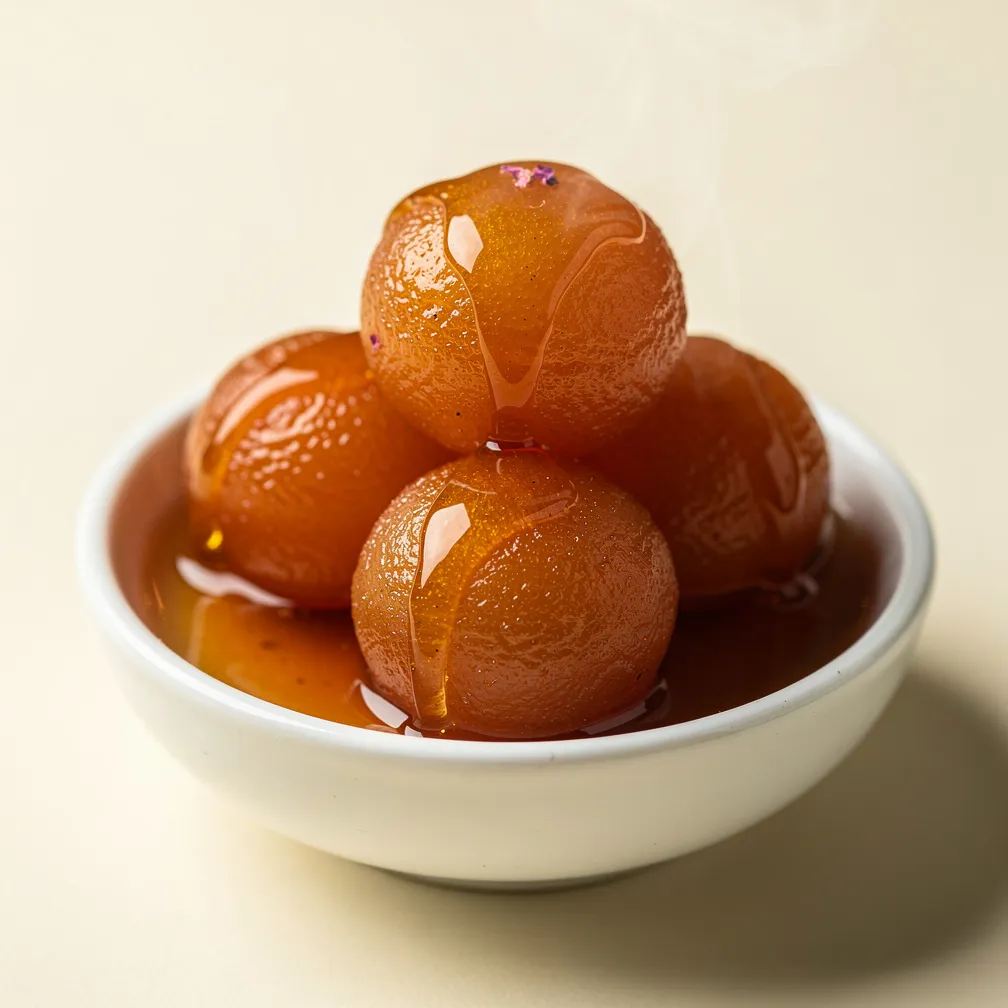
Gulab jamun
| Macros | per 100 g |
|---|---|
| Calories | 310 kcal |
| Protein | 5.5 g |
| Fat | 10.5 g |
| Carbs | 50.0 g |
Gulab jamun is a popular South Asian dessert made from milk solids (khoya) or milk powder, shaped into small balls, deep-fried, and soaked in a sugar syrup flavoured with cardamom and rose water. It is a staple at celebrations, festivals and restaurant dessert menus across India, Pakistan and Bangladesh, typically served warm in small portions of two or three pieces. Per 100 g, gulab jamun provides 310 kcal, 5.5 g of protein, 10.5 g of fat and 50 g of carbohydrates, of which 38 g are sugars, with only 0.5 g of dietary fibre. It contributes 110 mg of calcium and 130 mg of potassium per 100 g, along with 35 mcg of vitamin A. No glycemic index value is available for this food. Suitable for vegetarian dietary patterns.
How many calories in gulab jamun?
Gulab jamun contains 310 kcal per 100 g. A single piece typically weighs around 40–50 g, putting one gulab jamun at roughly 125–155 kcal.
How much sugar is in gulab jamun?
Gulab jamun contains 38 g of sugars per 100 g, which accounts for the majority of its 50 g total carbohydrate content. Most of this sugar comes from the syrup the balls are soaked in after frying.
Is gulab jamun vegetarian?
Yes, gulab jamun is suitable for a vegetarian diet. It is made from milk-derived ingredients such as khoya or milk powder, so it is not vegan.
Diets
Get Vnutri
Log meals, track daily totals, save favorites. Free on iOS and Android.
Glycemic Index
approximateMacros · per 100 g
| Macros | Amount |
|---|---|
| Calories | 310 kcal |
| Protein | 5.5 g |
| Fat | 10.5 g |
| Carbs | 50.0 g |
| Sugars | 38.0 g |
| Fiber | 0.50 g |
| Fats breakdown | Amount |
|---|---|
| Saturated | 6.2 g |
| Monounsaturated | 3.0 g |
| Polyunsaturated | 0.50 g |
| Cholesterol | 28.0 mg |
| Minerals | Amount |
|---|---|
| Calcium | 110 mg |
| Iron | 0.80 mg |
| Potassium | 130 mg |
| Sodium | 95.0 mg |
| Vitamins | Amount |
|---|---|
| Vitamin A | 35.0 mcg |
| Vitamin C | 0.50 mg |
| Vitamin B12 | 0.20 mcg |