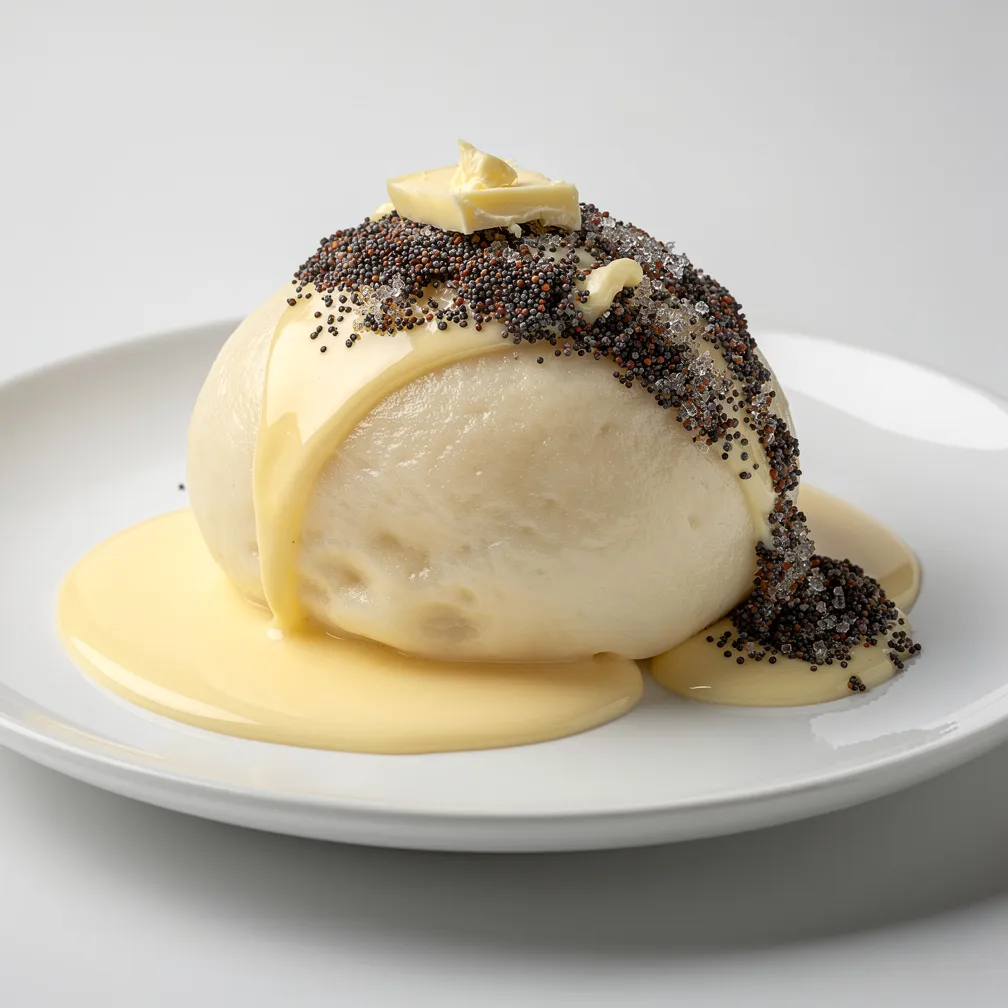
Germknödel
| Macros | per 100 g |
|---|---|
| Calories | 240 kcal |
| Protein | 6.0 g |
| Fat | 8.0 g |
| Carbs | 38.0 g |
Germknödel is a large, soft yeast dumpling from Austrian and Bavarian cuisine, traditionally steamed and served warm as a dessert or hearty snack, typically filled with plum jam and topped with melted butter and poppy seed sugar. Per 100 g, it provides 240 kcal, 6 g of protein, 8 g of fat, 38 g of carbohydrates, and 1.5 g of dietary fibre, with 12 g coming from sugars. Notable micronutrients include 180 mg of sodium, 155 mg of potassium, 55 mg of calcium, and 70 mcg of vitamin A per 100 g. No glycemic index data is available for this food. Germknödel is suitable for a vegetarian dietary pattern.
How many calories in a Germknödel?
Germknödel contains 240 kcal per 100 g. A single serving dumpling typically weighs around 200–250 g, which puts a whole Germknödel at roughly 480–600 kcal before any toppings are added.
Is Germknödel vegetarian?
Yes, Germknödel is suitable for a vegetarian diet. It is made from yeast dough, eggs, butter, and a fruit jam filling — no meat or fish is involved in the traditional recipe.
How much sodium is in Germknödel?
Germknödel contains 180 mg of sodium per 100 g, which is a moderate amount for a sweet dumpling dish. A full serving of 200–250 g would contribute around 360–450 mg of sodium.
Diets
Get Vnutri
Log meals, track daily totals, save favorites. Free on iOS and Android.
Macros · per 100 g
| Macros | Amount |
|---|---|
| Calories | 240 kcal |
| Protein | 6.0 g |
| Fat | 8.0 g |
| Carbs | 38.0 g |
| Sugars | 12.0 g |
| Fiber | 1.5 g |
| Fats breakdown | Amount |
|---|---|
| Saturated | 4.5 g |
| Monounsaturated | 2.2 g |
| Polyunsaturated | 0.60 g |
| Cholesterol | 55.0 mg |
| Minerals | Amount |
|---|---|
| Calcium | 55.0 mg |
| Iron | 1.4 mg |
| Potassium | 155 mg |
| Sodium | 180 mg |
| Vitamins | Amount |
|---|---|
| Vitamin A | 70.0 mcg |
| Vitamin C | 1.0 mg |
| Vitamin B12 | 0.20 mcg |