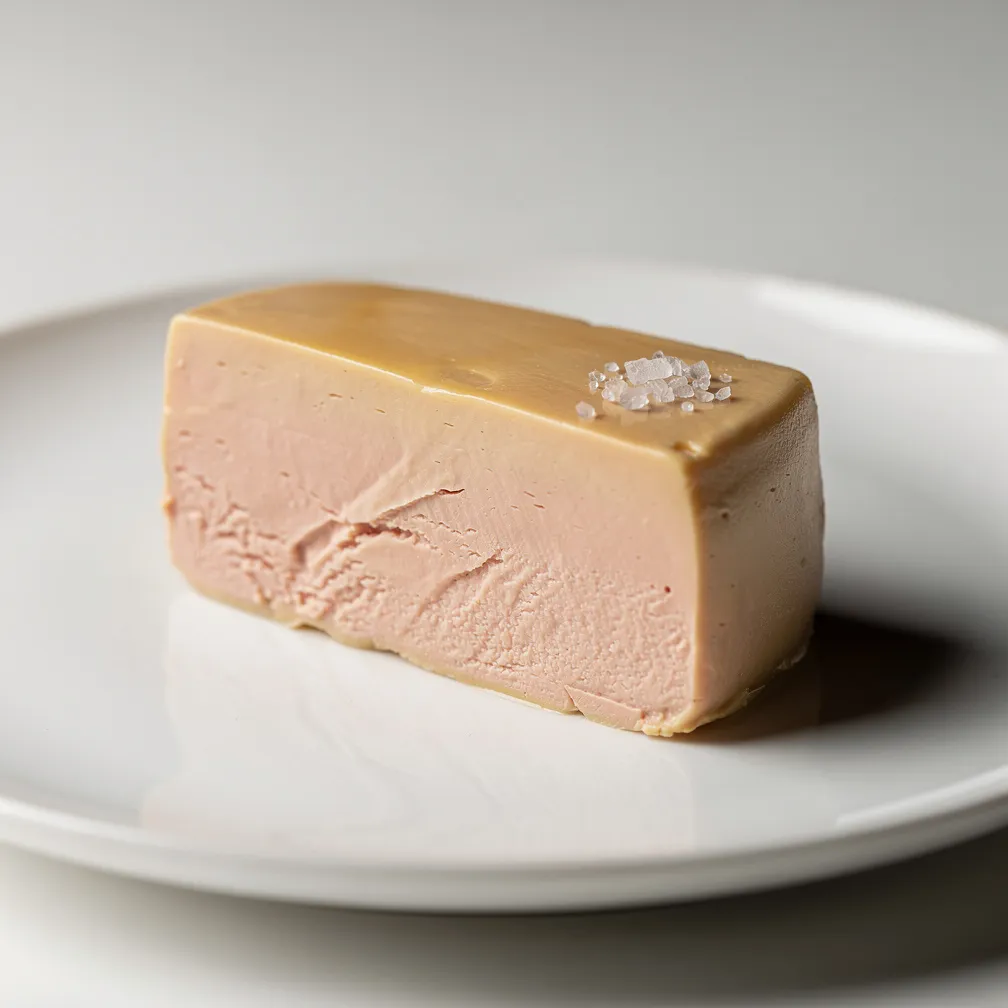
Duck foie gras
| Macros | per 100 g |
|---|---|
| Calories | 460 kcal |
| Protein | 7.0 g |
| Fat | 44.0 g |
| Carbs | 5.0 g |
Duck foie gras is the cooked, fattened liver of duck, most commonly served as a terrine, pâté or pan-seared slice in French cuisine, typically in small portions of 30–50 g. Per 100 g, it delivers 460 kcal, 7 g of protein, 44 g of fat, and 5 g of carbohydrates with no dietary fibre. The fat content accounts for the vast majority of its calories, making it one of the more energy-dense liver preparations. It is notably high in vitamin A at 4,800 mcg per 100 g, and provides 28 mcg of vitamin B12 per 100 g. Sodium content is substantial at 550 mg per 100 g, with 200 mg of potassium also present. No glycemic index data is available. Compatible with gluten-free, dairy-free and keto dietary patterns.
How many calories in duck foie gras?
Cooked duck foie gras contains 460 kcal per 100 g, almost entirely from its 44 g of fat. A typical serving of around 40 g would provide approximately 184 kcal.
How much vitamin A is in duck foie gras?
Duck foie gras contains 4,800 mcg of vitamin A per 100 g, making it one of the most concentrated dietary sources of this fat-soluble vitamin. Even a small 30 g serving delivers around 1,440 mcg.
Is duck foie gras keto-friendly?
Yes, duck foie gras fits a ketogenic diet — it contains 44 g of fat and only 5 g of carbohydrates per 100 g, with no fibre to subtract. Its very high fat-to-carb ratio aligns well with keto macronutrient targets.
Diets
Get Vnutri
Log meals, track daily totals, save favorites. Free on iOS and Android.
Macros · per 100 g
| Macros | Amount |
|---|---|
| Calories | 460 kcal |
| Protein | 7.0 g |
| Fat | 44.0 g |
| Carbs | 5.0 g |
| Sugars | 1.0 g |
| Fiber | 0 g |
| Fats breakdown | Amount |
|---|---|
| Saturated | 16.0 g |
| Monounsaturated | 22.0 g |
| Polyunsaturated | 4.0 g |
| Cholesterol | 380 mg |
| Minerals | Amount |
|---|---|
| Calcium | 20.0 mg |
| Iron | 5.5 mg |
| Potassium | 200 mg |
| Sodium | 550 mg |
| Vitamins | Amount |
|---|---|
| Vitamin A | 4800 mcg |
| Vitamin C | 2.0 mg |
| Vitamin B12 | 28.0 mcg |