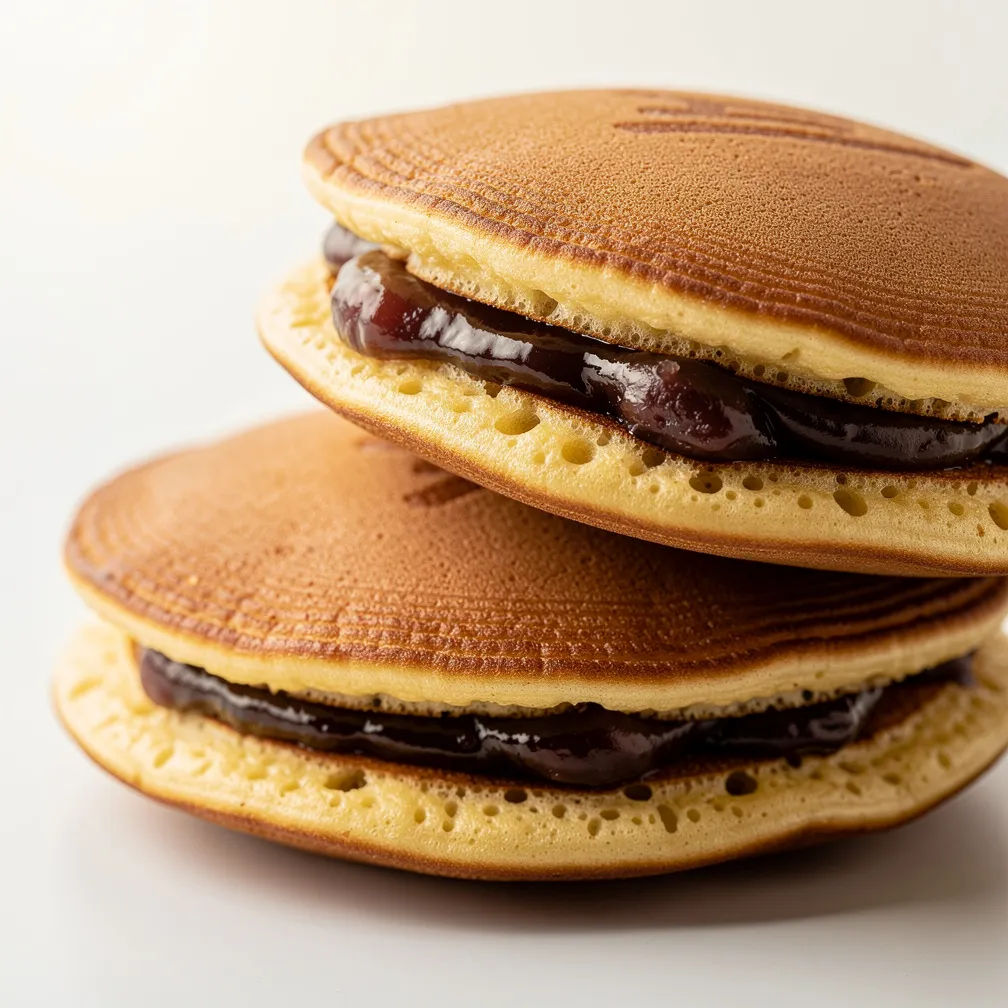
Dorayaki
| Macros | per 100 g |
|---|---|
| Calories | 270 kcal |
| Protein | 6.5 g |
| Fat | 4.5 g |
| Carbs | 52.0 g |
Dorayaki is a Japanese confection made of two small, round pancakes sandwiched together with a sweet filling, most traditionally anko (sweet red bean paste). It is a popular everyday snack in Japan, sold at convenience stores and wagashi shops alike, and is typically eaten as-is at room temperature. Per 100 g, dorayaki provides 270 kcal, 6.5 g of protein, 4.5 g of fat, 52 g of carbohydrates, and 2 g of dietary fibre, with 28 g coming from sugars. It contains 180 mg of sodium, 130 mg of potassium, and 40 mcg of vitamin A per 100 g. No glycemic index data is available for this food. Dorayaki is suitable for vegetarian and dairy-free dietary patterns.
How many calories in dorayaki?
Dorayaki contains 270 kcal per 100 g. A single dorayaki typically weighs around 60–80 g, putting one piece at roughly 160–215 kcal.
Is dorayaki dairy-free?
Traditional dorayaki is dairy-free, as the pancakes and anko filling are made without milk or butter. The data confirms it is compatible with both vegetarian and dairy-free dietary patterns.
Is dorayaki high in sugar?
Dorayaki contains 28 g of sugars per 100 g, which is relatively high and largely comes from the sweetened bean paste filling. The total carbohydrate content is 52 g per 100 g, making it an energy-dense snack.
Diets
Get Vnutri
Log meals, track daily totals, save favorites. Free on iOS and Android.
Glycemic Index
approximateMacros · per 100 g
| Macros | Amount |
|---|---|
| Calories | 270 kcal |
| Protein | 6.5 g |
| Fat | 4.5 g |
| Carbs | 52.0 g |
| Sugars | 28.0 g |
| Fiber | 2.0 g |
| Fats breakdown | Amount |
|---|---|
| Saturated | 1.2 g |
| Monounsaturated | 1.8 g |
| Polyunsaturated | 0.80 g |
| Cholesterol | 75.0 mg |
| Minerals | Amount |
|---|---|
| Calcium | 35.0 mg |
| Iron | 1.2 mg |
| Potassium | 130 mg |
| Sodium | 180 mg |
| Vitamins | Amount |
|---|---|
| Vitamin A | 40.0 mcg |
| Vitamin C | 0 mg |
| Vitamin B12 | 0.30 mcg |